


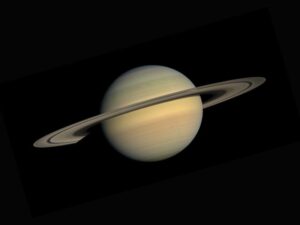
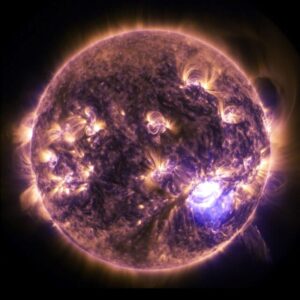


Scientists believe the solar system was formed some 4.6 billion years ago when a cloud of gas and dust collapsed under gravity possibly triggered by cataclysmic explosion from a nearby massive star or supernova. As this cloud collapsed, it...

Astronomers using the National Science Foundation's Karl G. Jansky Very Large Array (VLA) have made the first radio-telescope detection of a planetary-mass object beyond our Solar System. The object, about a dozen times more massive than Jupiter, is a...

Scientists have identified a group of planets outside our solar system where the same chemical conditions that may have led to life on Earth exist.
The researchers, from the University of Cambridge and the Medical Research Council Laboratory of Molecular...
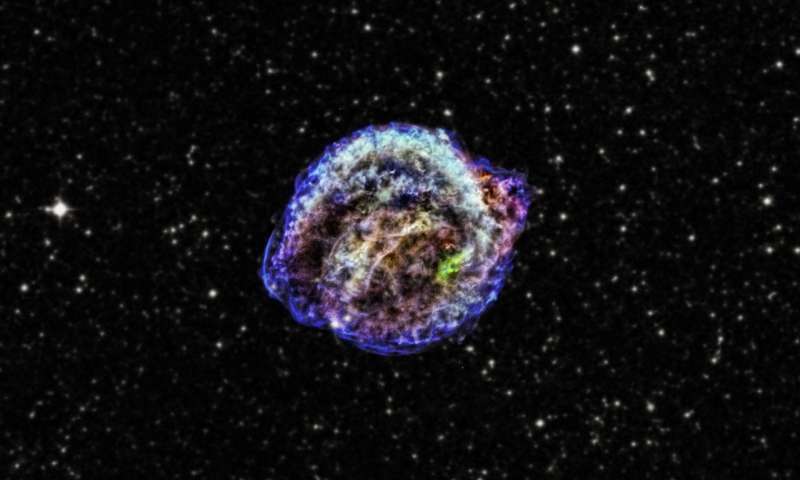
A new study argues that the explosion that Johannes Kepler observed in 1604 was caused by a merger of two stellar residues.
The Kepler supernova, of which only the supernova remnant remains, took place in the constellation of Ophiuchus, in...
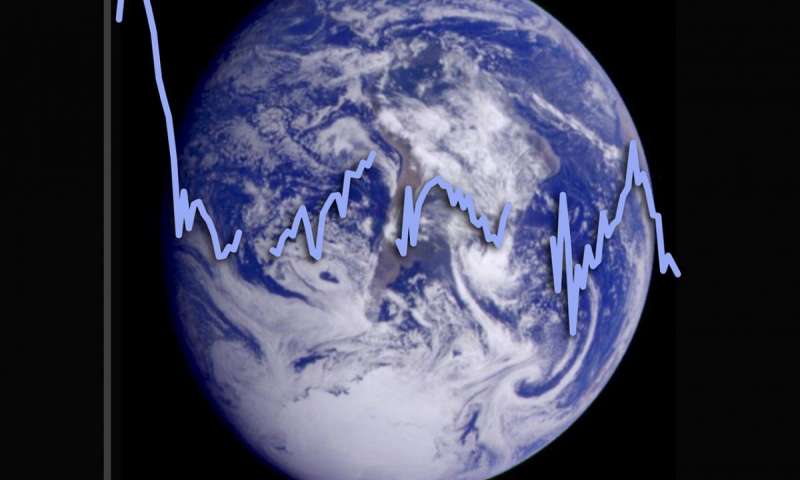
Earthbound detectives rely on fingerprints to solve their cases; now astronomers can do the same, using "light-fingerprints" instead of skin grooves to uncover the mysteries of exoplanets.
Cornell University researchers have created a reference catalog using calibrated spectra and geometric...
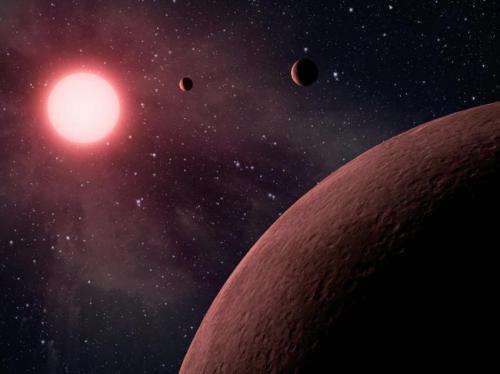
There may be more habitable planets in the universe than we previously thought, according to Penn State geoscientists, who suggest that plate tectonics—long assumed to be a requirement for suitable conditions for life—are in fact not necessary.
When searching for...
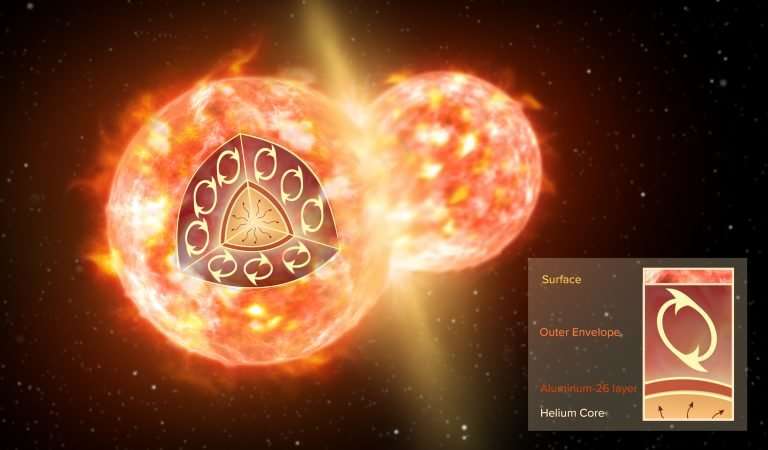
When two Sun-like stars collide, the result can be a spectacular explosion and the formation of an entirely new star. One such event was seen from Earth in 1670. It appeared to observers as a bright, red "new star."...

Science fiction writers have long featured terraforming, the process of creating an Earth-like or habitable environment on another planet, in their stories. Scientists themselves have proposed terraforming to enable the long-term colonization of Mars. A solution common to both...

Our Sun's beginnings are a mystery. It burst into being 4.6 billion years ago, about 50 million years before the Earth formed. Since the Sun is older than the Earth, it's hard to find physical objects that were around...

A thin gap has been discovered on the Hertzsprung-Russell Diagram (HRD), the most fundamental of all maps in stellar astronomy, a finding that provides new information about the interior structures of low mass stars in the Milky Way Galaxy,...

Findings from a Rochester Institute of Technology study provide further evidence that the outskirts of spiral galaxies host massive black holes. These overlooked regions are new places to observe gravitational waves created when the massive bodies collide, the authors...


