


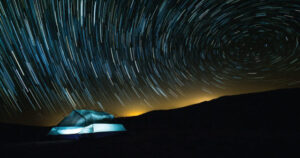


If extraterrestrial intelligence exists somewhere in our galaxy, a new MIT study proposes that laser technology on Earth could, in principle, be fashioned into something of a planetary porch light—a beacon strong enough to attract attention from as far...
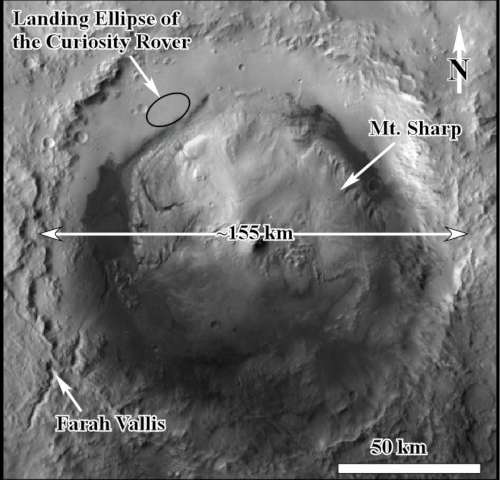
The presence of water on Mars has been theorized for centuries. Early telescopes revealed ice caps, and early astronomers noted channels that were hypothesized to be natural rivers or creature-created canals.
Mariner 4 was the first rover to Mars, landing...
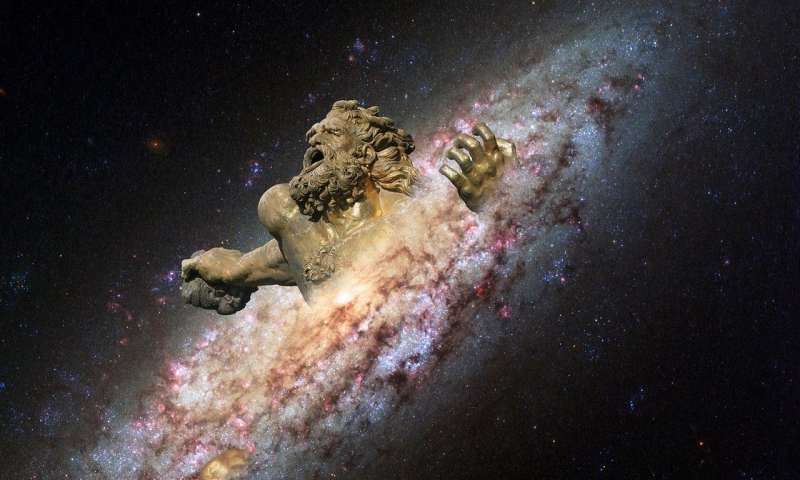
Some 10 billion years ago, the Milky Way merged with a large galaxy. The stars from this partner, named Gaia-Enceladus, make up most of the Milky Way's halo and also shaped its thick disk, giving it its inflated form....

Since it first appeared in the southern night sky on February 24th 1987, Supernova 1987A has been one of the most studied objects in the history of astronomy.
The supernova was the cataclysmic death of a blue supergiant star, some...
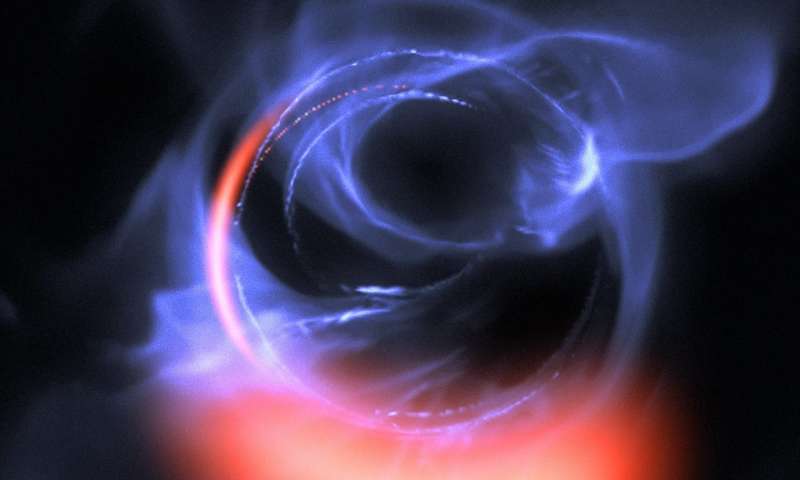
ESO's exquisitely sensitive GRAVITY instrument has added further evidence to the long-standing assumption that a supermassive black hole lurks in the centre of the Milky Way. New observations show clumps of gas swirling around at about 30% of the...
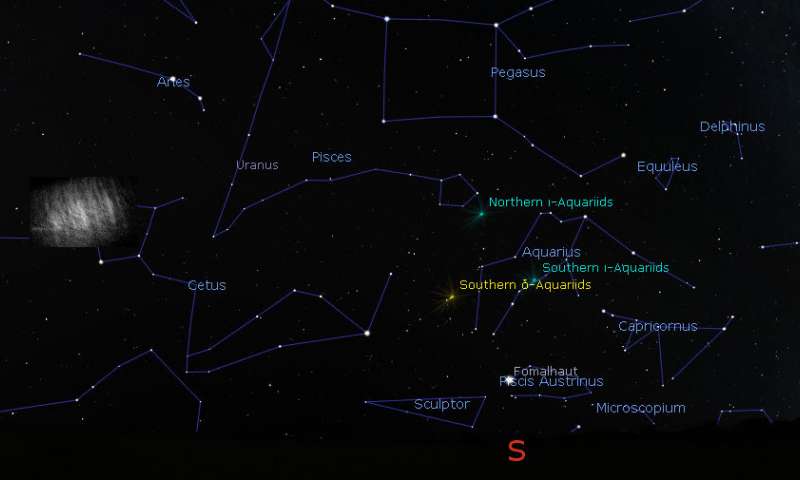
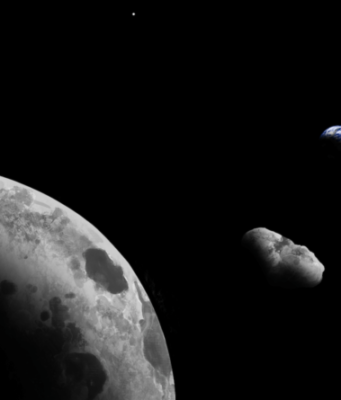
A team of Hungarian astronomers and physicists may have confirmed two elusive clouds of dust, in semi-stable points just 400,000 kilometres from Earth. The clouds, first reported by and named for Polish astronomer Kazimierz Kordylewski in 1961, are exceptionally...
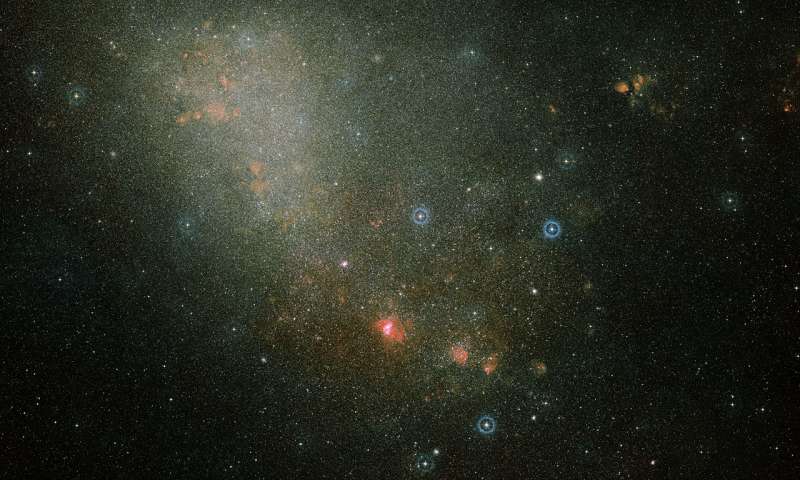
If you're standing in the Southern Hemisphere on a clear night, you can see two luminous clouds offset from the Milky Way.
These clouds of stars are satellite galaxies of the Milky Way, called the Small Magellanic Cloud and the...

The zip of electricity in Martian dust storms helps to form the huge amounts of perchlorate found in the planet's soils, according to new research from Washington University in St. Louis.
It's not lightning but another form of electrostatic discharge...
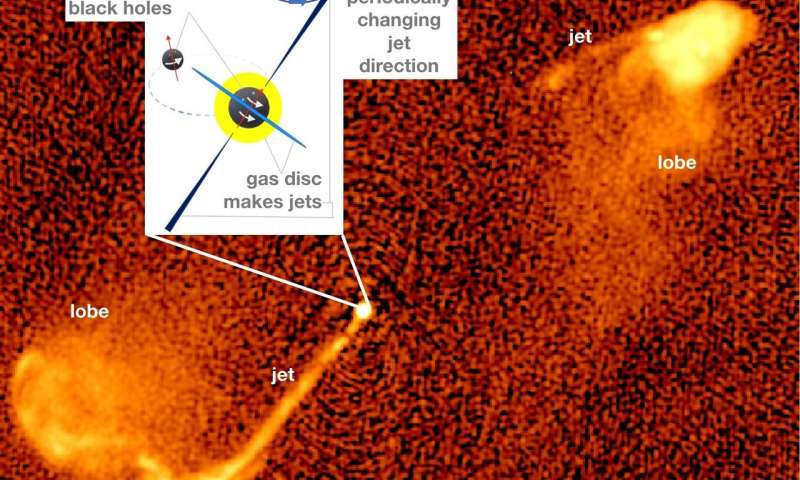
New research, published today in the journal Monthly Notices of the Royal Astronomical Society, has found evidence for a large number of double supermassive black holes, likely precursors of gigantic black hole merging events. This confirms the current understanding...

An approximately 14 million year old pulsar star that is the "slowest-spinning" of its kind ever identified has been discovered by a Ph.D. student from The University of Manchester.
Chia Min Tan, a Ph.D. Student based at the Jodrell Bank...
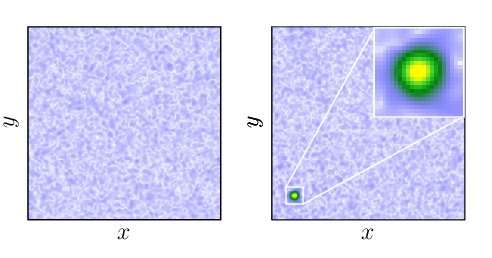
Researchers developed a mathematical model describing motion of dark matter particles inside the smallest galaxy halos. They observed that over time, dark matter may form spherical droplets of quantum condensate. Previously, this was considered impossible, as fluctuations of the...


