


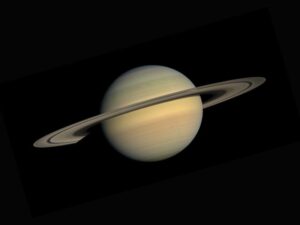



New findings have emerged about five tiny moons nestled in and near Saturn's rings. The closest-ever flybys by NASA's Cassini spacecraft reveal that the surfaces of these unusual moons are covered with material from the planet's rings -- and...
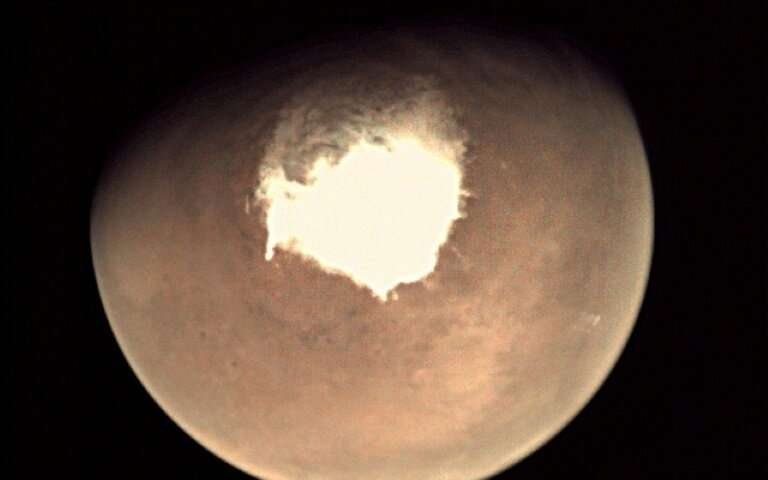
The mystery of methane on Mars may finally be solved as scientists Monday confirmed the presence of the life-indicating gas on the Red Planet as well as where it might have come from.
In the 15 years since a European...

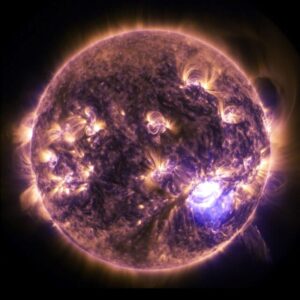
The sun's magnetic field is ten times stronger than previously believed, new research from Queen's University Belfast and Aberystwyth University has revealed.
The new finding was discovered by Dr. David Kuridze, Research Fellow at Aberystwyth University. Dr. Kuridze began the...

Physicists from MIT and elsewhere have performed the first run of a new experiment to detect axions—hypothetical particles that are predicted to be among the lightest particles in the universe. If they exist, axions would be virtually invisible, yet...

In mid-2018, researchers supported by the Italian Space Agency detected the presence of a deep-water lake on Mars under its south polar ice caps. Now, researchers at the USC Arid Climate and Water Research Center (AWARE) have published a...
After drawing both praise and skepticism, the team of astronomers who discovered NGC 1052-DF2 – the very first known galaxy to contain little to no dark matter – are back with stronger evidence about its bizarre nature.
Dark matter is...

Long ago on Mars, water carved deep riverbeds into the planet's surface—but we still don't know what kind of weather fed them. Scientists aren't sure, because their understanding of the Martian climate billions of years ago remains incomplete.
A new...
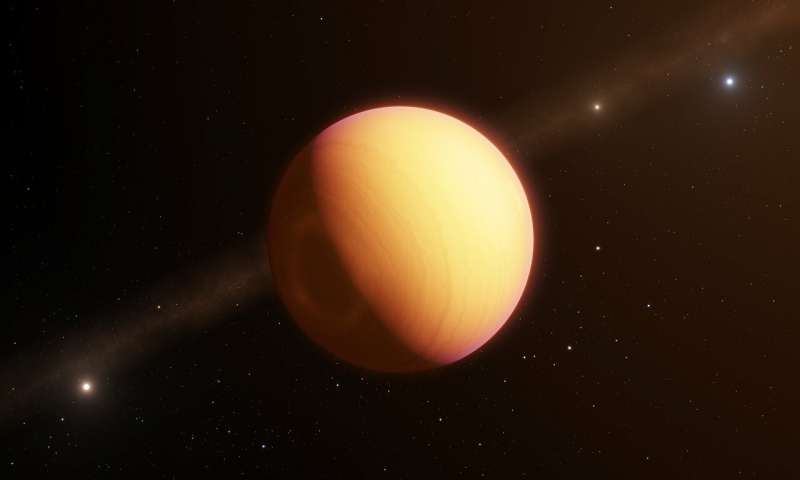
The GRAVITY instrument on ESO's Very Large Telescope Interferometer (VLTI) has made the first direct observation of an exoplanet using optical interferometry. This method revealed a complex exoplanetary atmosphere with clouds of iron and silicates swirling in a planet-wide...

A team of scientists has proposed a powerful new test for inflation, the theory that the universe dramatically expanded in size in a fleeting fraction of a second right after the Big Bang. Their goal is to give insight...

The sparsely distributed hot gas that exists in the space between galaxies, the intergalactic medium, is ionized. The question is, how? Astronomers know that once the early universe expanded and cooled enough, hydrogen (its main constituent) recombined into neutral...
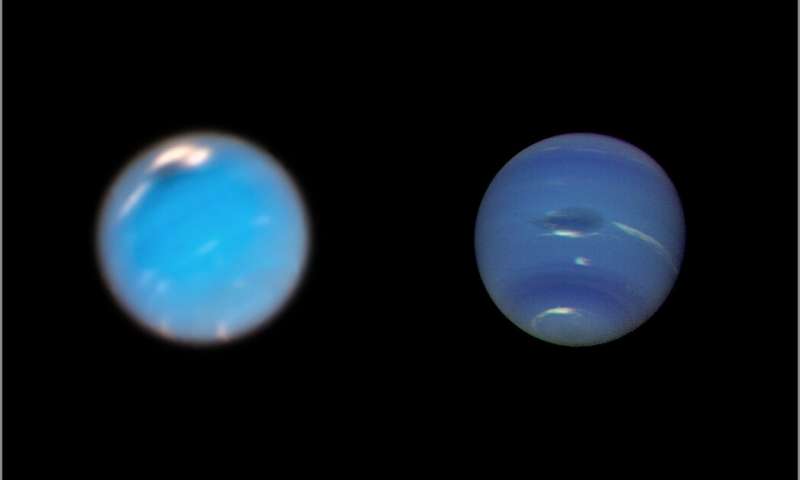
Images taken by the Hubble Space Telescope document the formation of a Great Dark Spot on Neptune for the first time, report researchers in a new study.
Like Jupiter's Great Red Spot, Neptune's Great Dark Spots are storms that form...


