



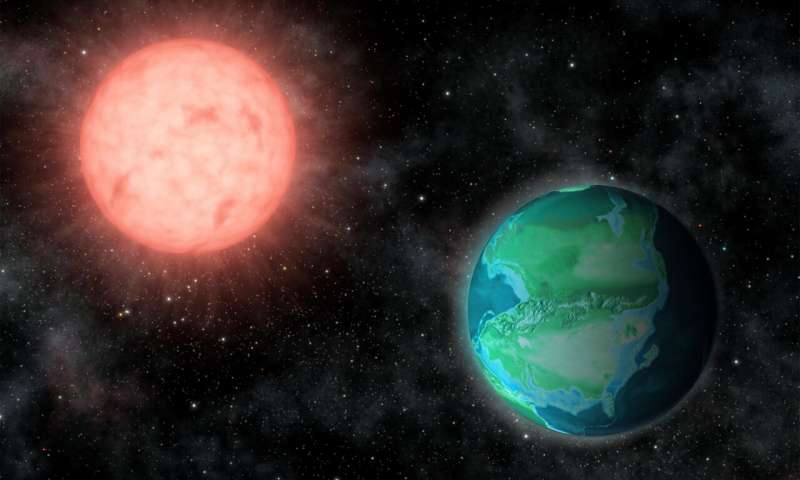
Excitement about exoplanets skyrocketed when rocky Earth-like planets were discovered orbiting in the habitable zone of some of our closest stars – until hopes for life were dashed by the high levels of radiation bombarding those worlds.
Proxima-b, only 4.24...

In the past three decades, almost 4,000 planet-like objects have been discovered orbiting isolated stars outside the solar system (exoplanets). Beginning in 2011, it was possible to use NASA's Kepler Space Telescope to observe the first exoplanets in orbit...

Metallic asteroids are thought to have started out as blobs of molten iron floating in space. As if that's not strange enough, scientists now think that as the metal cooled and solidified, volcanoes spewing liquid iron could have erupted...

For five months in mid 2017, Emily Mason did the same thing every day. Arriving to her office at NASA's Goddard Space Flight Center in Greenbelt, Maryland, she sat at her desk, opened up her computer, and stared at...

Gravitational waves – the invisible ripples in the fabric of space predicted by Albert Einstein – are opening up a new era of astronomy that is allowing scientists to see parts of the universe once thought to be invisible,...

When the supermassive black holes at the center of galaxies accrete material, they can eject powerful jets of charged particles at speeds approaching that of light. These particles in turn emit radiation across the electromagnetic spectrum, from radio to...
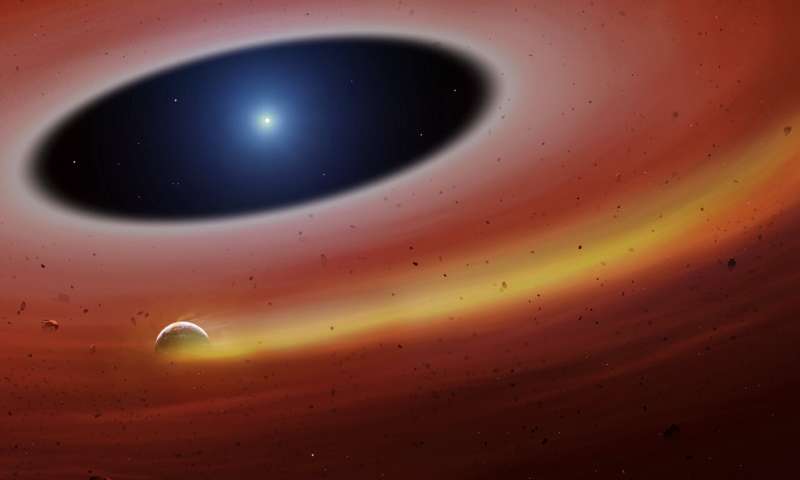
A fragment of a planet that has survived the death of its star has been discovered by University of Warwick astronomers in a disc of debris formed from destroyed planets, which the star ultimately consumes.
The iron and nickel rich...
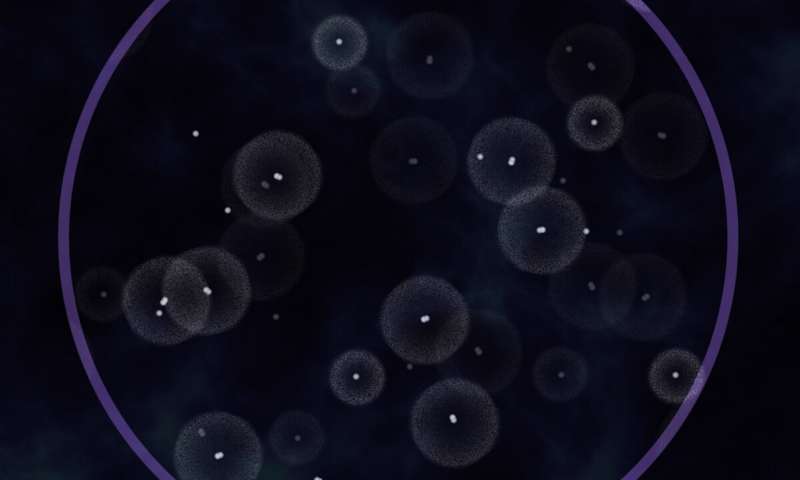
Researchers at the Instituto de Astrofísica de Canarias (IAC) and the University of Cambridge have detected lithium in a primitive star in our galaxy. The observations were made at the VLT, at the Paranal Observatory of ESO in Chile.
In...
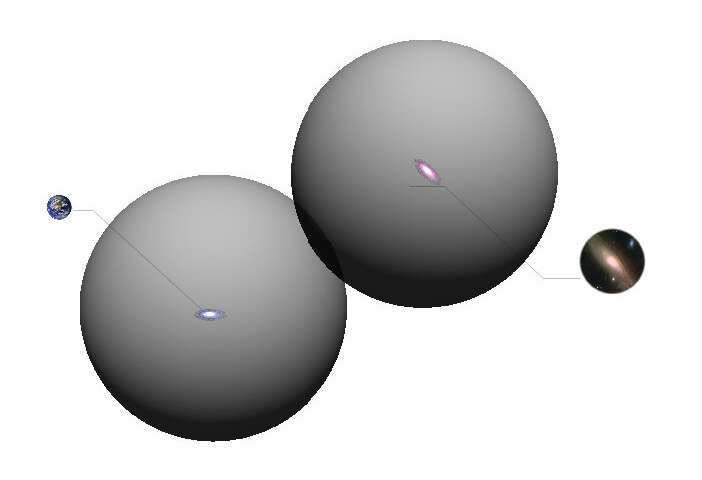
An international team of researchers has put a theory speculated by the late Stephen Hawking to its most rigorous test to date, and their results based on the observations using the Subaru Telescope have ruled out the possibility that...

UNSW astronomers have shown that binary stars – two stars locked in orbit around each other – reflect light as well as radiating it, revealing new ways for their detection.
One of the first things we learn in astronomy is...
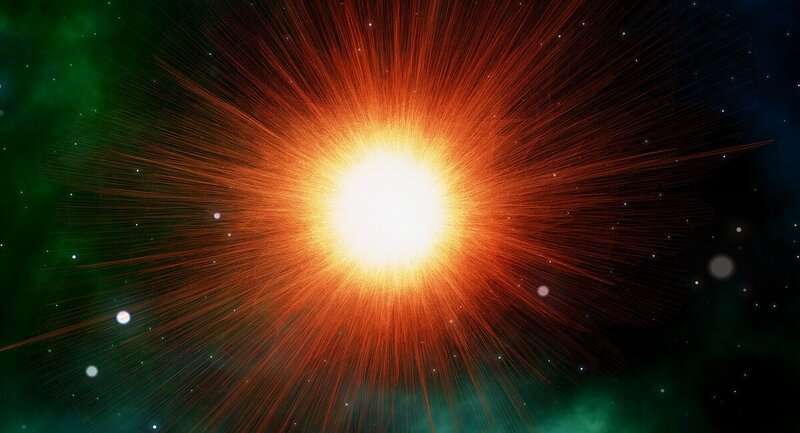
Scientists from the RIKEN Cluster for Pioneering Research and collaborators have used simulations to show that the photons emitted by long gamma-ray bursts, among the most energetic events to take place in the universe, originate in the photosphere—the visible...


