




Astronomers have discovered a third planet in the Kepler-47 system, securing the system's title as the most interesting of the binary-star worlds. Using data from NASA's Kepler space telescope, a team of researchers, led by astronomers at San Diego...

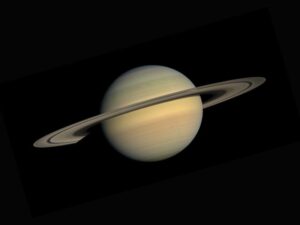
On its final flyby of Saturn's largest moon in 2017, NASA's Cassini spacecraft gathered radar data revealing that the small liquid lakes in Titan's northern hemisphere are surprisingly deep, perched atop hills and filled with methane.
The new findings, published...
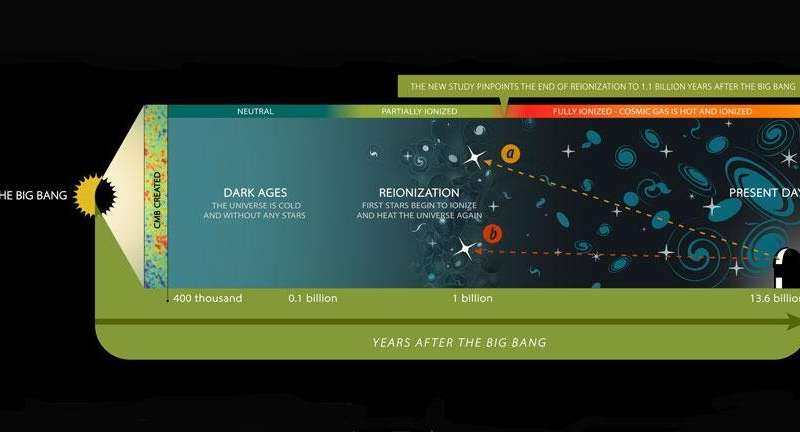
Large differences in the 'fogginess' of the early universe were caused by islands of cold gas left behind when the universe heated up after the big bang, according to an international team of astronomers.
The results, reported in the Monthly Notices...

Researchers from NASA and the Johns Hopkins University Applied Physics Laboratory in Laurel, Maryland, report that streams of meteoroids striking the Moon infuse the thin lunar atmosphere with a short-lived water vapor.
The findings will help scientists understand the history...

Astronomers from the United States and South Korea have made the first high-resolution, radio telescope observations of the molecular clouds within a massive star-forming region of the outer Milky Way.
"This region is behind a nearby cloud of dust and...
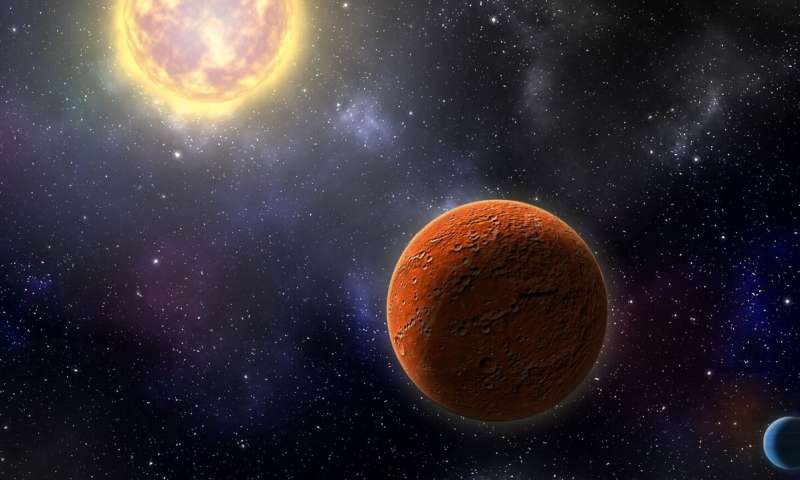
A nearby system hosts the first Earth-sized planet discovered by NASA's Transiting Exoplanets Survey Satellite, as well as a warm sub-Neptune-sized world, according to a new paper from a team of astronomers that includes Carnegie's Johanna Teske, Paul Butler,...

A tiny piece of the building blocks from which comets formed has been discovered inside a primitive meteorite. The discovery by a Carnegie Institution of Science-led team, including a researcher now at Arizona State University, was published April 15...

The closest exoplanet to us, if we include only single stars like the Sun, is the planet around Barnard's Star, Barnard's Star-b ("BSb"). (The planet Promixa Centauri-b is closer, but Proxima Cen is part of a triple-star system with...
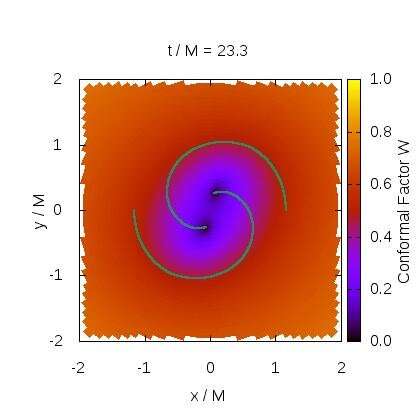
Researchers hoping to better interpret data from the detection of gravitational waves generated by the collision of binary black holes are turning to the public for help.
West Virginia University assistant professor Zachariah Etienne is leading what will soon become...

In a landmark study, a group of U.S. scientists from Johns Hopkins, Stanford University and other institutions has found no long-lasting, major differences between the epigenomes of astronaut Scott Kelly, who spent a year in space aboard the International...

New evidence of the impact of the recent planet-encompassing dust storm on water in the atmosphere, and a surprising lack of methane, are among the scientific highlights of the ExoMars Trace Gas Orbiter's first year in orbit.
Two papers are...


