




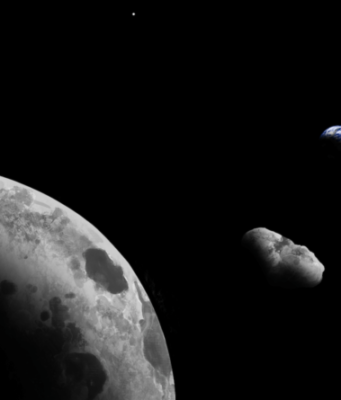
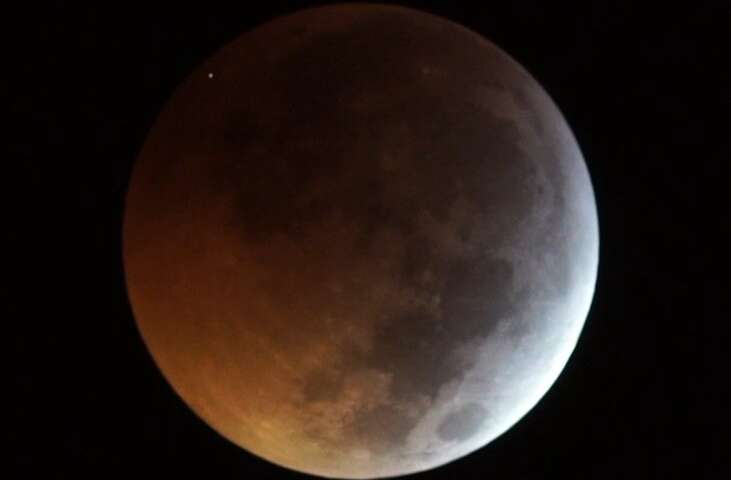
Observers watching January's total eclipse of the Moon saw a rare event, a short-lived flash as a meteorite hit the lunar surface. Spanish astronomers now think the space rock collided with the Moon at 61,000 kilometres an hour, excavating...

As fascinating as it is mysterious, dark matter is one of the greatest enigmas of astrophysics and cosmology. It is thought to account for 90 percent of the matter in the universe, but its existence has been demonstrated only...
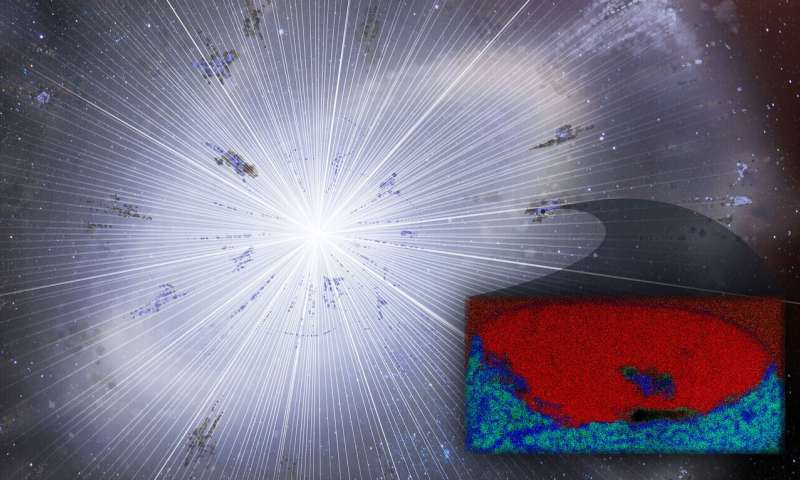
A grain of dust forged in the death throes of a long-gone star was discovered by a team of researchers led by the University of Arizona.
The discovery challenges some of the current theories about how dying stars seed the universe with...

Astronomers have discovered rapidly swinging jets coming from a black hole almost 8000 light-years from Earth.
Published today in the journal Nature, the research shows jets from V404 Cygni's black hole behaving in a way never seen before on such short...
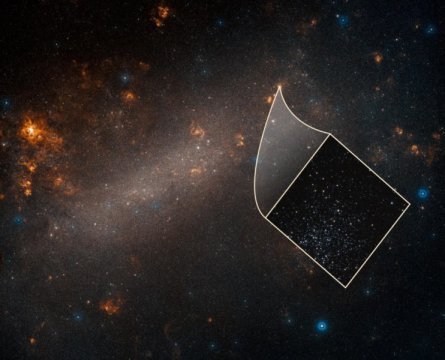
New measurements from NASA's Hubble Space Telescope confirm that the Universe is expanding about 9% faster than expected based on its trajectory seen shortly after the big bang, astronomers say.
The new measurements, published April 25 in the Astrophysical Journal Letters,...

Astronomers using NASA's Hubble Space Telescope say they have crossed an important threshold in revealing a discrepancy between the two key techniques for measuring the universe's expansion rate. The recent study strengthens the case that new theories may be...

The discoveries of thousands of planets orbiting stars outside our solar system has made questions about the potential for life to form on these planets fundamentally important in modern science. Fundamentally important for the habitability of a planet is...
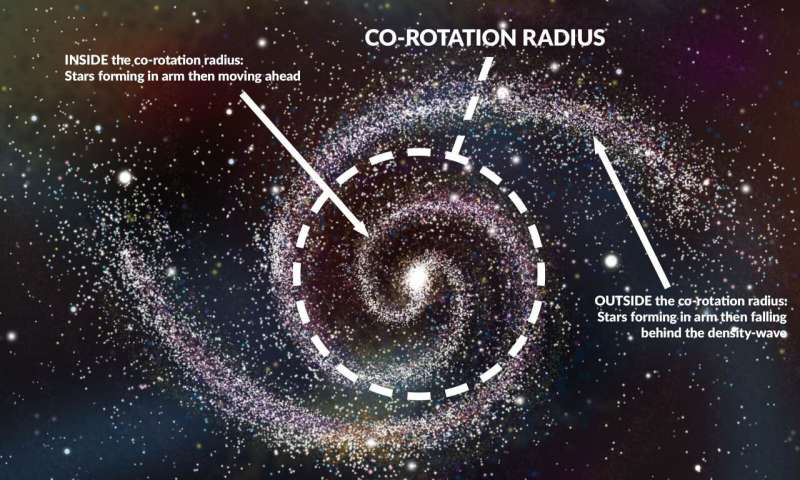
University of Arkansas astrophysicists have taken an important step toward solving the mystery of how disk galaxies maintain the shape of their spiral arms. Their findings support the theory that these arms are created by a wave of denser...

Scientists have used the tiny distortions imprinted on the cosmic microwave background by the gravity of matter throughout the universe, recorded by ESA's Planck satellite, to uncover the connection between the luminosity of quasars – the bright cores of...

Since its discovery in 2016, planetary scientists have been excited about TRAPPIST-1, a system where seven Earth-sized rocky planets orbit a cool star. Three of the planets are in the habitable zone, the region of space where liquid water...
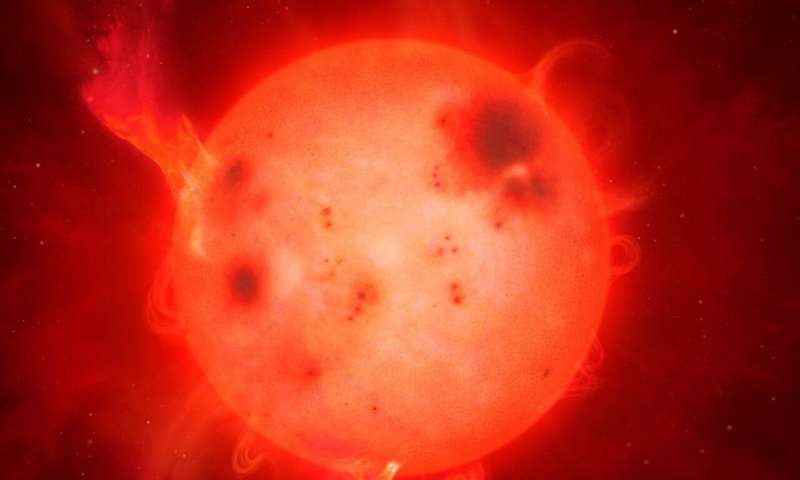
A stellar flare ten times more powerful than anything seen on our sun has burst from an ultracool star almost the same size as Jupiter.
The star is the coolest and smallest to give off a rare white-light superflare, and...


