




Massive clusters of galaxies, some with more mass than a hundred Milky Way galaxies, have been detected from cosmic epochs as early as about three billion years after the big bang. Their ongoing star formation makes them bright enough...
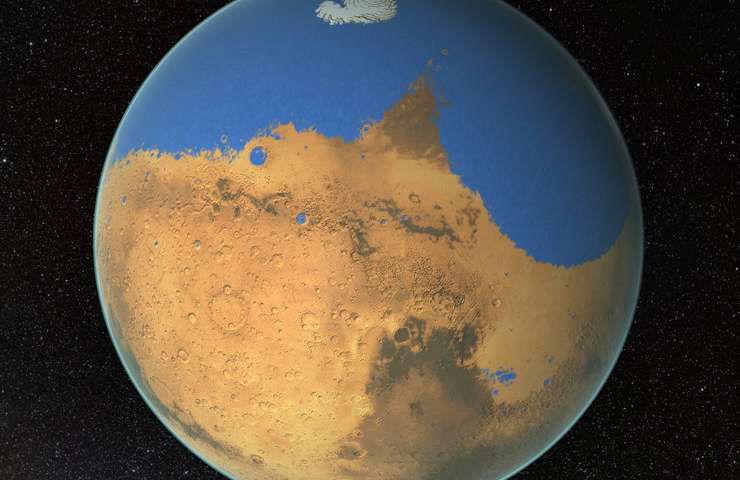
Approximately every two Earth years, when it is summer on the southern hemisphere of Mars, a window opens: Only in this season can water vapor efficiently rise from the lower into the upper Martian atmosphere. There, winds carry the...

Gravitational waves, first detected in 2016, offer a new window on the universe, with the potential to tell us about everything from the time following the Big Bang to more recent events in galaxy centers.
And while the billion-dollar Laser...
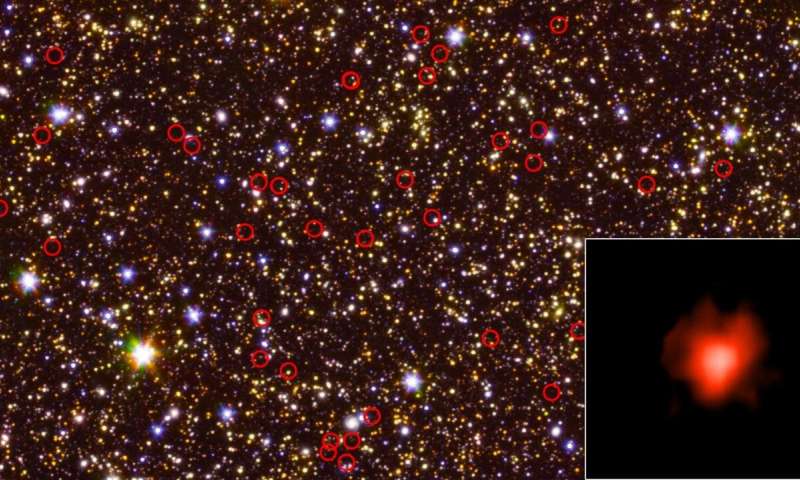
NASA's Spitzer Space Telescope has revealed that some of the universe's earliest galaxies were brighter than expected. The excess light is a byproduct of the galaxies releasing incredibly high amounts of ionizing radiation. The finding offers clues to the...
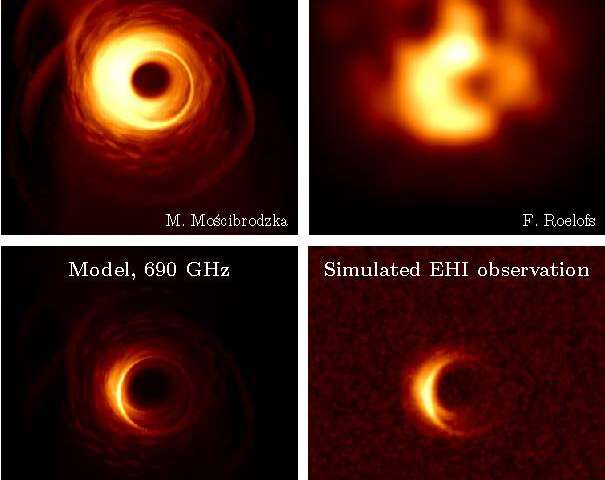
Astronomers have just managed to take the first image of a black hole, and now the next challenge facing them is how to take even sharper images, so that Einstein's Theory of General Relativity can be tested. Radboud University...
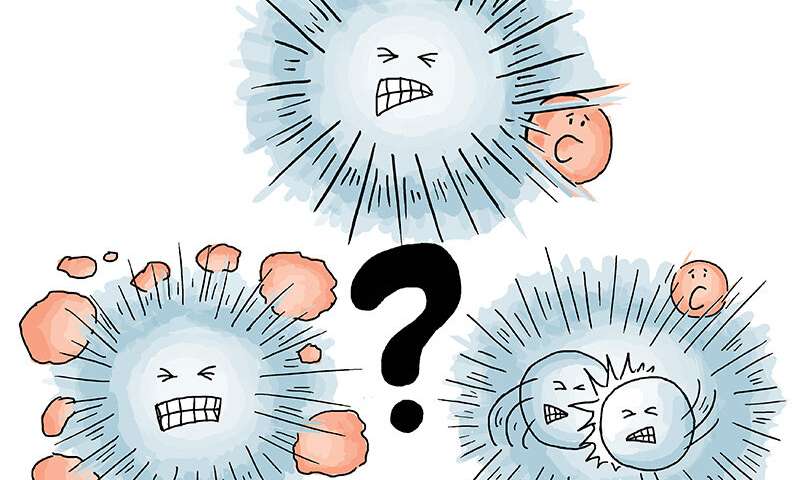
Detection of a supernova with an unusual chemical signature by a team of astronomers led by Carnegie's Juna Kollmeier—and including Carnegie's Nidia Morrell, Anthony Piro, Mark Phillips, and Josh Simon—may hold the key to solving the longstanding mystery that...
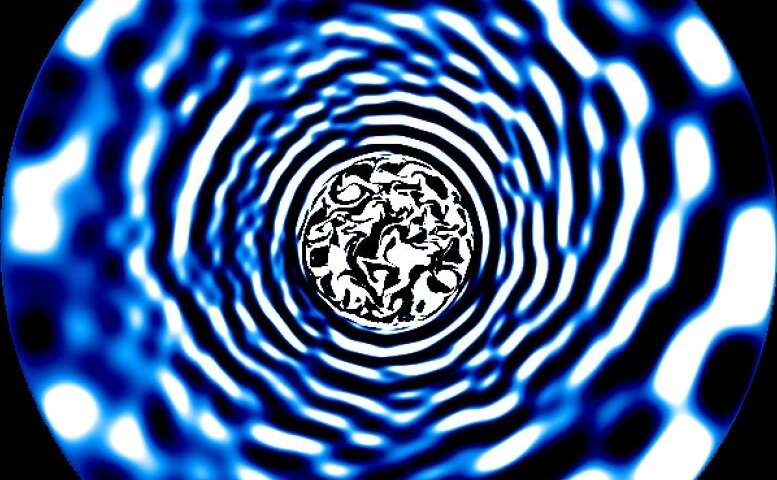
Blue supergiants are the rock-and-roll stars of the universe. They are massive stars that live fast and die young which makes them rare and difficult to study, even with modern telescopes.
Before space telescopes, few blue supergiants had been observed,...
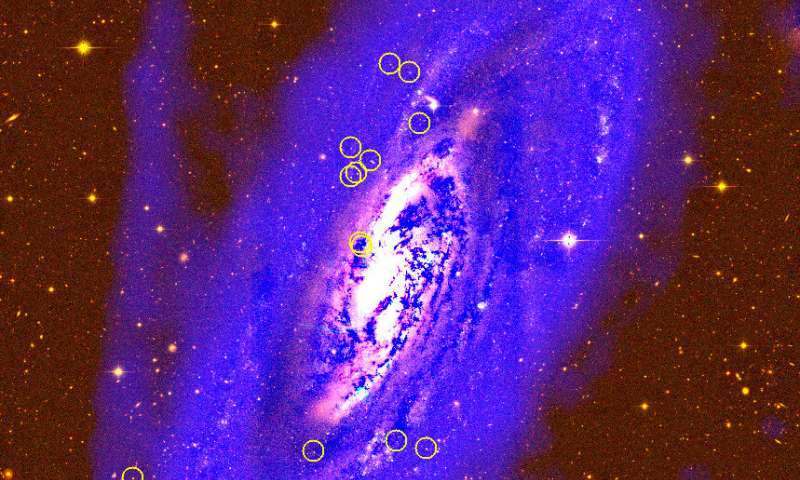
An international scientific team led by a Mexican researcher discovered globular clusters rotating at the same speed as the gas in the disk of the spiral galaxy Messier 106 (also known as M106 or NGC 4258) to which they...

Astrophysicists Szabolcs Marka at Columbia University and Imre Bartos at the University of Florida, have identified a violent collision of two neutron stars 4.6 billion years ago as the likely source of some of the most coveted matter on...

Which of Earth's features were essential for the origin and sustenance of life? And how do scientists identify those features on other worlds?
A team of investigators with array of expertise ranging from geochemistry to planetary science to astronomy published...

Two cosmochemists at Arizona State University have made the first-ever measurements of water contained in samples from the surface of an asteroid. The samples came from asteroid Itokawa and were collected by the Japanese space probe Hayabusa.
The team's findings...


