



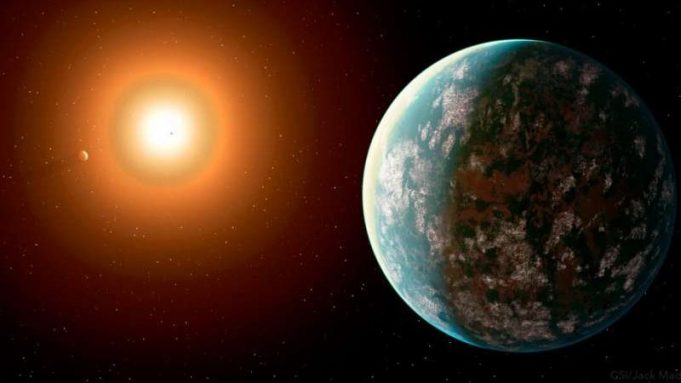
An international team of astronomers led by Cornell's Lisa Kaltenegger has characterized the first potentially habitable world outside of our own solar system.
Located about 31 light-years away, the super-Earth planet—named GJ 357 d—was discovered in early 2019 owing to...

Triton orbits Neptune, the eighth planet from the Sun, some 2.7 billion miles from Earth—at the cold outer fringe of the Solar System's major planet zone. Surface temperatures hover near absolute zero, so low that common compounds we know...
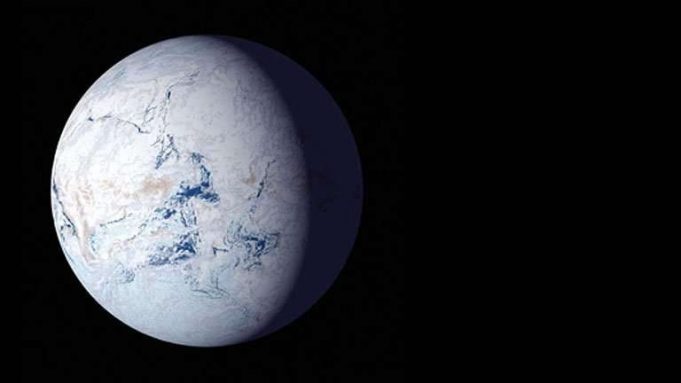
Icy planets once thought too cold to support life might have livable land areas above freezing, challenging the typical assumption of what kinds of planets might be habitable, a new study suggests.
Scientists have long thought snowball planets—Earthlike planets with oceans...

A new study spearheaded by Earth scientists at the University of Cologne's Institute of Geology and Mineralogy has constrained the age of the Moon to approximately 50 million years after the formation of the solar system. After the formation...
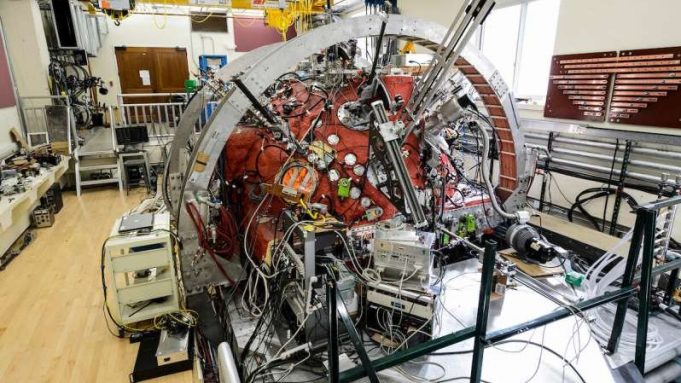
The sun's solar wind affects nearly everything in the solar system. It can disrupt the function of Earth's satellites and creates the lights of the auroras.
A new study by University of Wisconsin-Madison physicists mimicked solar winds in the lab,...
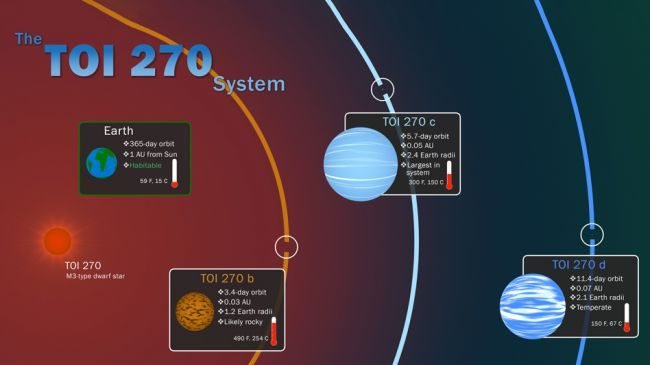
NASA's newest planet-hunting satellite has discovered a type of planet missing from our own solar system.
Launched in 2018, the Transiting Exoplanet Survey Satellite, or TESS, has found three new worlds around a neighboring star. Stephen Kane, a UC Riverside...
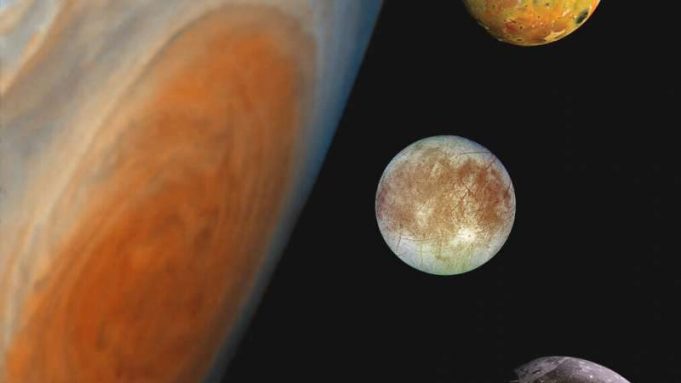
On 31 March 2017, Jupiter's moon Europa passed in front of a background star—a rare event that was captured for the first time by ground-based telescopes thanks to data provided by ESA's Gaia spacecraft.
Previously, observatories had only managed to...
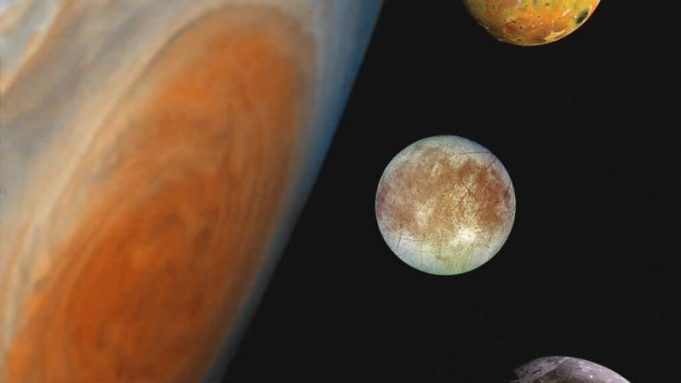
On 31 March 2017, Jupiter's moon Europa passed in front of a background star—a rare event that was captured for the first time by ground-based telescopes thanks to data provided by ESA's Gaia spacecraft.
Previously, observatories had only managed to...

An international team of astronomers has witnessed a rare dynamic event foreshadowing the death of a red giant star for the first time – a discovery that reinforces predictions about our Sun's ultimate demise.
Dr Meridith Joyce, an astronomer based...

Researchers at Dartmouth College have discovered a planet orbiting one of the brightest young stars known, according to a study published in the journal The Astrophysical Journal Letters. Aged at approximately 45 million years old, the star and its planet...
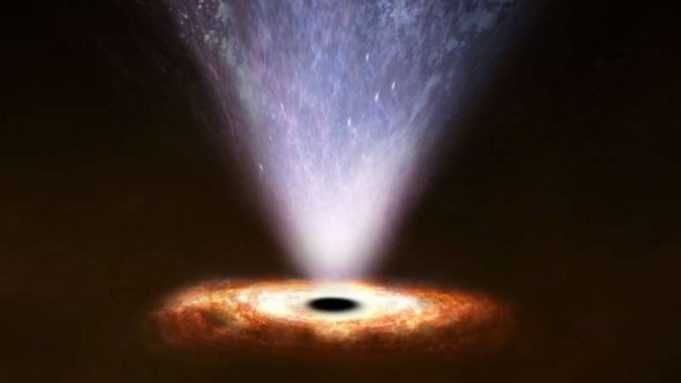
Data from ESA's XMM-Newton X-ray observatory has revealed how supermassive black holes shape their host galaxies with powerful winds that sweep away interstellar matter.
In a new study, scientists analysed eight years of XMM-Newton observations of the black hole at...


