





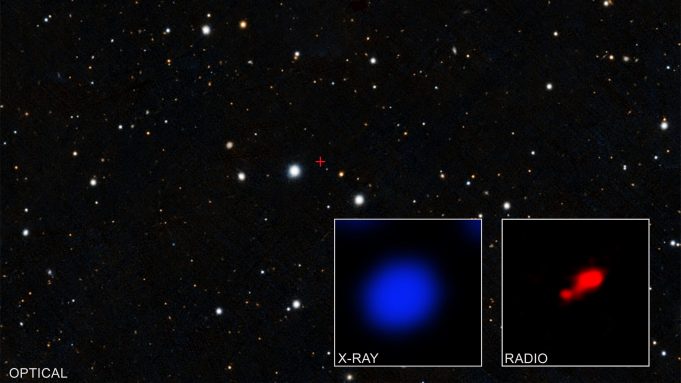
A group of astronomers, including Penn State scientists, has announced the likely discovery of a highly obscured black hole existing only 850 million years after the Big Bang, using NASA's Chandra X-ray Observatory. This is the first evidence for...
Dark matter, which researchers believe make up about 80% of the universe's mass, is one of the most elusive mysteries in modern physics. What exactly it is and how it came to be is a mystery, but a new...
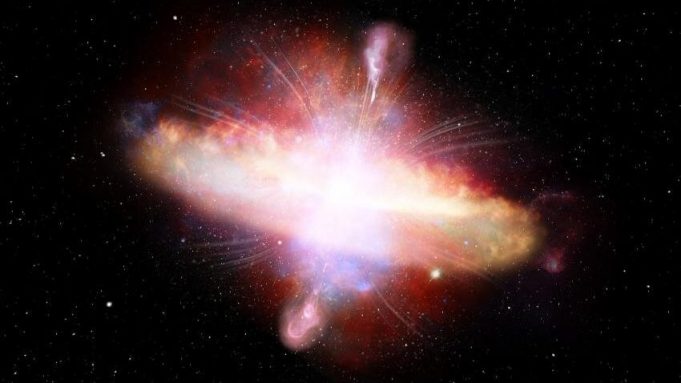
Astronomers have identified a rare moment in the life of some of the universe's most energetic objects. Quasars were first observed 60 years ago, but their origins still remain a mystery. Now researchers at Durham University, UK, have spotted...

Astronomers have used the combined power of multiple astronomical observatories around the world and in space to discover a treasure trove of previously unknown ancient massive galaxies. This is the first multiple discovery of its kind, and such an...

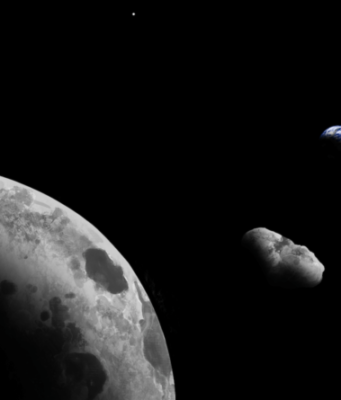
The Apollo Moon buggies weren't the only things rolling over the Moon's surface in the early 1970s.
New research has found that a strong moonquake in 1975 probably sent boulders tumbling down crater walls on our nearest neighbor.
Apollo seismometers detected...
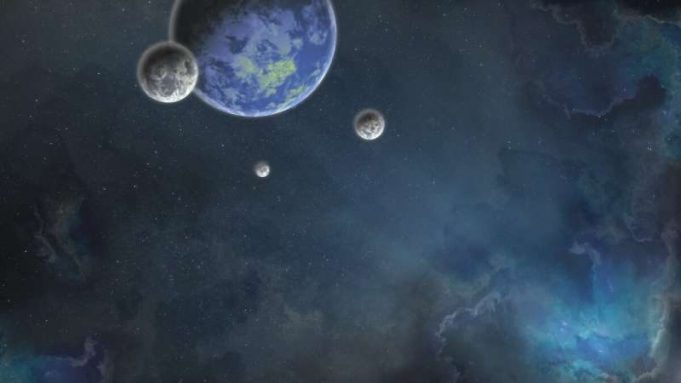
Astronomers are planning to hunt for cores of exoplanets around white dwarf stars by 'tuning in' to the radio waves that they emit.
In new research led by the University of Warwick, scientists have determined the best candidate white dwarfs...
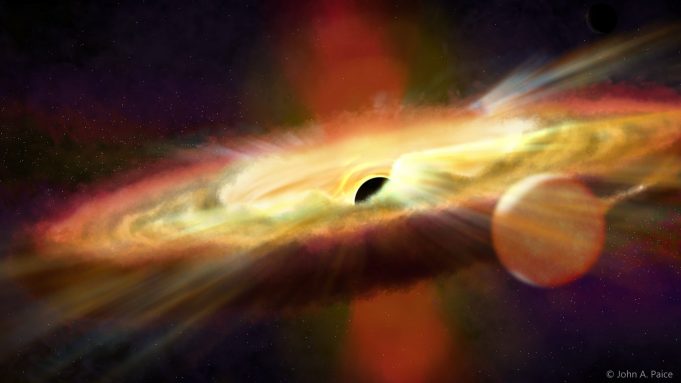
An international team of astrophysicists from Southampton, Oxford and South Africa have detected a very hot, dense outflowing wind close to a black hole at least 25,000 light-years from Earth.
Lead researcher Professor Phil Charles from the University of Southampton...

In the last century, astronomers studying the motions of galaxies and the character of the cosmic microwave background radiation came to realize that most of the matter in the universe was not visible. About 84% of the matter in...

Scientists can tell a lot about a star by the light it gives off. The color, for example, reveals its surface temperature and the elements in and around it. Brightness correlates with a star's mass, and for many stars,...
A newly discovered ancient star containing a record-low amount of iron carries evidence of a class of even older stars, long hypothesised but assumed to have vanished.
In a paper published in the journal Monthly Notices of the Royal Astronomical Society: Letters,...
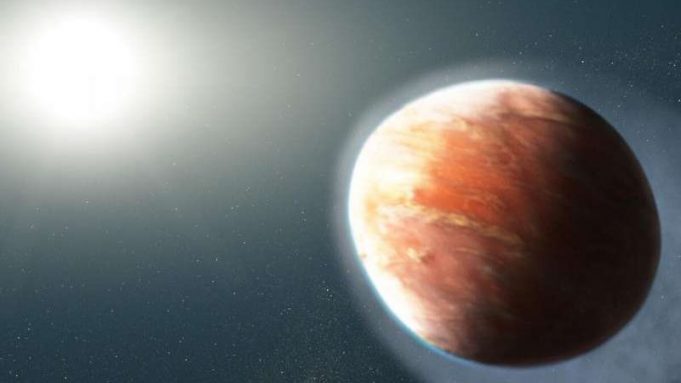
The scorching hot exoplanet WASP-121b may not be shredding any heavy metal guitar riffs, but it is sending heavy metals such as iron and magnesium into space. The distant planet's atmosphere is so hot that metal is vaporizing and...


