



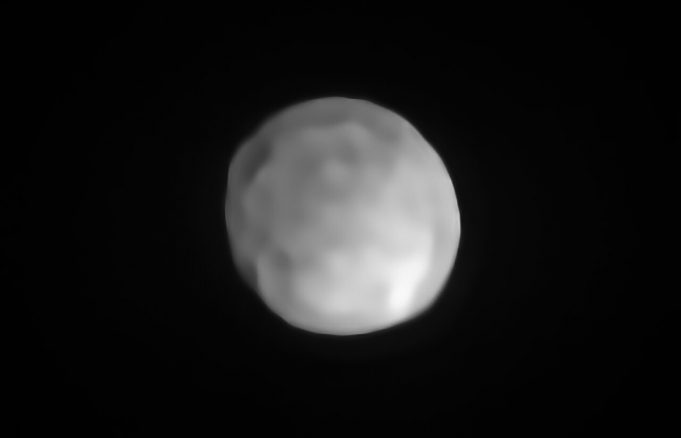
Astronomers using ESO's SPHERE instrument at the Very Large Telescope (VLT) have revealed that the asteroid Hygiea could be classified as a dwarf planet. The object is the fourth largest in the asteroid belt after Ceres, Vesta and Pallas....
Conventional wisdom tells us that large objects appear smaller as they get farther from us, but this fundamental law of classical physics is reversed when we observe the distant universe.
Astrophysicists at the University of Kent simulated the development of...
As the Big Bang theory goes, somewhere around 13.8 billion years ago the universe exploded into being, as an infinitely small, compact fireball of matter that cooled as it expanded, triggering reactions that cooked up the first stars and...
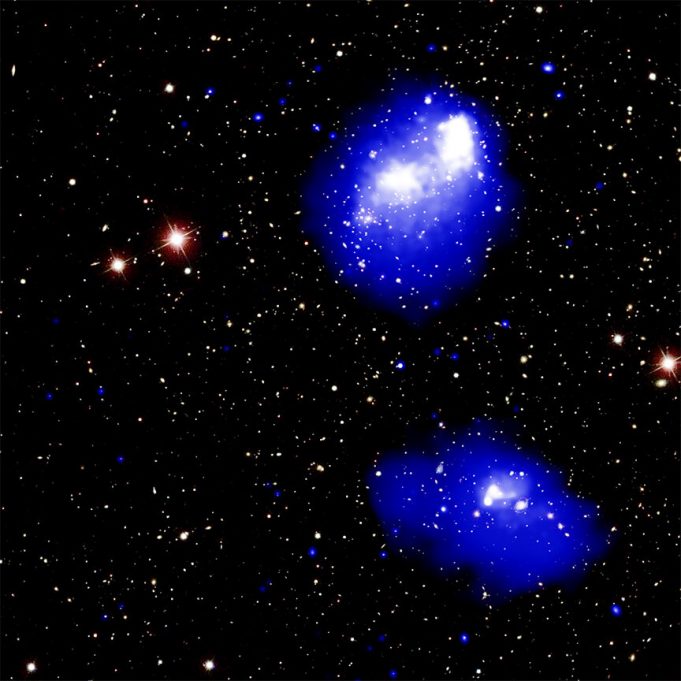
Astronomers using data from NASA's Chandra X-Ray Observatory and other telescopes have put together a detailed map of a rare collision between four galaxy clusters. Eventually all four clusters—each with a mass of at least several hundred trillion times...
Scientists from the universities of Alberta and Toronto developed a blueprint for a new quantum battery that doesn't leak charge.
"A quantum battery is a tiny, nano-size battery meant to be used for applications on the nano scale," explained U of A...
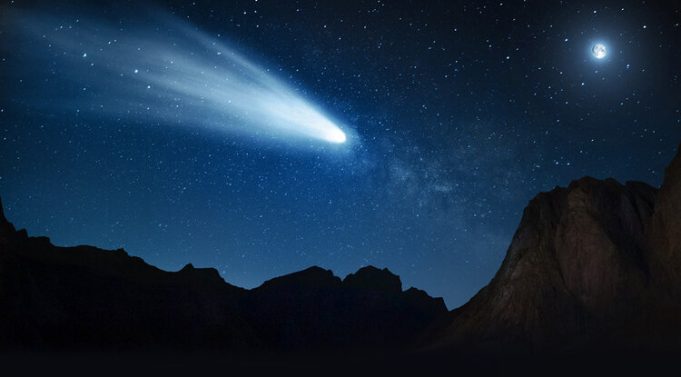
Comets are known to have a temper. As they swoop in from the outer edges of our solar system, these icy bodies begin spewing gas and dust as they venture closer to the sun. Their luminous outbursts can result...
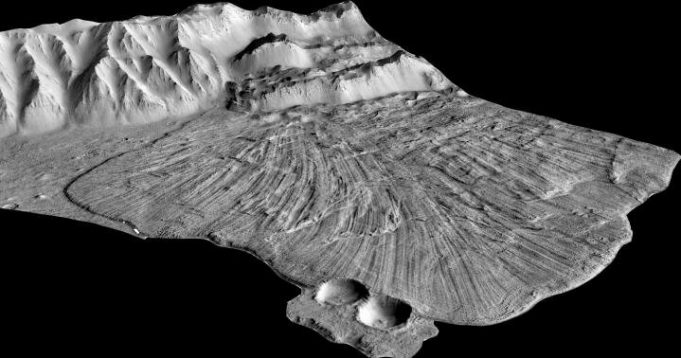
Detailed three-dimensional images of an extensive landslide on Mars, which spans an area more than 55 kilometres wide, have been analysed to understand how the unusually large and long ridges and furrows formed about 400 million years ago.
The findings,...

A new study outlines a method for detecting a speculative phenomenon that has long captured the imagination of sci-fi fans: wormholes, which form a passage between two separate regions of spacetime.
Such pathways could connect one area of our universe...
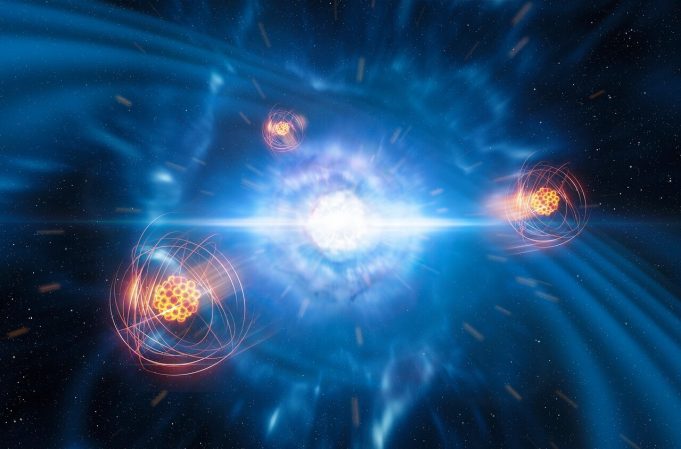
For the first time, a freshly made heavy element, strontium, has been detected in space, in the aftermath of a merger of two neutron stars. This finding was observed by ESO's X-shooter spectrograph on the Very Large Telescope (VLT)...

A group of astronomers led by University of California, Davis has obtained new data that suggest the universe is expanding more rapidly than predicted.
The study comes on the heels of a hot debate over just how fast the universe...
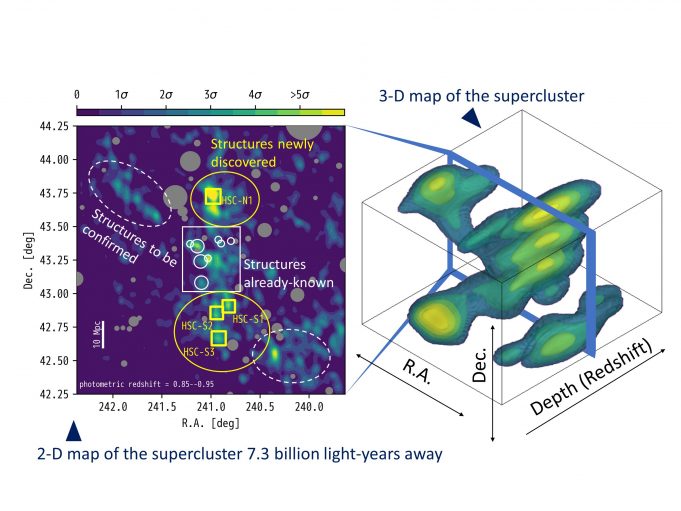
Using the Subaru Telescope and Gemini-North Telescope, a team of astronomers has revealed that the supercluster CL1604, a distant supercluster located about 7.3 billion light-years away, is a large-scale 3-D structure extending over about 160 million light-years in the...


