



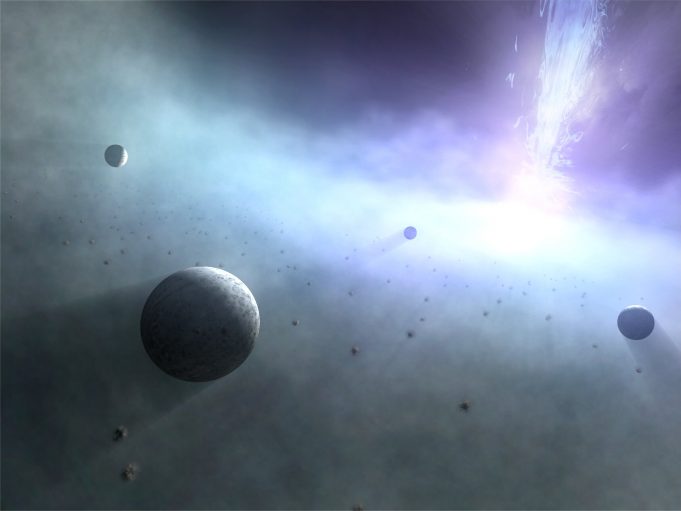
Theoreticians in two fields defied the received wisdom that planets only orbit stars like the sun. They proposed the possibility of thousands of planets around a supermassive black hole.
"With the right conditions, planets could be formed even in harsh environments, such as...
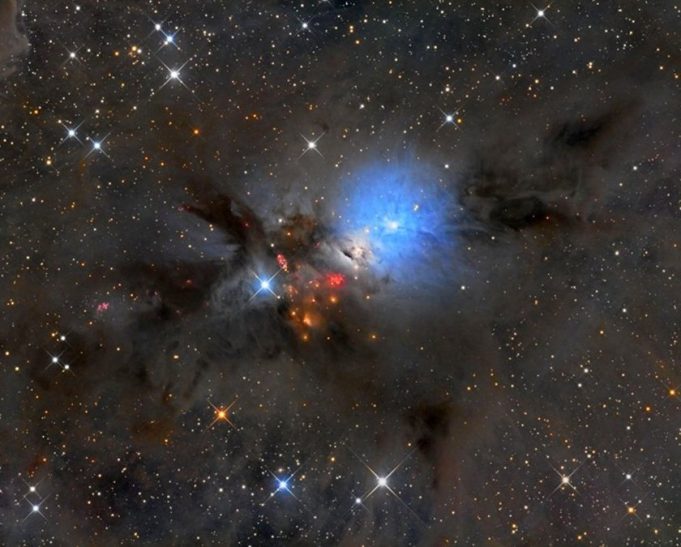
Over 200 molecules have been discovered in space, some (like Buckminsterfullerene) very complex with carbon atoms. Besides being intrinsically interesting, these molecules radiate away heat, helping giant clouds of interstellar material cool and contract to form new stars. Moreover,...
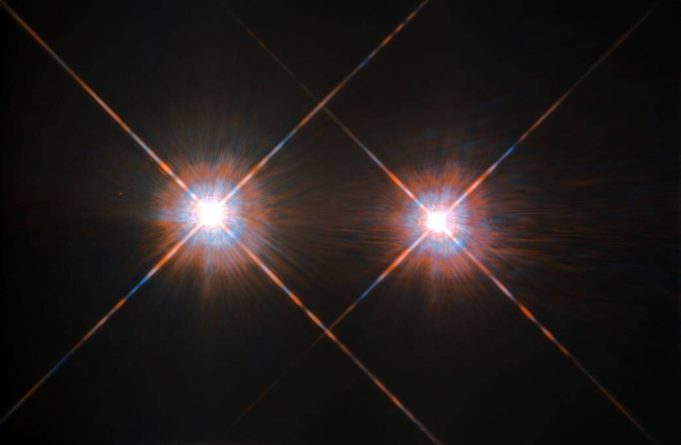
"They're out there," goes a saying about extraterrestrials. It would seem more likely to be true in light of a new study on planetary axis tilts.
Astrophysicists at the Georgia Institute of Technology modeled a theoretical twin of Earth into...
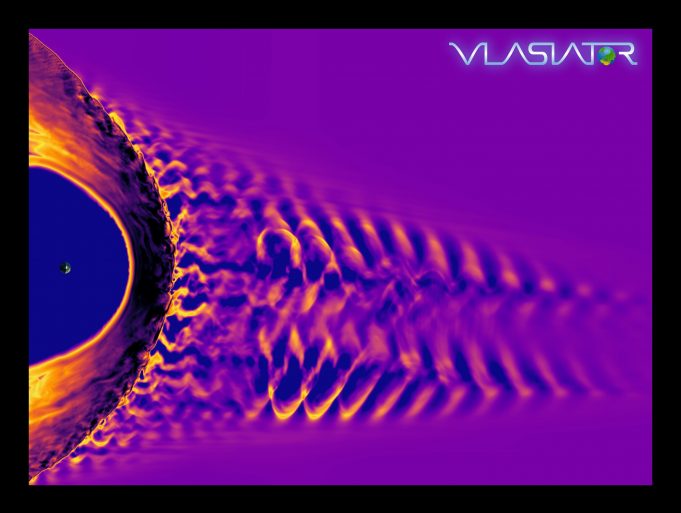
Data from ESA's Cluster mission has provided a recording of the eerie "song" that Earth sings when it is hit by a solar storm.
The song comes from waves that are generated in the Earth's magnetic field by the collision of the...
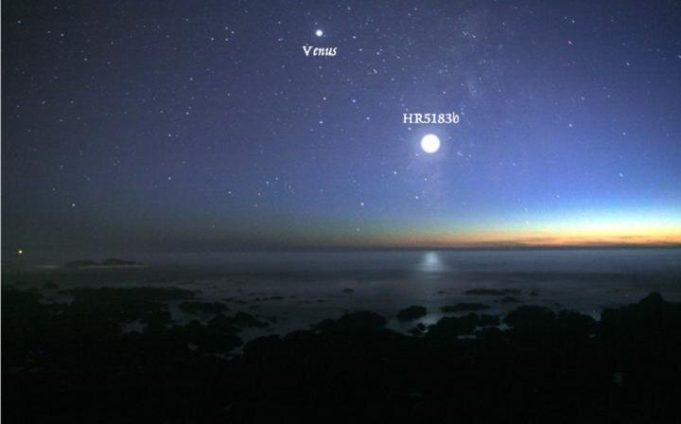
Contrary to previous thought, a gigantic planet in wild orbit does not preclude the presence of an Earth-like planet in the same solar system—or life on that planet.
What's more, the view from that Earth-like planet as its giant neighbor...
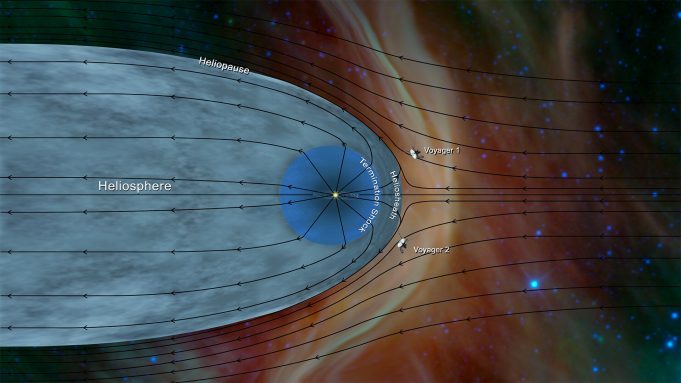
Voyager 1 has a companion in the realm of the stars.
Researchers at the University of Iowa report that the spacecraft Voyager 2 has entered the interstellar medium (ISM), the region of space outside the bubble-shaped boundary produced by wind streaming outward from the...
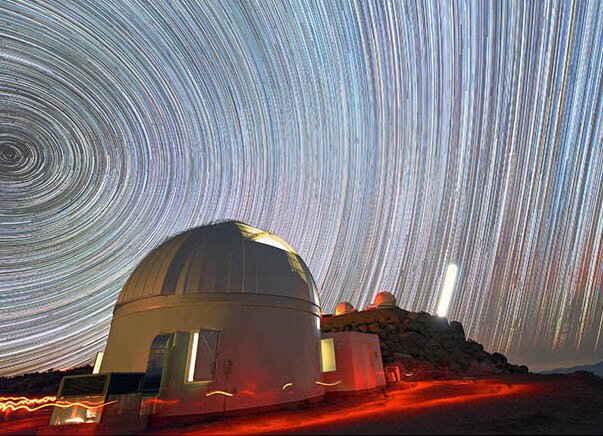
The path of a light beam is bent by the presence of mass, and a massive body can therefore act like a lens (a "gravitational lens") to distort the image of an object seen behind it. Scientists first confirmed...
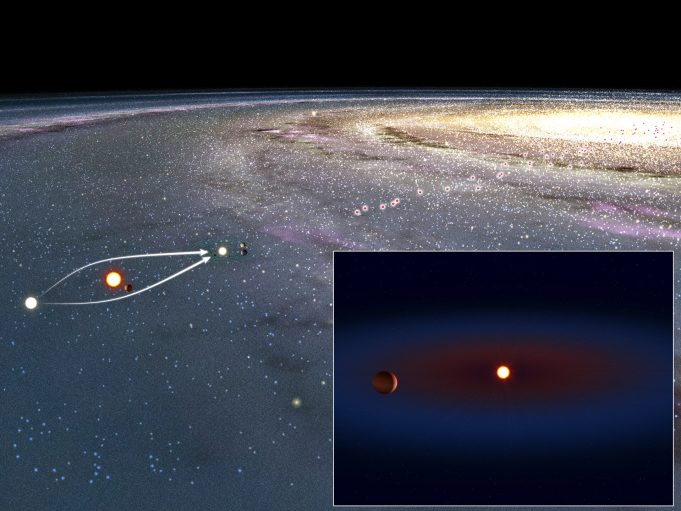
Researchers using telescopes around the world confirmed and characterized an exoplanet orbiting a nearby star through a rare phenomenon known as gravitational microlensing. The exoplanet has a mass similar to Neptune, but it orbits a star lighter (cooler) than...
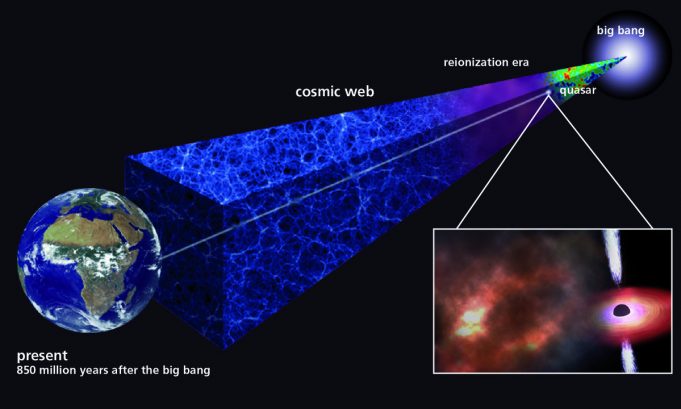
Astronomers led by Eduardo Bañados of the Max Planck Institute for Astronomy have discovered a gas cloud that contains information about an early phase of galaxy and star formation, merely 850 million years after the Big Bang. The cloud...

Exploring the influence of galactic winds from a distant galaxy called Makani, UC San Diego's Alison Coil, Rhodes College's David Rupke and a group of collaborators from around the world made a novel discovery. Published in Nature, their study's findings...
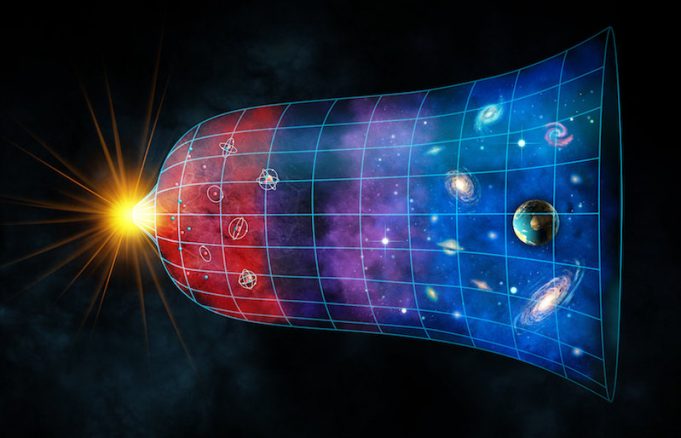
As the Big Bang theory goes, somewhere around 13.8 billion years ago the universe exploded into being, as an infinitely small, compact fireball of matter that cooled as it expanded, triggering reactions that cooked up the first stars and...


