



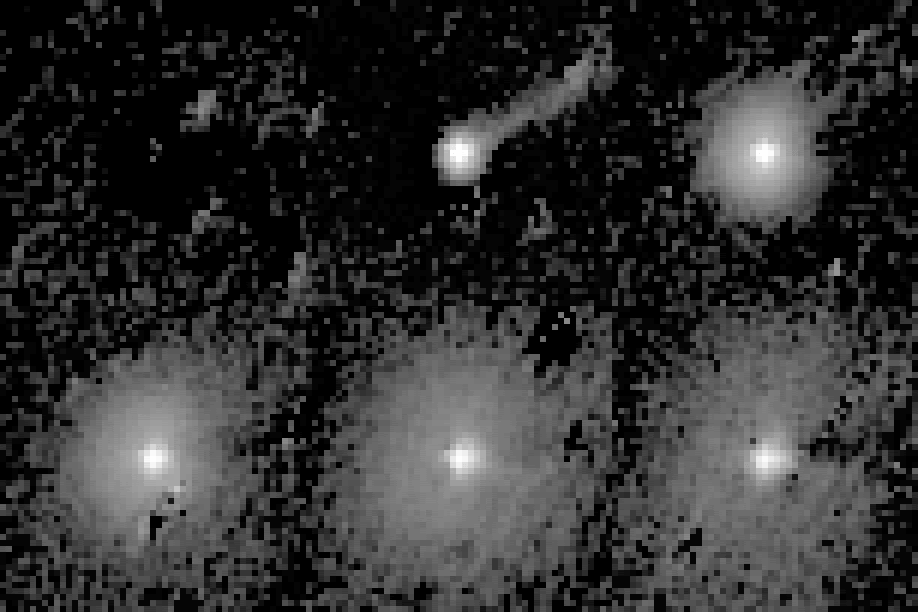
Using data from NASA's Transiting Exoplanet Survey Satellite (TESS), astronomers at the University of Maryland (UMD), in College Park, Maryland, have captured a clear start-to-finish image sequence of an explosive emission of dust, ice and gases during the close...
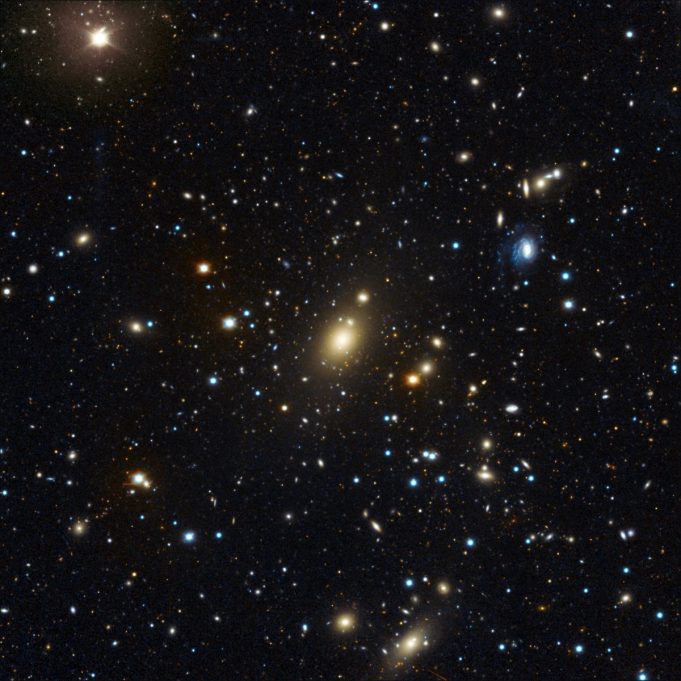
In space, black holes appear in different sizes and masses. The record is now held by a specimen in the Abell 85 cluster of galaxies, where an ultra-massive black hole with 40 billion times the mass of our sun...
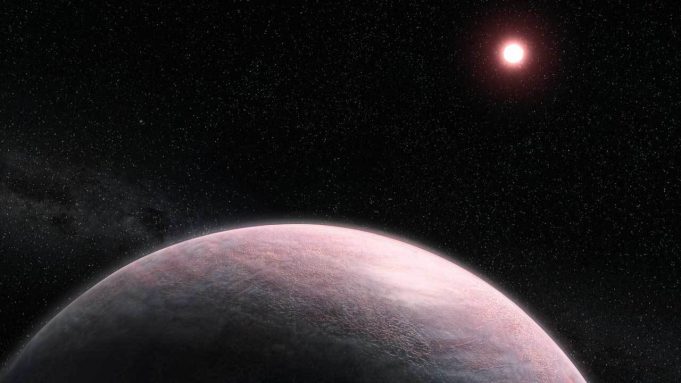
When NASA's James Webb Space Telescope launches in 2021, one of its most anticipated contributions to astronomy will be the study of exoplanets—planets orbiting distant stars. Among the most pressing questions in exoplanet science is: Can a small, rocky...
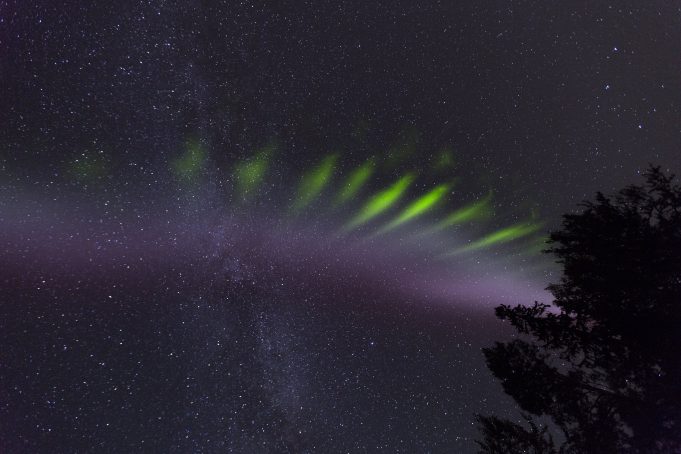
Strange ribbons of purple light that appeared in the sky—known as Steve—became the subject of debate in 2017, as their origins were unbeknown to scientists. Now, photographs of this remarkable phenomena have been studied to understand their exact position...
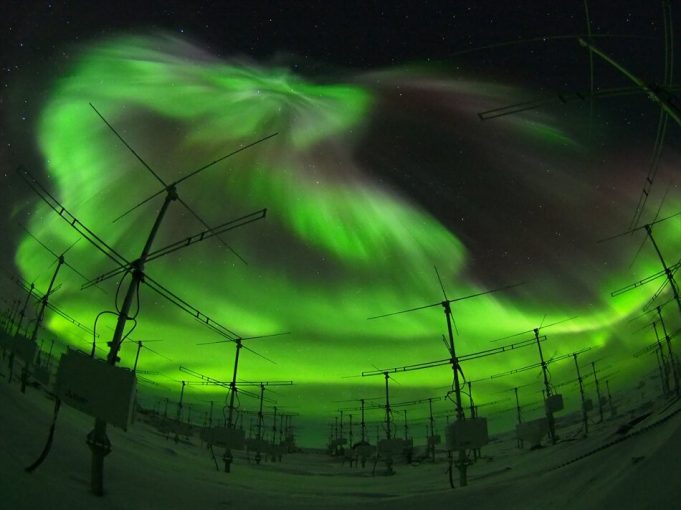
There's chaos in the night sky about 60 to 600 miles above Earth's surface. Called the ionosphere, this layer of Earth's atmosphere is blasted by solar radiation that breaks down the bonds of ions. Free electrons and heavy ions...
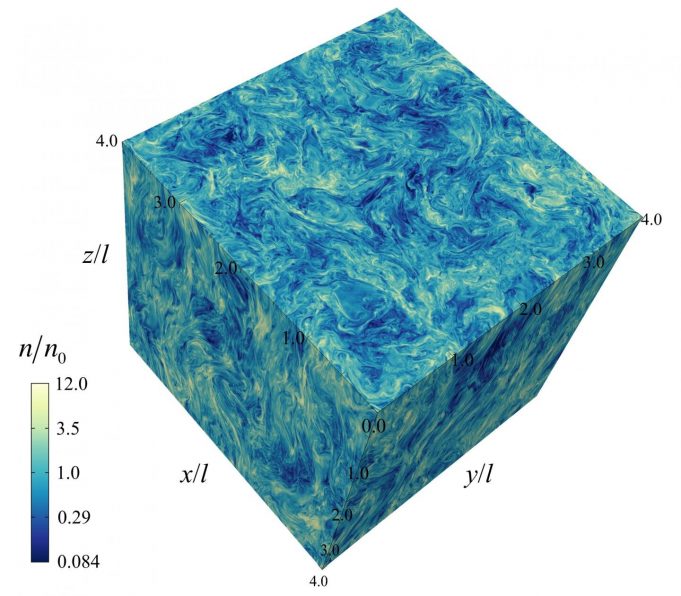
For decades, scientists have speculated about the origin of the electromagnetic radiation emitted from celestial regions that host black holes and neutron stars—the most mysterious objects in the universe.
Astrophysicists believe that this high-energy radiation—which makes neutron stars and black holes shine...

An international team headed by Professor LIU Jifeng of the National Astronomical Observatory of China of the Chinese Academy of Sciences (NAOC) spotted a stellar black hole with a mass 70 times greater than the sun. The monster black...

Bacteria, fungi, and viruses can enter our gut through the food we eat. Fortunately, the epithelial cells that line our intestines serve as a robust barrier to prevent these microorganisms from invading the rest of our bodies.
A research team...
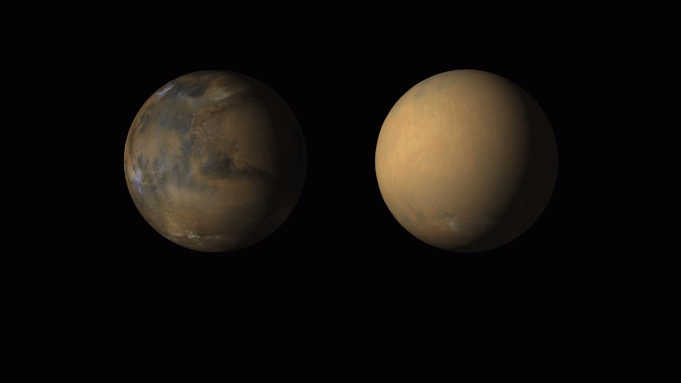
Dust storms are common on Mars. But every decade or so, something unpredictable happens: A series of runaway storms breaks out, covering the entire planet in a dusty haze.
Last year, a fleet of NASA spacecraft got a detailed look...
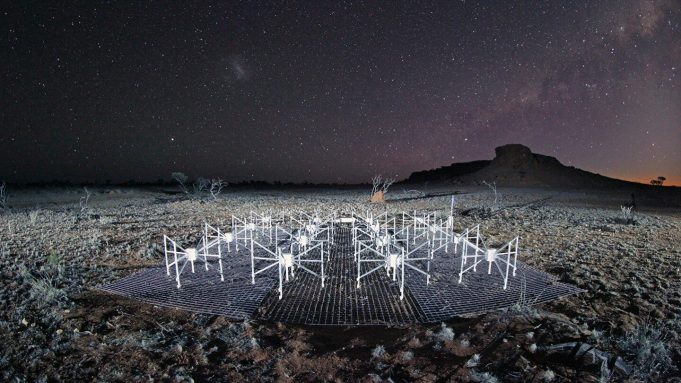
Around 12 billion years ago, the universe emerged from a great cosmic dark age as the first stars and galaxies lit up. With a new analysis of data collected by the Murchison Widefield Array (MWA) radio telescope, scientists are...
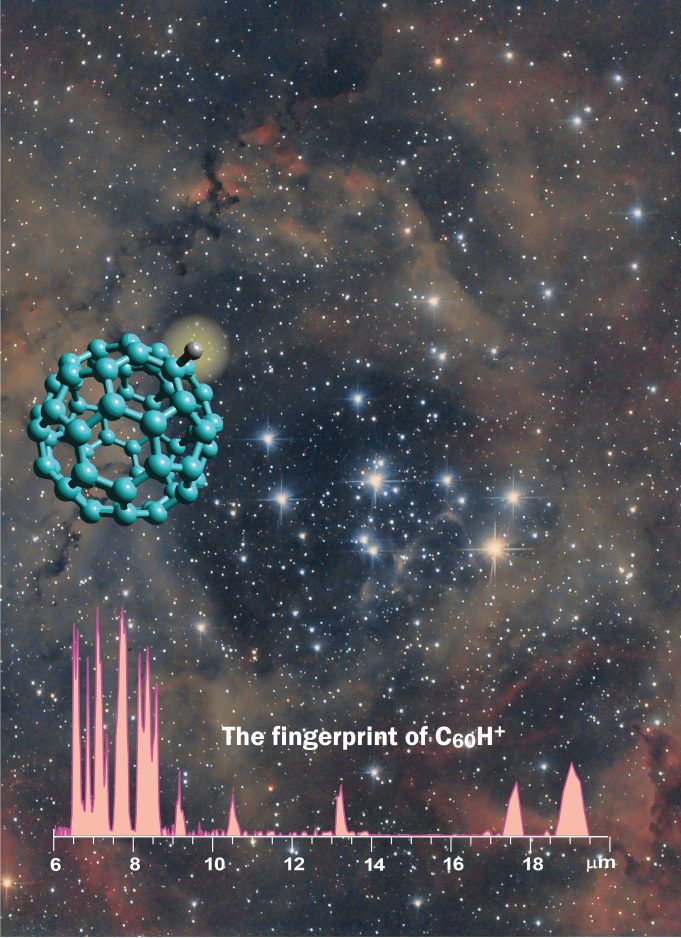
It is one of the most common forms of carbon in space: C60, a soccer ball-shaped carbon molecule, but one that has an extra proton attached to it. This is the conclusion of research carried out at Radboud University,...


