



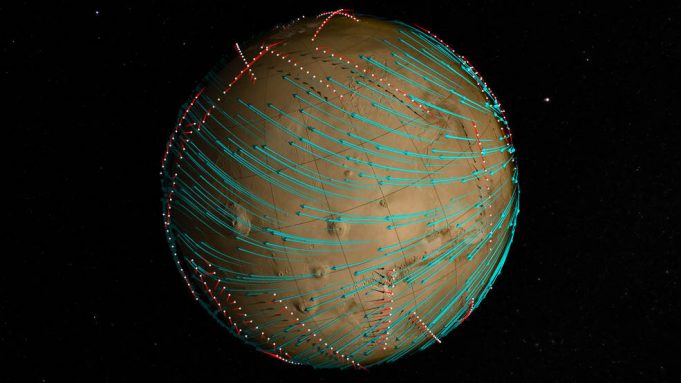
Today, a paper published in Science documents for the first time the global wind circulation patterns in the upper atmosphere of a planet, 120 to 300 kilometers above the surface. The findings are based on local observations, rather than indirect measurements,...
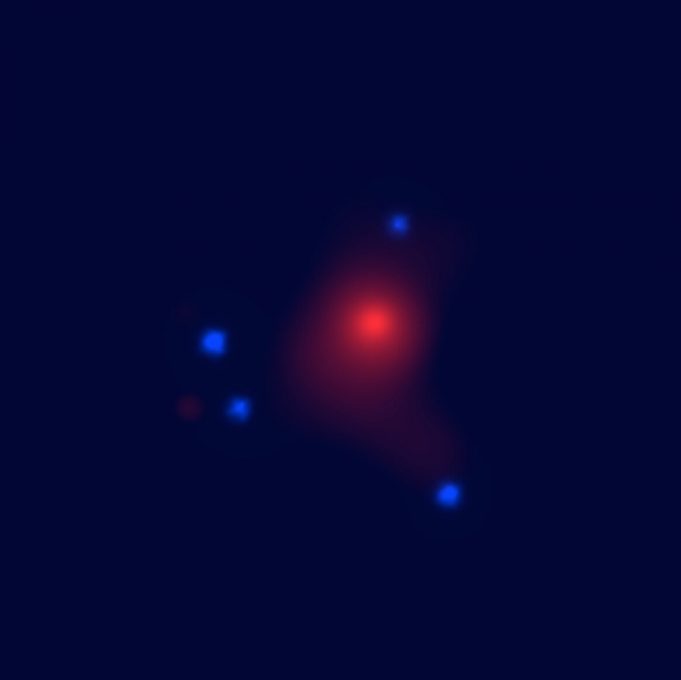
A University of Oklahoma research group is reporting the detection of extragalactic planet-mass objects in a second and third galaxy beyond the Milky Way after the first detection in 2018. With the existing observational resources, it is impossible to...
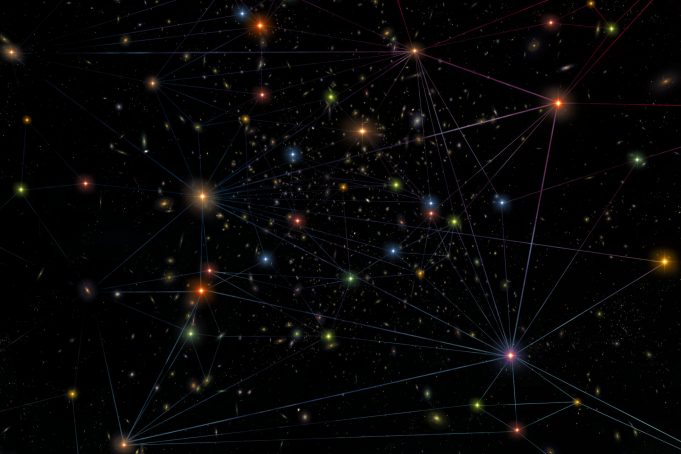
Supermassive black holes are the largest black holes, with masses that can exceed a billion Suns. Just this spring, the first-ever image of the supermassive black hole at the center of the Messier 87 galaxy was taken, and researchers...
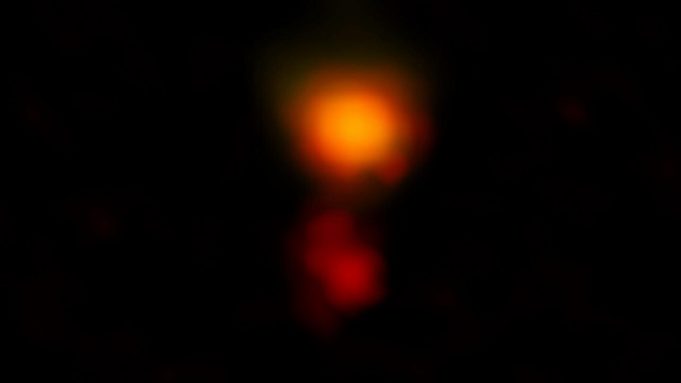
Astronomers using the Atacama Large Millimeter/submillimeter Array (ALMA) have spotted the light of a massive galaxy seen only 970 million years after the Big Bang. This galaxy, called MAMBO-9, is the most distant dusty star-forming galaxy that has ever...
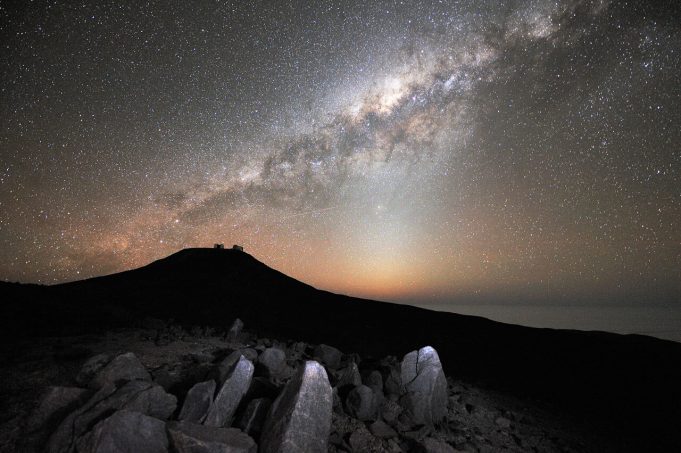
A new study on the kinematics and chemical composition of a sample of stars in the vicinity of the sun, led by Dr. Daniela Carollo, researcher of the Italian National Institute for Astrophysics, has revealed that the stars that...
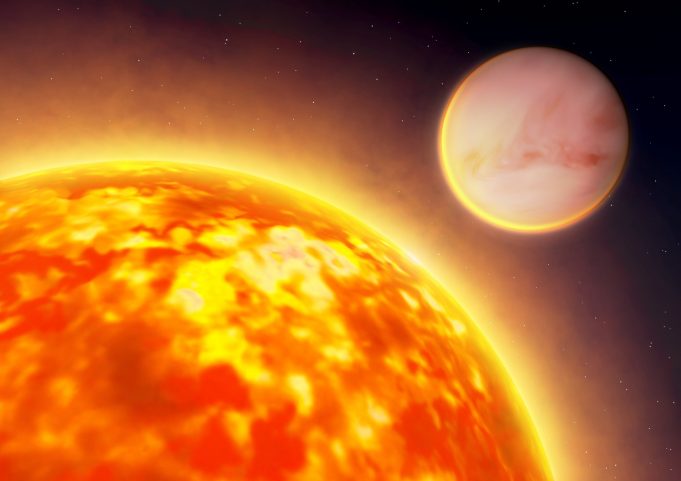
The most extensive survey of atmospheric chemical compositions of exoplanets to date has revealed trends that challenge current theories of planet formation and has implications for the search for water in the solar system and beyond.
A team of researchers,...

Scientists may have figured out how dust particles can stick together to form planets, according to a Rutgers co-authored study that may also help to improve industrial processes.
In homes, adhesion on contact can cause fine particles to form dust...
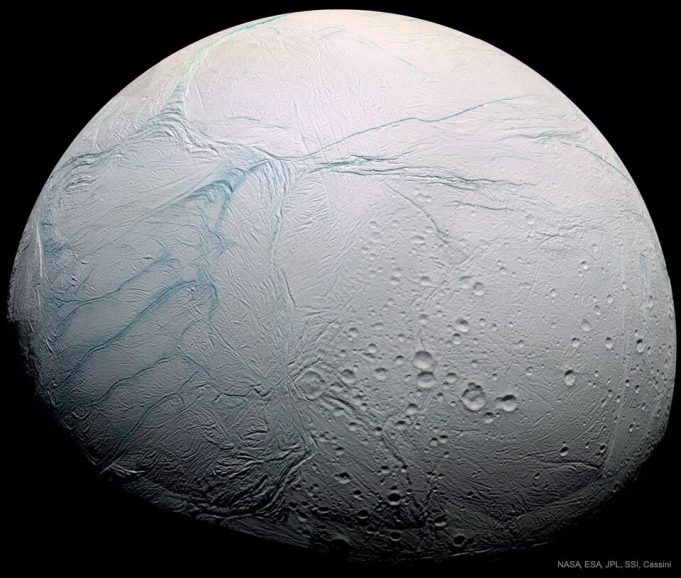
Saturn's icy moon Enceladus is of great interest to scientists due to its subsurface ocean, making it a prime target for those searching for life elsewhere. New research led by Carnegie's Doug Hemingway reveals the physics governing the fissures...
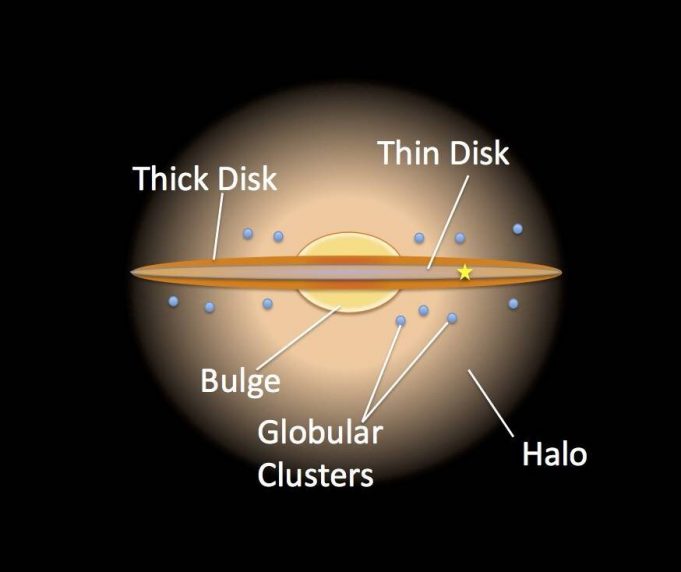
Data gathered by NASA's now defunct Kepler telescope provides a solution to an astronomical mystery.
Star-quakes recorded by NASA's Kepler space telescope have helped answer a long-standing question about the age of the "thick disc" of the Milky Way.
In a...
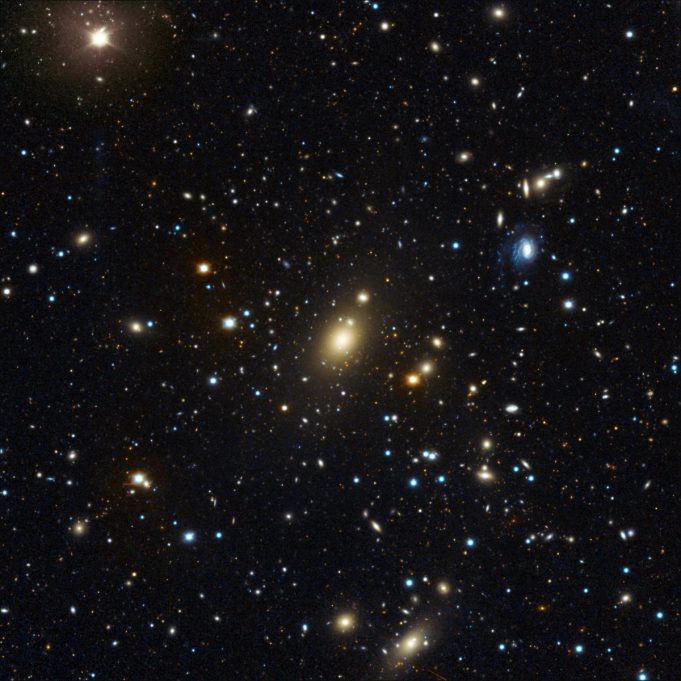
In space, black holes appear in different sizes and masses. The record is now held by a specimen in the Abell 85 cluster of galaxies, where an ultra-massive black hole with 40 billion times the mass of our sun...
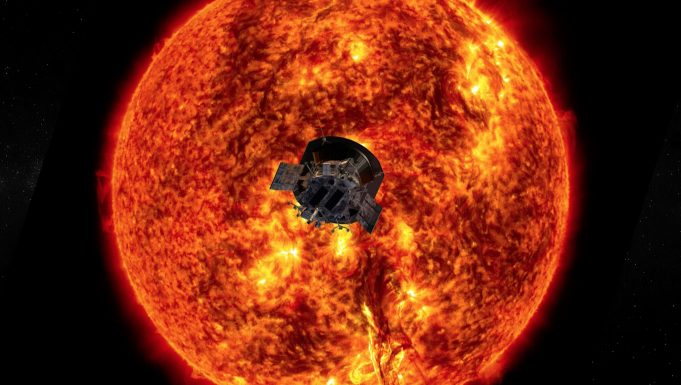
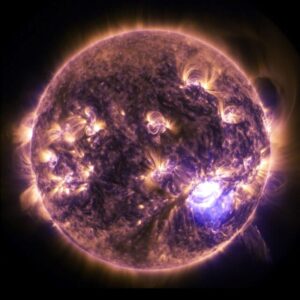
A year ago, NASA's Parker Solar Probe flew closer to the sun than any satellite in history, collecting a spectacular trove of data from the very edge of the sun's million-degree corona.
Now, that data has allowed solar physicists to...


