





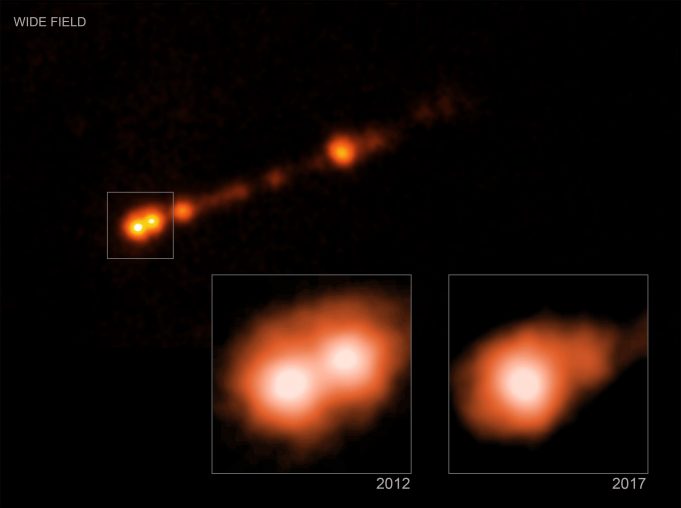
The Event Horizon Telescope Collaboration released the first image of a black hole with observations of the massive, dark object at the center of Messier 87, or M87, last April. This black hole has a mass of about 6.5...
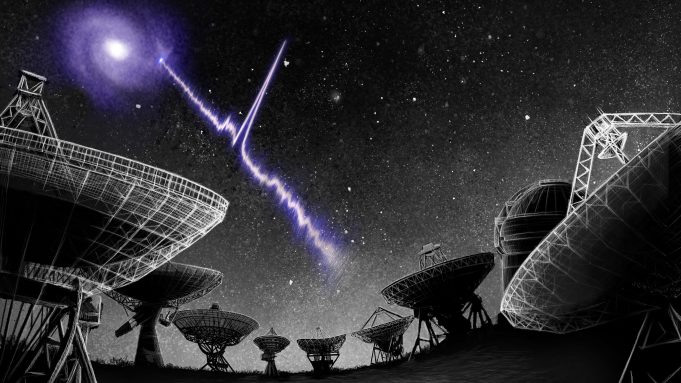
For more than a decade, astronomers across the globe have wrestled with the perplexities of fast radio bursts—intense, unexplained cosmic flashes of energy, light years away, that pop for mere milliseconds.
Despite the hundreds of records of these enigmatic sources,...
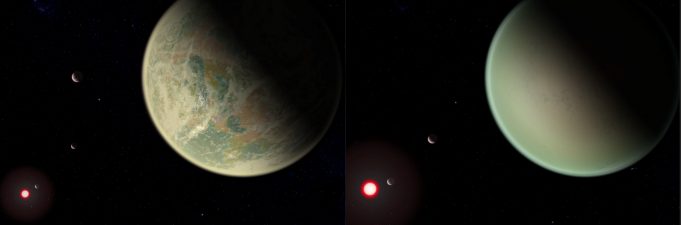
Scientists have developed a new method for detecting oxygen in exoplanet atmospheres that may accelerate the search for life.
One possible indication of life, or biosignature, is the presence of oxygen in an exoplanet's atmosphere. Oxygen is generated by life on...
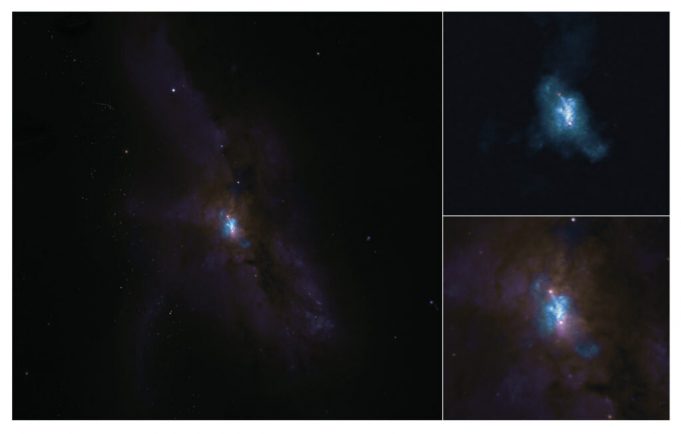
An international team of astronomers used the Atacama Large Millimeter/submillimeter Array (ALMA) to create the most detailed image yet of the gas surrounding two supermassive black holes in a merging galaxy.
400 million light-years away from Earth, in the constellation...
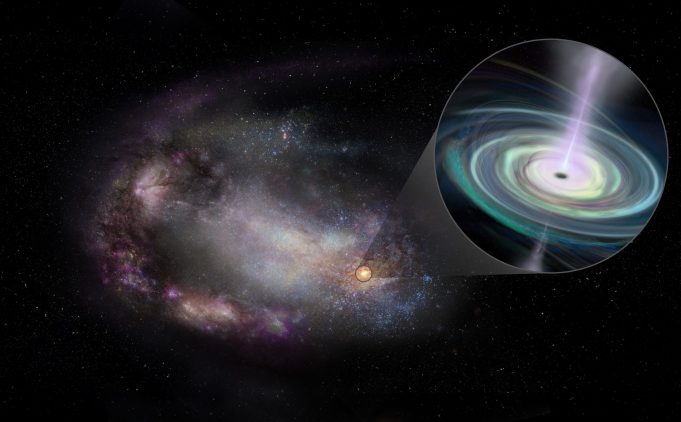
Astronomers seeking to learn about the mechanisms that formed massive black holes in the early history of the Universe have gained important new clues with the discovery of 13 such black holes in dwarf galaxies less than a billion...

A conventional compass would be of little use on the moon, which today lacks a global magnetic field.
But the moon did produce a magnetic field billions of years ago, and it was likely even stronger than the Earth's field...
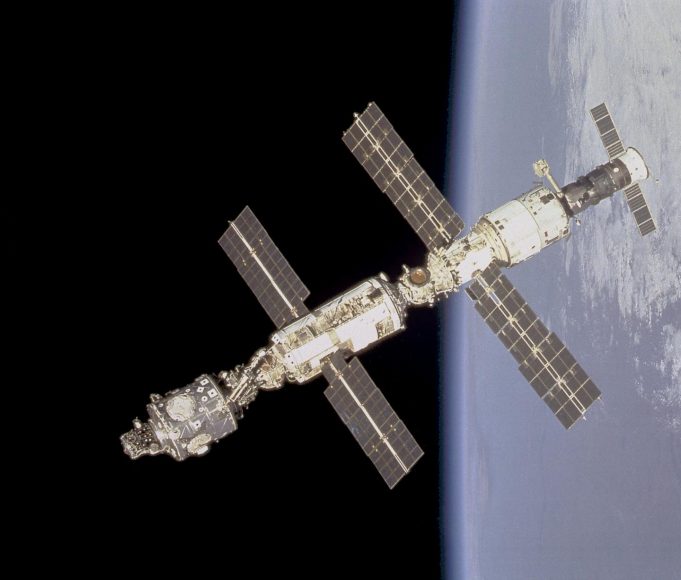
Serena Auñón-Chancellor, M.D., M.P.H., Clinical Associate Professor of Medicine at LSU Health New Orleans School of Medicine's branch campus in Baton Rouge, is the lead author of a paper describing a previously unrecognized risk of spaceflight discovered during a...
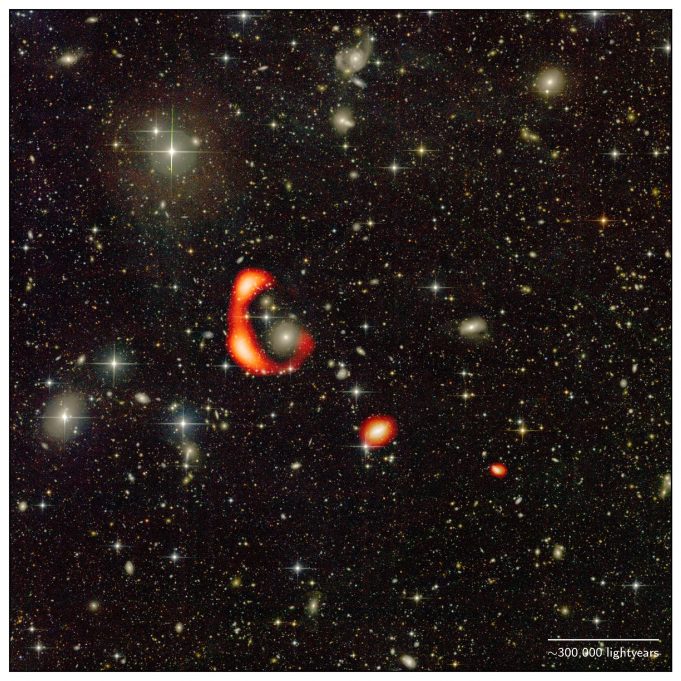
A team of astronomers at the National Centre for Radio Astrophysics (NCRA) in Pune, India have discovered a mysterious ring of hydrogen gas around a distant galaxy, using the Giant Metrewave Radio Telescope (GMRT). The ring is much bigger...
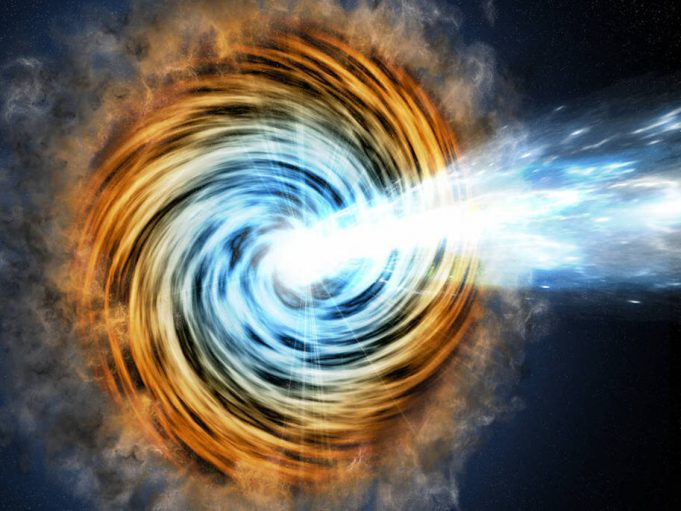
Active galactic nuclei (AGN) are supermassive black holes at the centers of galaxies that are accreting material. These AGN emit jets of charged particles that move at speeds close to that of light, transporting huge amounts of energy away...
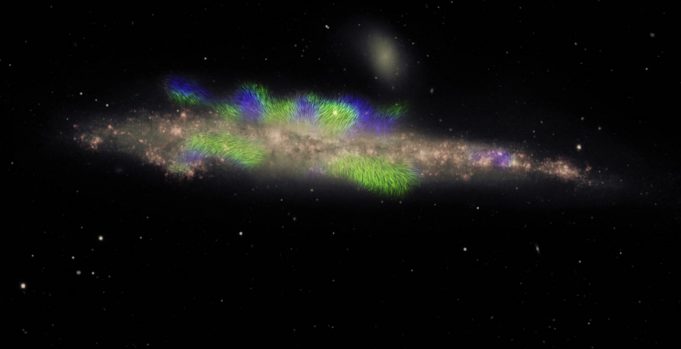
Using the National Science Foundation's Karl G. Jansky Very Large Array radio telescope, a team of astronomers has captured for the first time an image of large-scale, coherent, magnetic fields in the halo of a faraway spiral galaxy, confirming...
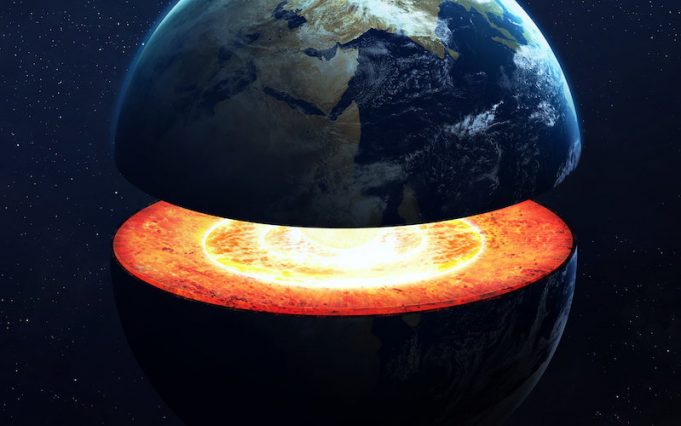
The Earth's inner core is hot, under immense pressure and snow-capped, according to new research that could help scientists better understand forces that affect the entire planet.
The snow is made of tiny particles of iron -- much heavier than...


