


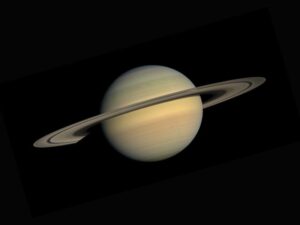

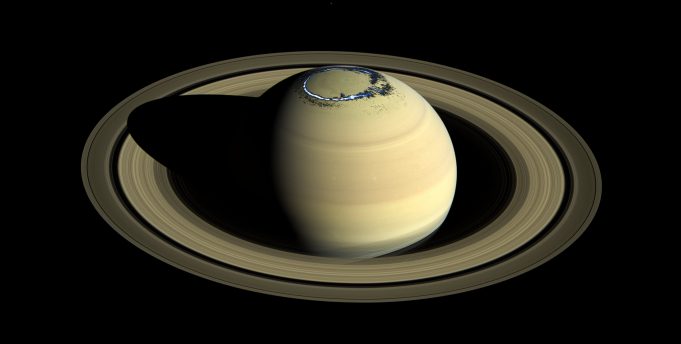
Researchers are busy analysing some of the final data sent back from the Cassini spacecraft which has been in orbit around Saturn for more than 13 years until the end of its mission in September 2017.
For the last leg...

A "cold Neptune" and two potentially habitable worlds are part of a cache of five newly discovered exoplanets and eight exoplanet candidates found orbiting nearby red dwarf stars, which are reported in The Astrophysical Journal Supplement Series by a team led...
A new study by a group of researchers at the University of Birmingham has found that collisions of supermassive black holes may be simultaneously observable in both gravitational waves and X-rays at the beginning of the next decade.
The European...
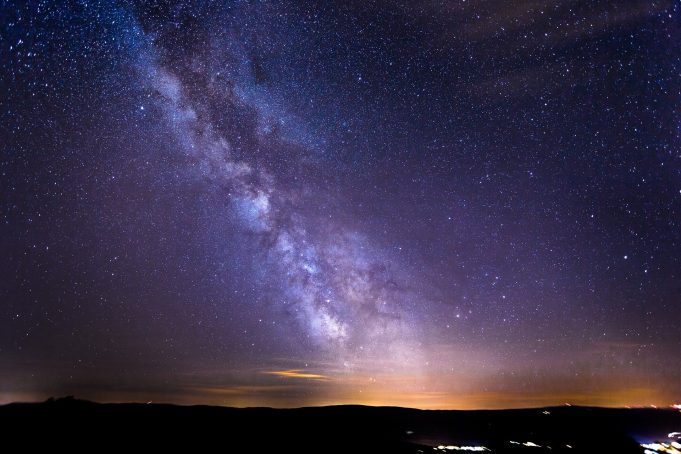
A single bright star in the constellation of Indus, visible from the southern hemisphere, has revealed new insights on an ancient collision that our galaxy the Milky Way underwent with another smaller galaxy called Gaia-Enceladus early in its history.
An...
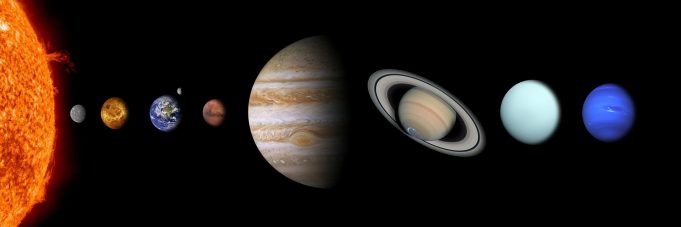
Scientists, including those from the University of Colorado Boulder, have finally scaled the solar system's equivalent of the Rocky Mountain range.
In a study published today in Nature Astronomy, researchers from the United States and Japan unveil the possible origins of...
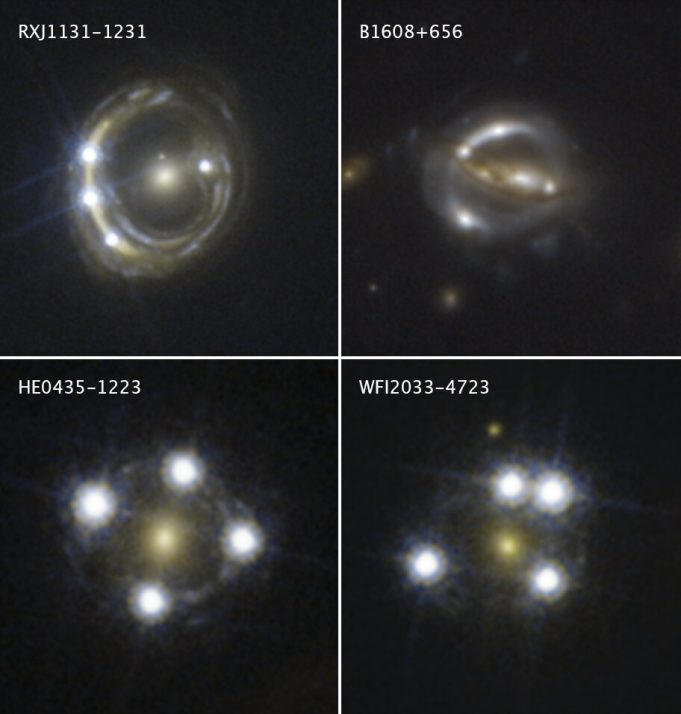
A team of astronomers using NASA's Hubble Space Telescope has measured the universe's expansion rate using a technique that is completely independent of any previous method.
Knowing the precise value for how fast the universe expands is important for determining...
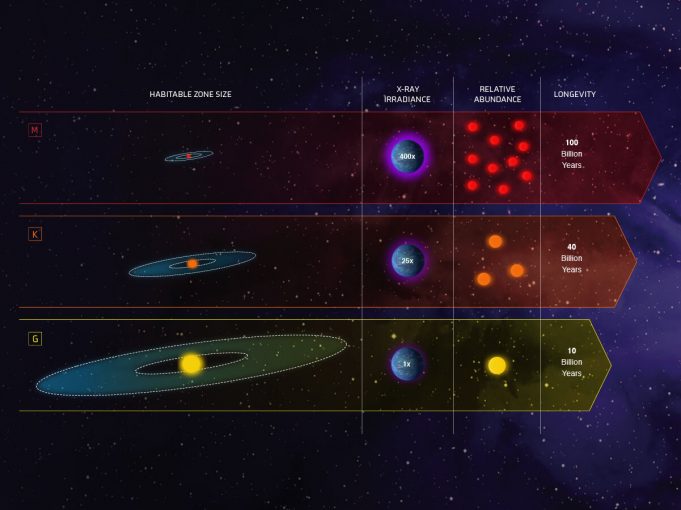
To date astronomers have discovered over 4,000 planets orbiting other stars. Statistically, there should be over 100 billion planets in our Milky Way galaxy. They come in a wide range of sizes and characteristics, largely unimagined before exoplanets were...
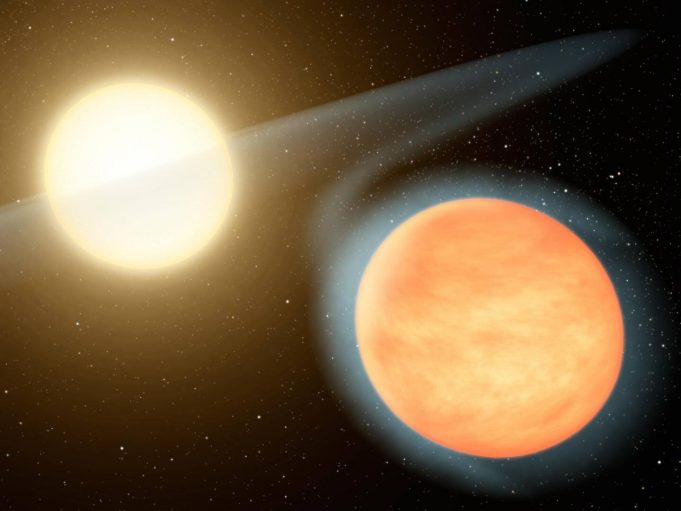
Earth is doomed—but not for 5 billion years. Our planet will be roasted as our sun expands and becomes a red giant, but the exoplanet WASP-12b, located 600 light-years away in the constellation Auriga, has less than a thousandth...
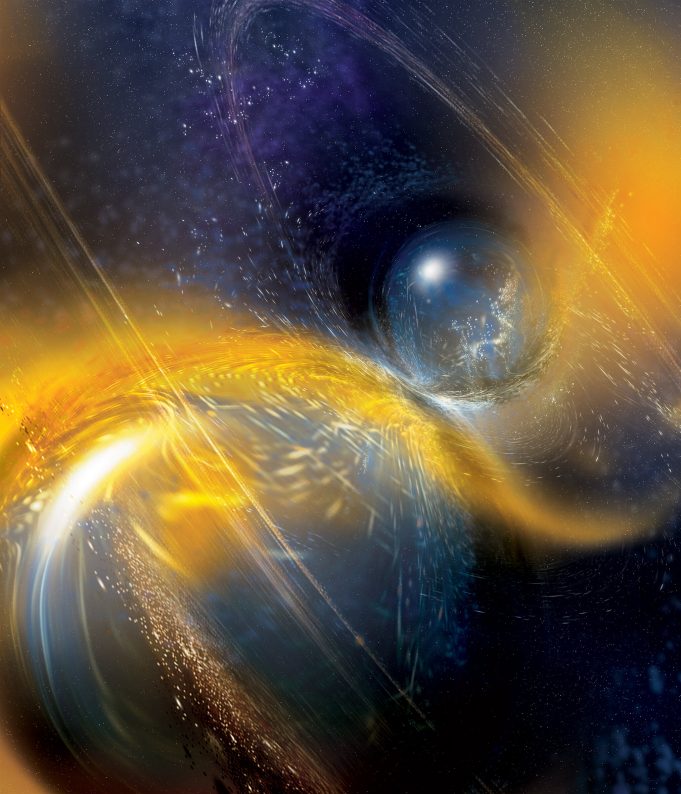
On April 25, 2019, the LIGO Livingston Observatory picked up what appeared to be gravitational ripples from a collision of two neutron stars. LIGO Livingston is part of a gravitational-wave network that includes LIGO (the Laser Interferometer Gravitational-wave Observatory),...
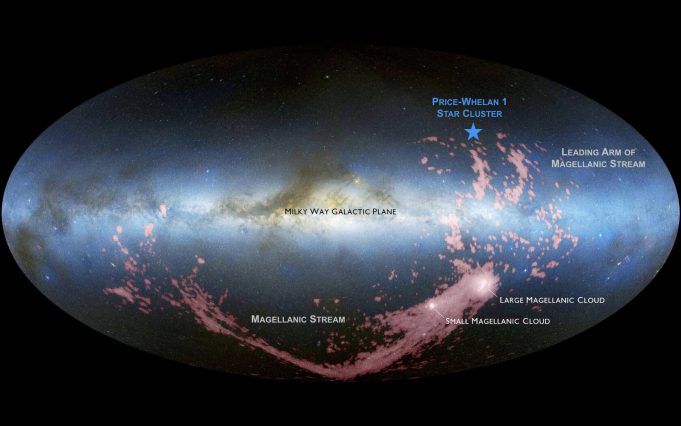
The outskirts of the Milky Way are home to the galaxy's oldest stars. But astronomers have spotted something unexpected in this celestial retirement community: a flock of young stars.
More surprising still, spectral analysis suggests that the infant stars have an extragalactic...
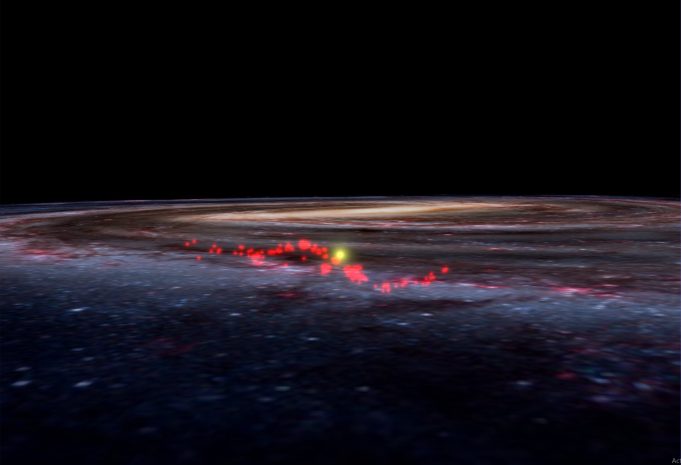
Astronomers at Harvard University have discovered a monolithic, wave-shaped gaseous structure—the largest ever seen in our galaxy—made up of interconnected stellar nurseries. Dubbed the "Radcliffe wave" in honor of the collaboration's home base, the Radcliffe Institute for Advanced Study,...


