





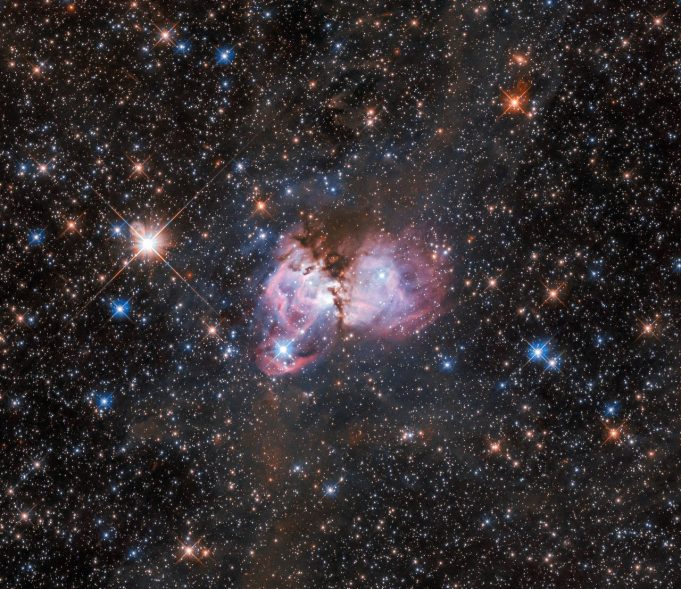
This scene of stellar creation, captured by the NASA/ESA Hubble Space Telescope, sits near the outskirts of the famous Tarantula Nebula. This cloud of gas and dust, as well as the many young and massive stars surrounding it, is...
Scientists from the University of Sheffield have discovered a pulsating ancient star in a double star system, which will allow them to access important information on the history of how stars like our Sun evolve and eventually die.
The discovery...
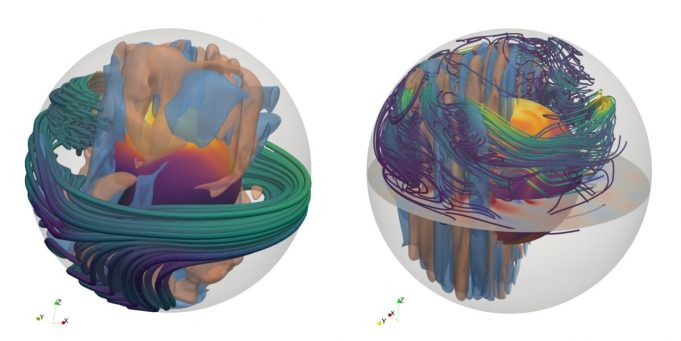
Magnetars are neutron stars endowed with the strongest magnetic fields observed in the universe, but their origin remains controversial. In a study published in Science Advances, a team of scientists from CEA, Saclay, the Max Planck Institute for Astrophysics (MPA),...

Researchers from the Max Planck Institute for Gravitational Physics (Albert Einstein Institute; AEI) in Hannover together with international colleagues have published their second Open Gravitational-wave Catalog (2-OGC). They used improved search methods to dig deeper into publicly available data...
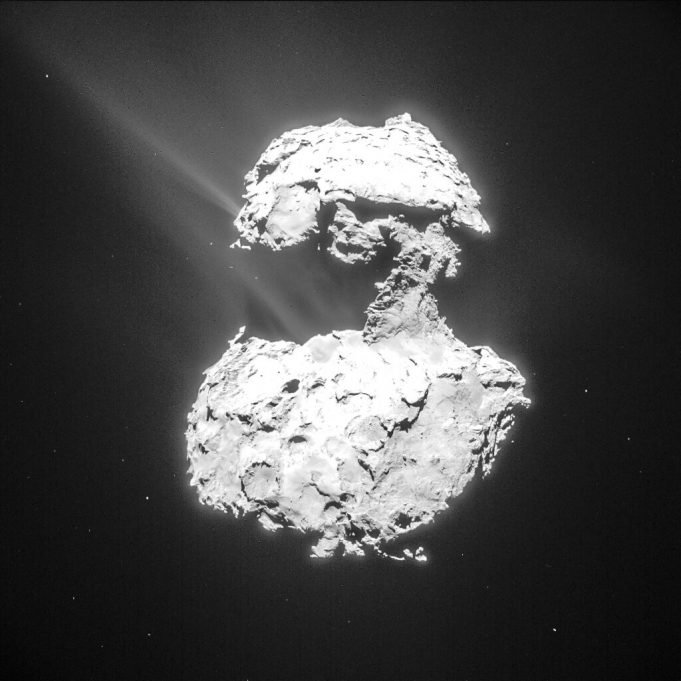
One of the basic building blocks of life is nitrogen. An international consortium was able to detect ammonium salt containing nitrogen on the cometary surface of Chury thanks to a method using analogs for comet material. The method on...
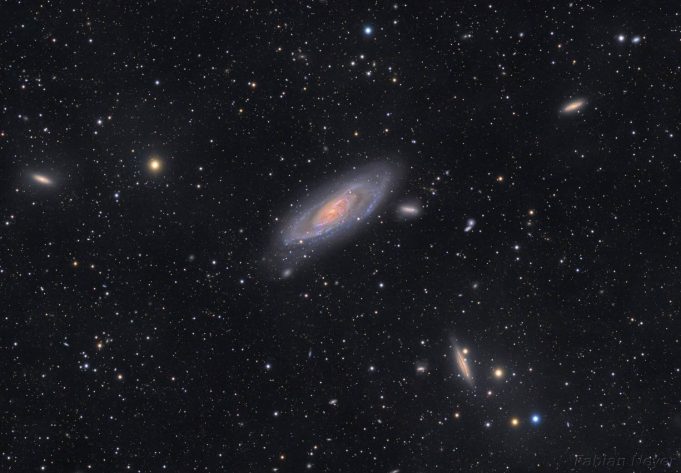
The Earth, solar system, the entire Milky Way and the few thousand galaxies closest to us move in a vast "bubble" that is 250 million light years in diameter, where the average density of matter is half as high...
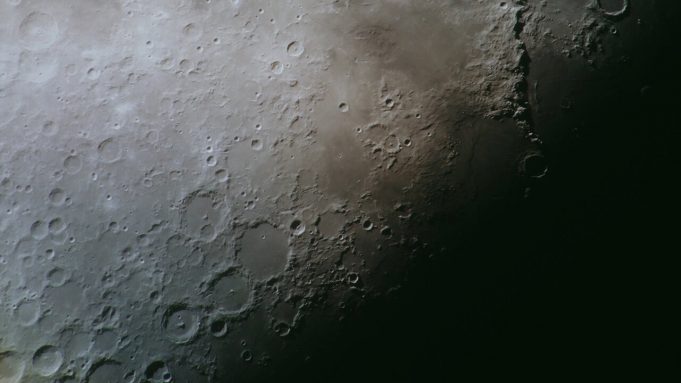
Scientists at The University of New Mexico have found that the Earth and Moon have distinct oxygen compositions and are not identical in oxygen as previously thought according to a new study released today in Nature Geoscience.
The paper, titled Distinct oxygen isotope...
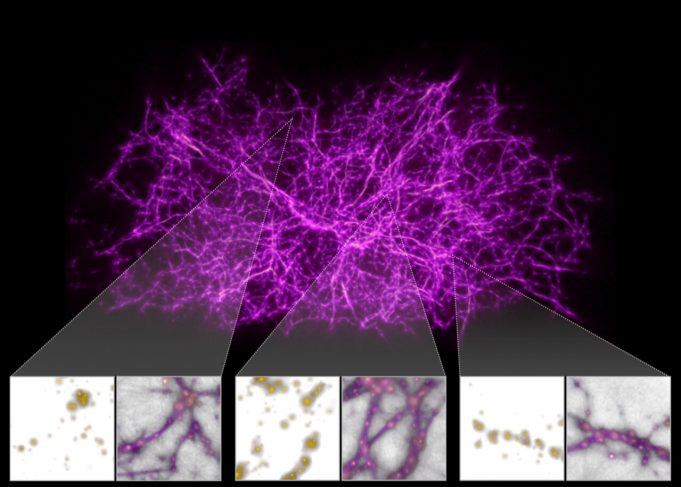
A computational approach inspired by the growth patterns of a bright yellow slime mold has enabled a team of astronomers and computer scientists at UC Santa Cruz to trace the filaments of the cosmic web that connects galaxies throughout...
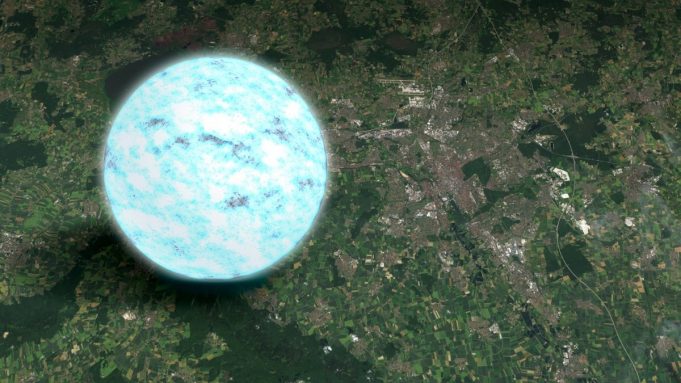
An international research team led by members of the Max Planck Institute for Gravitational Physics (Albert Einstein Institute; AEI) has obtained new measurements of how big neutron stars are. To do so, they combined a general first-principles description of...
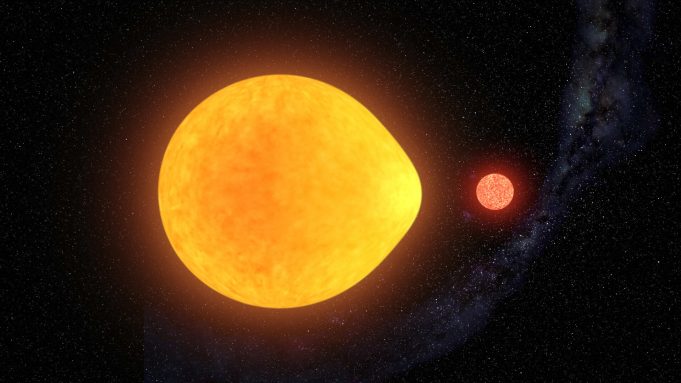
A star that pulsates on just one side has been discovered in the Milky Way about 1500 light years from Earth. It is the first of its kind to be found and scientists expect to find many more similar...
Although it may have a difficult designation to remember, PSO J030947.49+271757.31, the most distant blazar observed to date, reveals important details about ancient black holes and places tight constraints on theories of the evolution of the universe. Its light...


