





Research by the University of Liverpool has revealed that strange behaviour of the magnetic field in the South Atlantic region existed as far back as eight to 11 million years ago, suggesting that today's South Atlantic Anomaly is a...
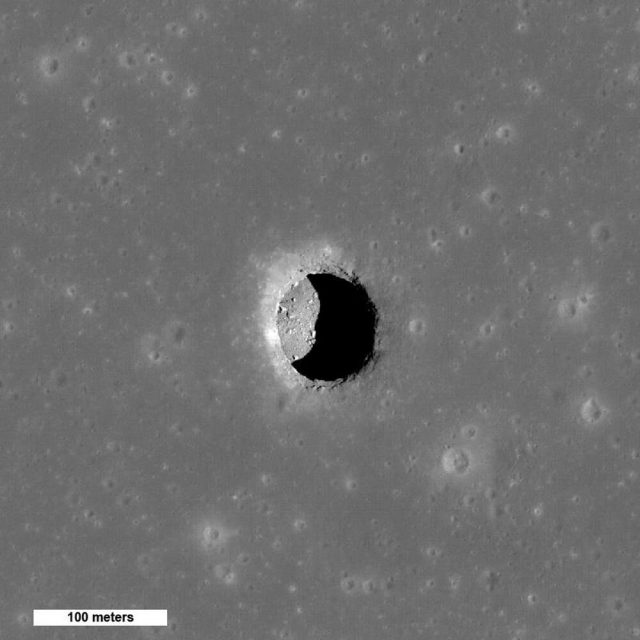
When magma comes out of the Earth onto the surface, it flows as lava. Those lava flows are fascinating to watch, and they leave behind some unique landforms and rocks. But a lot of what's fascinating about these flows...

The giant impacts that dominate late stages of planet formation have a wide range of consequences for young planets and their atmospheres, according to new research.
Research led by Durham University and involving the University of Glasgow, both UK, has...
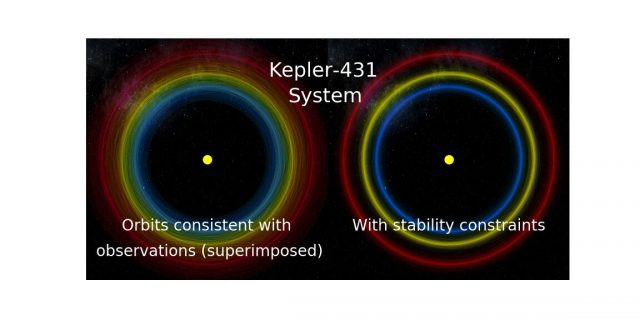
Why don't planets collide more often? How do planetary systems—like our solar system or multi-planet systems around other stars—organize themselves? Of all of the possible ways planets could orbit, how many configurations will remain stable over the billions of...

An exploding white dwarf star blasted itself out of its orbit with another star in a "partial supernova" and is now hurtling across our galaxy, according to a new study from the University of Warwick.
It opens up the possibility...

For the past decade, an international team of astronomers, led in part by Brent Tully at the University of Hawaiʻi Institute for Astronomy, has been mapping the distribution of galaxies around the Milky Way. They have discovered an immense...

The moon formed a little later than previously assumed. When a Mars-sized protoplanet was destroyed in a collision with the young Earth, a new body was created from the debris ejected during this collision, which became the moon. Planetary...
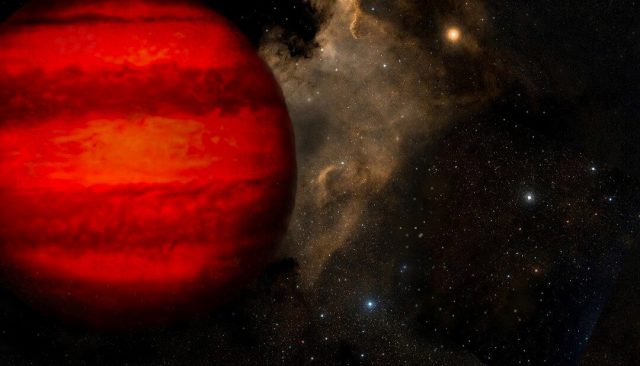
With the help of citizen scientists, astronomers have discovered two highly unusual brown dwarfs, balls of gas that are not massive enough to power themselves the way stars do.
Participants in the NASA-funded Backyard Worlds: Planet 9 project helped lead scientists to...

In a paper published in the Astrophysical Journal, a team led by researchers at École Polytechnique have paved the way to unraveling the mystery as to why many supernova remnants that we observe from Earth are axisymmetric (elongated along one...

Scientists at Harvard University and the Black Hole Initiative (BHI) have developed a new method to find black holes in the outer solar system, and along with it, determine once-and-for-all the true nature of the hypothesized Planet Nine. The...

A new study released today makes a compelling case for the development of "NEMO"—a new observatory in Australia that could deliver on some of the most exciting gravitational-wave science next-generation detectors have to offer, but at a fraction of...


