


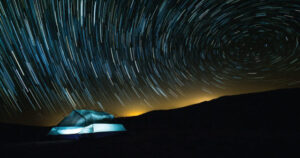
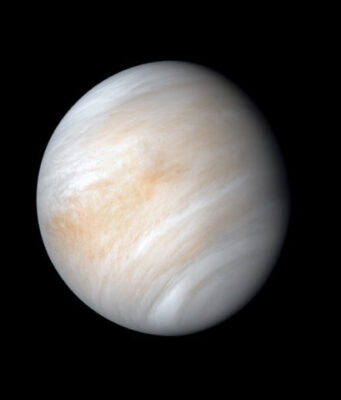

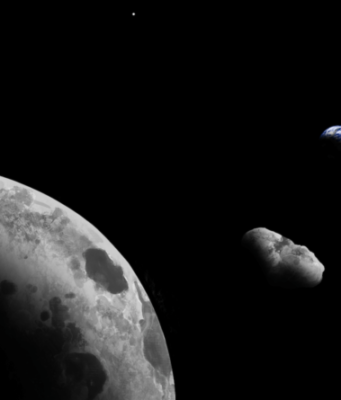

While Einstein's theory of general relativity can explain a large array of fascinating astrophysical and cosmological phenomena, some aspects of the properties of the universe at the largest-scales remain a mystery. A new study using loop quantum cosmology—a theory...
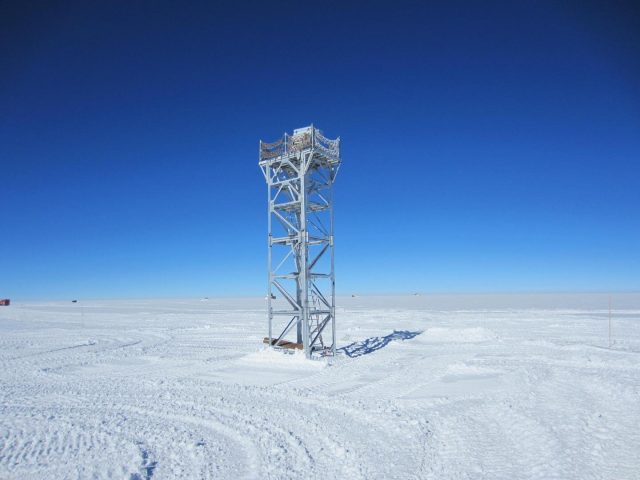
au, could offer the clearest view on Earth of the stars at night, according to new research by an international team from China, Australia and the University of British Columbia (UBC). The challenge? The location is one of the...

A team of astronomers including Carnegie's Ting Li and Alexander Ji discovered a stellar stream composed of the remnants of an ancient globular cluster that was torn apart by the Milky Way's gravity 2 billion years ago, when Earth's...

A global collaboration of telescopes including ESA's Integral high-energy space observatory has detected a unique mix of radiation bursting from a dead star in our galaxy—something that has never been seen before in this type of star, and may...

Using known distances of 50 galaxies from Earth to refine calculations in Hubble's constant, a research team led by a University of Oregon astronomer estimates the age of the universe at 12.6 billion years.
Approaches to date the Big Bang,...

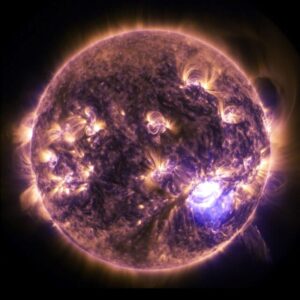
In a study published in Nature Astronomy, an international team of researchers has presented a new, detailed look inside the "central engine" of a large solar flare accompanied by a powerful eruption first captured on Sept. 10, 2017 by the...

By reviving a technique capable of combining specialized gamma-ray telescopes to one giant virtual instrument, scientists have measured the diameters of individual stars hundreds of light-years away. The team used the four VERITAS telescopes (Very Energetic Radiation Imaging Telescope...

The European Southern Observatory's Very Large Telescope (ESO's VLT) has taken the first ever image of a young, sun-like star accompanied by two giant exoplanets. Images of systems with multiple exoplanets are extremely rare, and—until now—astronomers had never directly...

Spiral galaxies such as our Milky Way can have sprawling magnetic fields. There are various theories about their formation, but so far the process is not well understood. An international research team has now analyzed the magnetic field of...

A research team led by Osaka University investigated the formation ages of 59 lunar craters with a diameter of approximately 20 km using the Terrain Camera (TC) onboard the lunar orbiter spacecraft Kaguya.
Kaguya (formerly SELENE, for SELenological and ENgineering...

The rediscovery of a lost planet could pave the way for the detection of a world within the habitable "Goldilocks zone" in a distant solar system.
The planet, the size and mass of Saturn with an orbit of thirty-five days,...


