



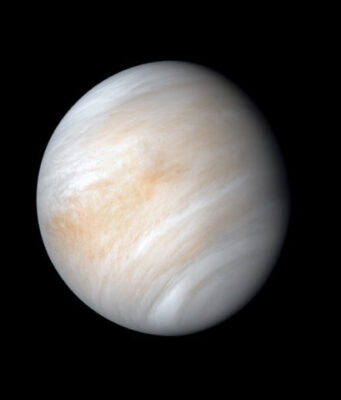

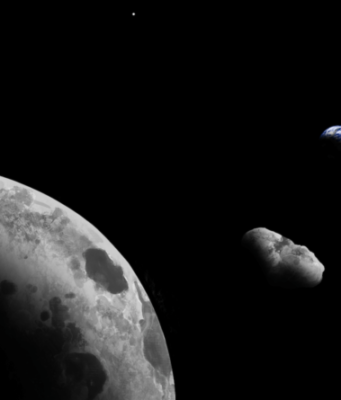

Astronomers can go their whole career without finding a new object in the sky. But for Lina Necib, a postdoctoral scholar in theoretical physics at Caltech, the discovery of a cluster of stars in the Milky Way, but not...
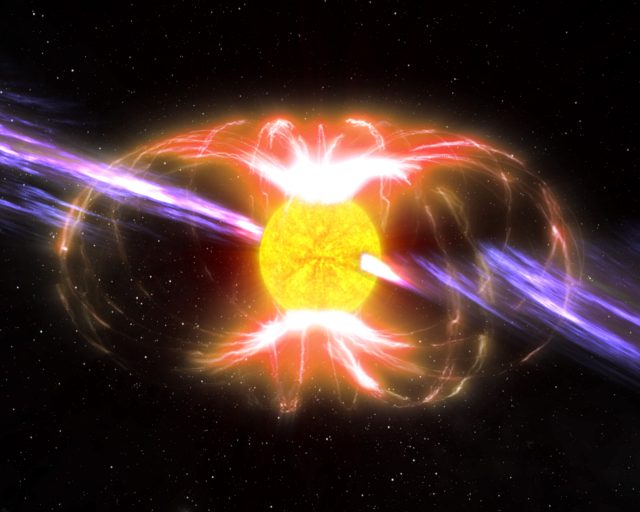
On March 12th 2020 a space telescope called Swift detected a burst of radiation from halfway across the Milky Way. Within a week, the newly discovered X-ray source, named Swift J1818.0–1607, was found to be a magnetar, a rare...

It lacks the drama of a shape-shifting alien creature, but another threat looms over the prospect of generations-long, interstellar space travel: Explorers arriving on Xanadu could face problems communicating with previous and subsequent arrivals, their spoken language having changed...
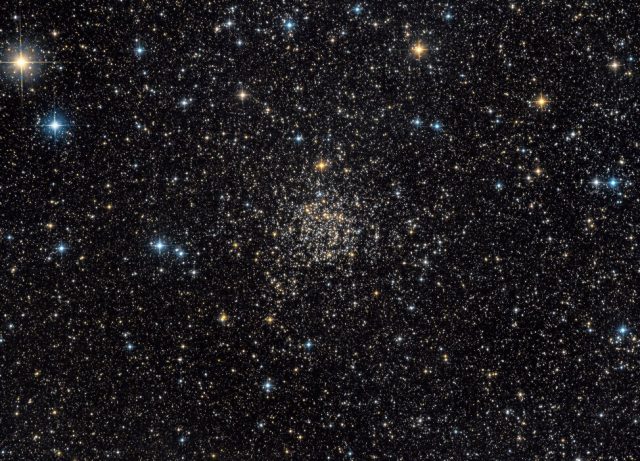
As dying stars take their final few breaths of life, they gently sprinkle their ashes into the cosmos through the magnificent planetary nebulae. These ashes, spread via stellar winds, are enriched with many different chemical elements, including carbon.
Findings from...
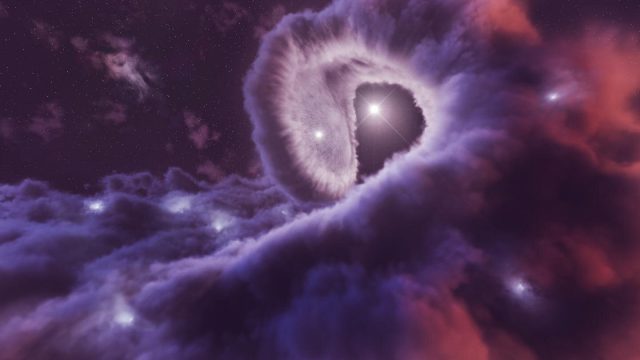
With a specialized telescope in Namibia a DESY-led team of researchers has proven a certain type of binary star as a new kind of source for very high-energy cosmic gamma-radiation. Eta Carinae is located 7500 lightyears away in the...
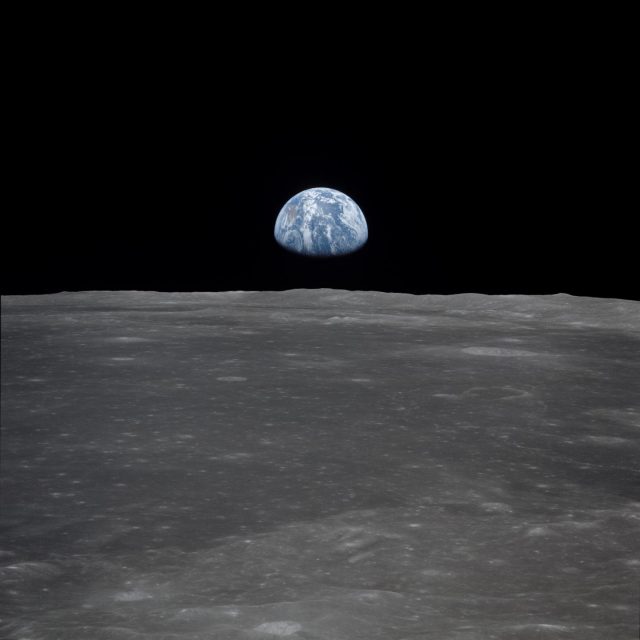
Life on Earth would not be possible without the Moon; it keeps our planet's axis of rotation stable, which controls seasons and regulates our climate. However, there has been considerable debate over how the Moon was formed. The popular...

SRON-astronomers have found the signature for aluminum oxide (AlO) in the spectrum of exoplanet WASP-43b. This came as a surprise because AlO is expected to stay hidden in the lower atmospheric layers. It is only the second time that...

Through simulations of a dying star, a team of theoretical physics researchers have found the evolutionary origin and the maximum mass of black holes which are discovered by the detection of gravitational waves.
The exciting detection of gravitational waves with...

The surviving core of a gas giant has been discovered orbiting a distant star by University of Warwick astronomers, offering an unprecedented glimpse into the interior of a planet.
The core, which is the same size as Neptune in our own...

Measurements from NASA's Transiting Exoplanet Survey Satellite (TESS) have enabled astronomers to greatly improve their understanding of the bizarre environment of KELT-9 b, one of the hottest planets known.
"The weirdness factor is high with KELT-9 b," said John Ahlers,...
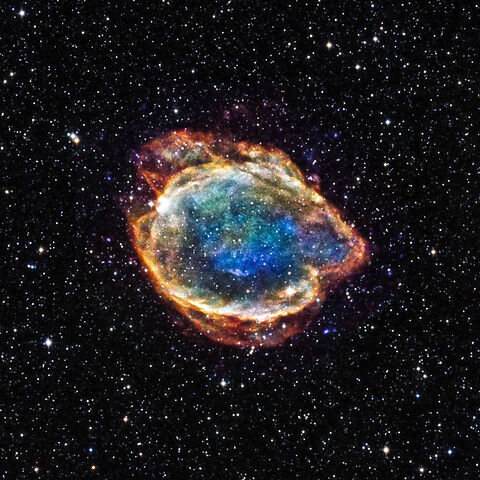
A recent study on pre-supernova neutrinos—tiny cosmic particles that are extremely hard to detect—has brought scientists one step closer to understanding what happens to stars before they explode and die. The study, co-authored by postdoctoral researcher Ryosuke Hirai from...


