



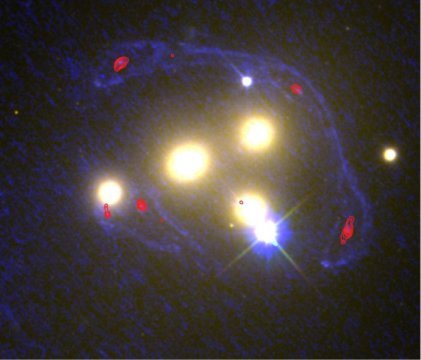
Astronomers are back in the dark about what dark matter might be, after new observations showed the mysterious substance may not be interacting with forces other than gravity after all. Dr Andrew Robertson of Durham University will today (Friday...
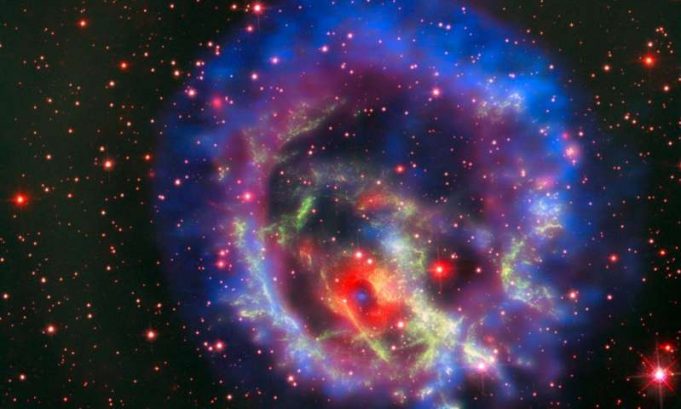
New images from ESO's Very Large Telescope and other telescopes reveal a rich landscape of stars and glowing clouds of gas in one of our closest neighboring galaxies, the Small Magellanic Cloud. The pictures have allowed astronomers to identify...

In a new study published today in the Astrophysical Journal, researchers from New York University Abu Dhabi and NASA's Jet Propulsion Laboratory (JPL) in Pasadena, CA, share new findings about how the presence of "giant" planets (between 10 and...
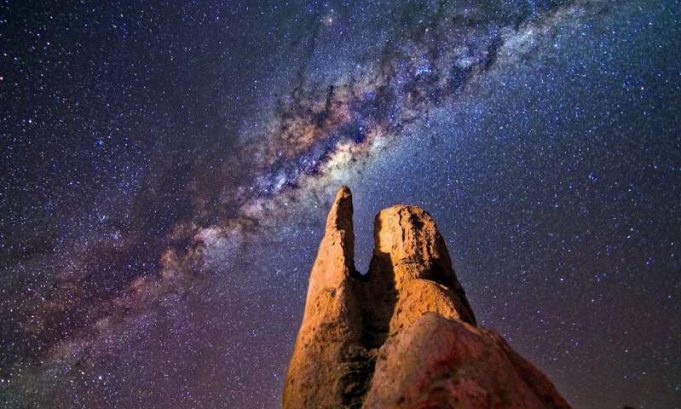
A Columbia University-led team of astrophysicists has discovered a dozen black holes gathered around Sagittarius A* (Sgr A*), the supermassive black hole in the center of the Milky Way Galaxy. The finding is the first to support a decades-old...
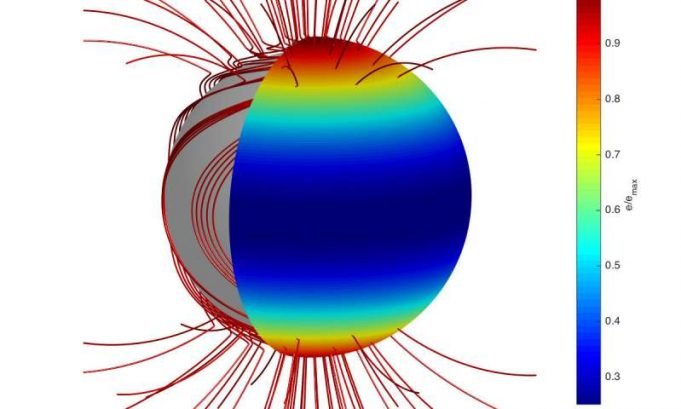
A study of the evolution of magnetic fields inside neutron stars shows that instabilities can create intense magnetic hot spots that survive for millions of years, even after the star's overall magnetic field has decayed significantly. The results will...
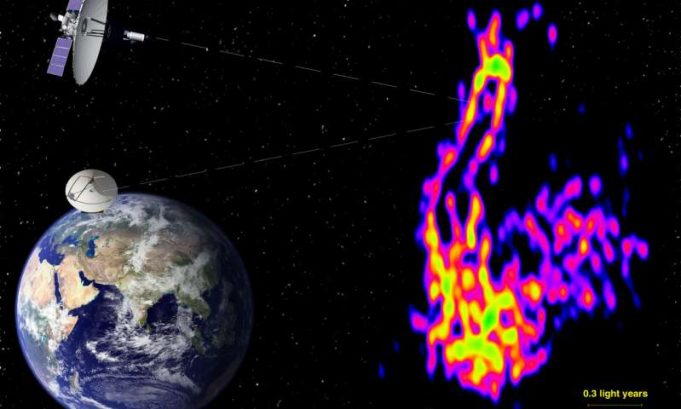
An international team of researchers has imaged newly forming jets of plasma from a massive black hole with unprecedented accuracy. Radio images made with a combination of telescopes in space and on the ground resolve the jet structure merely...
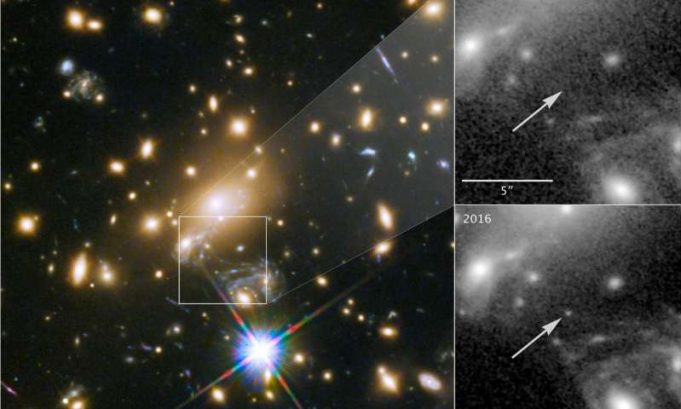
Thanks to a rare cosmic alignment, astronomers have captured the most distant normal star ever observed, some 9 billion light years from Earth.
While astronomers routinely study galaxies much farther away, they're visible only because they glow with the brightness...
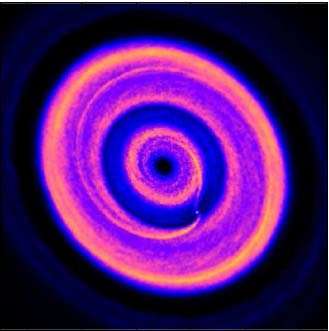
The discovery of an exoplanet has most often resulted from the monitoring of a star's flicker (the transiting method) or its wobble (the radial velocity method). Discovery by direct imaging is rare because it is so difficult to spot...
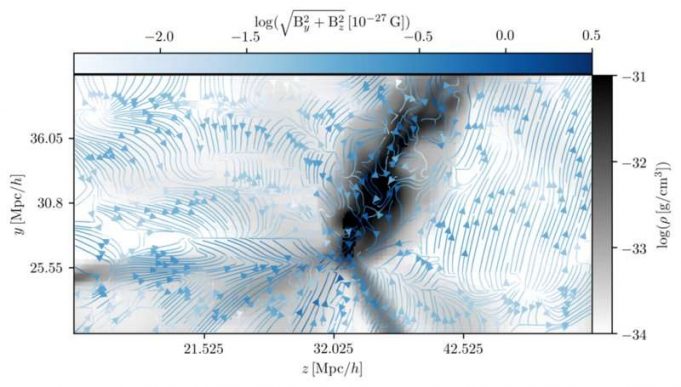
In the first fractions of a second after the birth of our universe, not only elementary particles and radiation, but also magnetic fields were generated. A team led by the Max Planck Institute for Astrophysics in Garching has now...
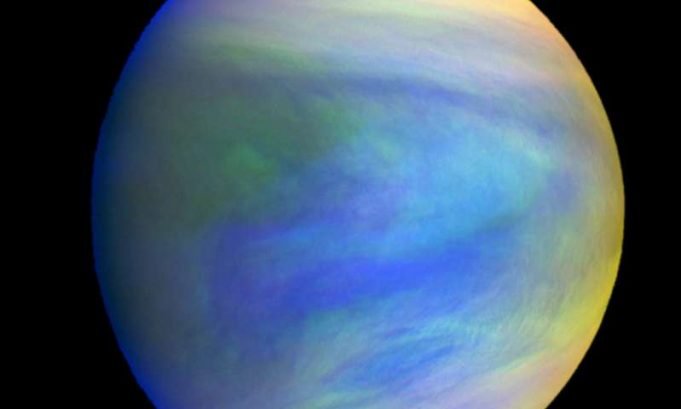
In the search for extraterrestrial life, scientists have turned over all sorts of rocks.
Mars, for example, has geological features that suggest it once had—and still has—subsurface liquid water, an almost sure prerequisite for life. Scientists have also eyed Saturn's...
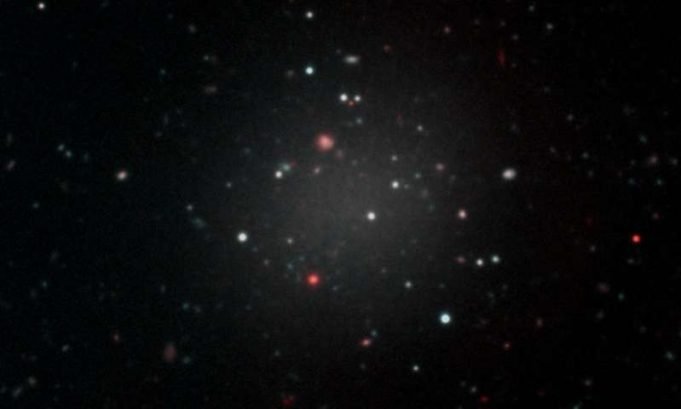
Galaxies and dark matter go hand in hand; you typically don't find one without the other. So when researchers uncovered a galaxy, known as NGC1052-DF2, that is almost completely devoid of the stuff, they were shocked.
"Finding a galaxy without...


