


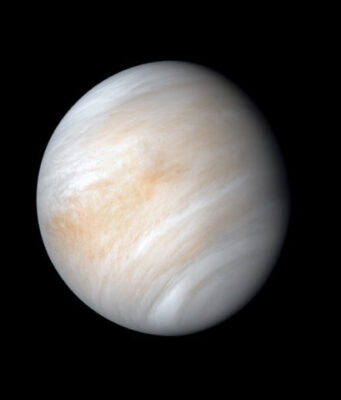


Fragments of a meteorite that fell to Earth about a decade ago provide compelling evidence of a lost planet that once roamed our solar system, according to a study published Tuesday.
Researchers from Switzerland, France and Germany examined diamonds found...

Astrophysicists at Frankfurt, the Max Planck Institute for Radio Astronomy in Bonn, and Nijmegen, collaborating in the project BlackHoleCam, answer this question by computing the first images of feeding non-Einsteinian black holes: it is presently hard to tell them...

Imagine if, many millions of years ago, dinosaurs drove cars through cities of mile-high buildings. A preposterous idea, right? Over the course of tens of millions of years, however, all of the direct evidence of a civilization—its artifacts and...
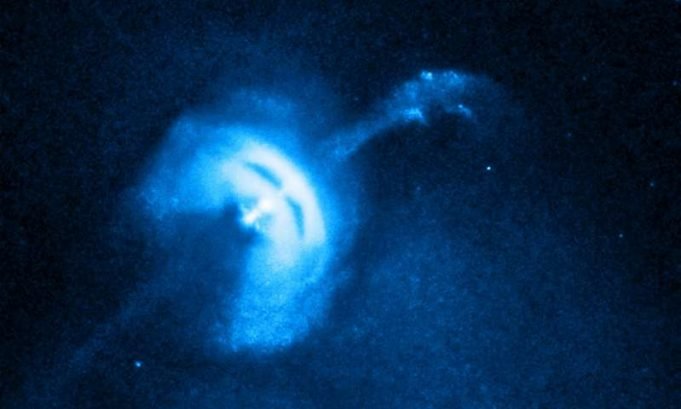
Pulsars are rapidly rotating neutron stars and sometimes they abruptly increase their rotation rate. This sudden change of spin rate is called a "glitch" and I was part of a team that recorded one happening in the Vela Pulsar,...
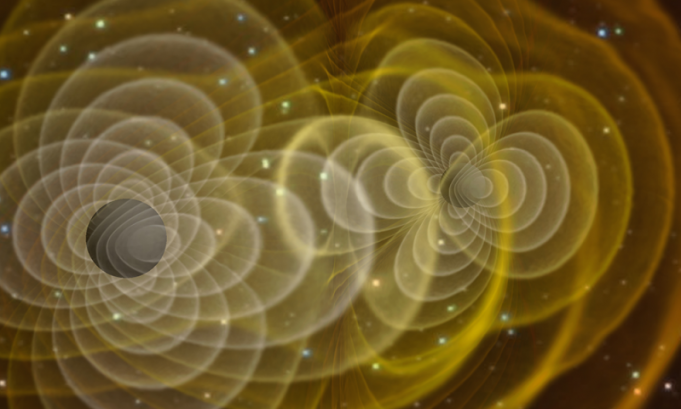
Deep space is not as silent as we have been led to believe. Every few minutes a pair of black holes smash into each other. These cataclysms release ripples in the fabric of spacetime known as gravitational waves. Now...

A well-known experiment with young people bouncing a ball showed that when an observer focuses on counting the passes, he does not detect if someone crosses the stage disguised as a gorilla. According to researchers at the University of...
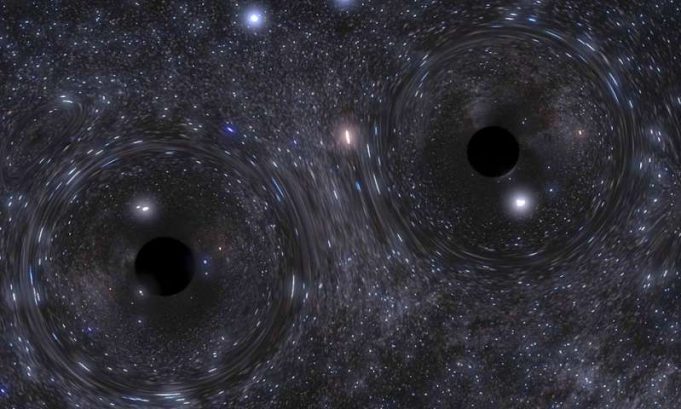
When LIGO's twin detectors first picked up faint wobbles in their respective, identical mirrors, the signal didn't just provide first direct detection of gravitational waves—it also confirmed the existence of stellar binary black holes, which gave rise to the...
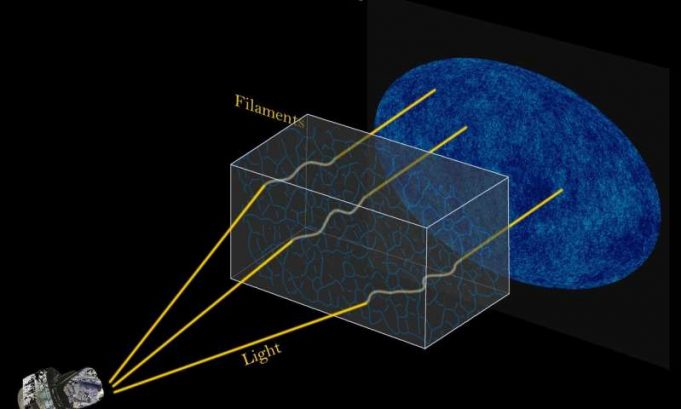
Scientists have decoded faint distortions in the patterns of the universe's earliest light to map huge tubelike structures invisible to our eyes – known as filaments – that serve as superhighways for delivering matter to dense hubs such as...
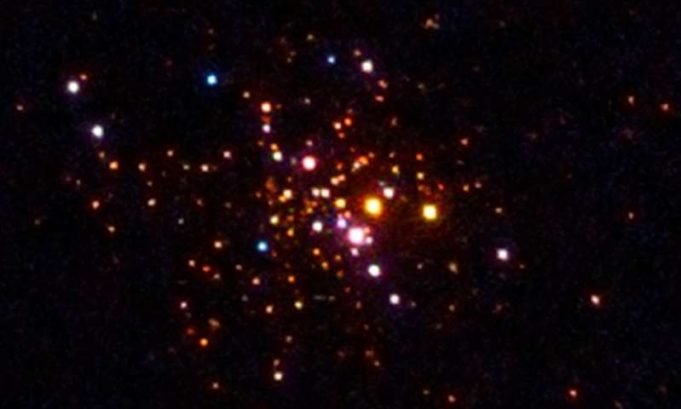
Cataclysmic variable stars (CVs) are white dwarf stars that are accreting from an orbiting, low mass binary companion star. The accretion is facilitated by the proximity of the stars; typical orbital periods range from about one to ten hours....
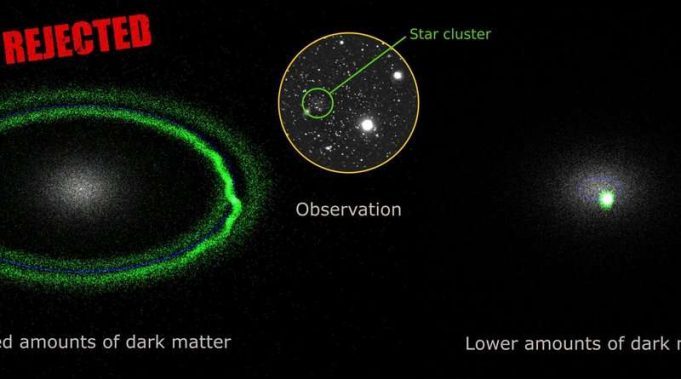
Astrophysicists from the University of Surrey and the University of Edinburgh have created a new method to measure the amount of dark matter at the centre of tiny "dwarf" galaxies.
Dark matter makes up most of the mass of the...
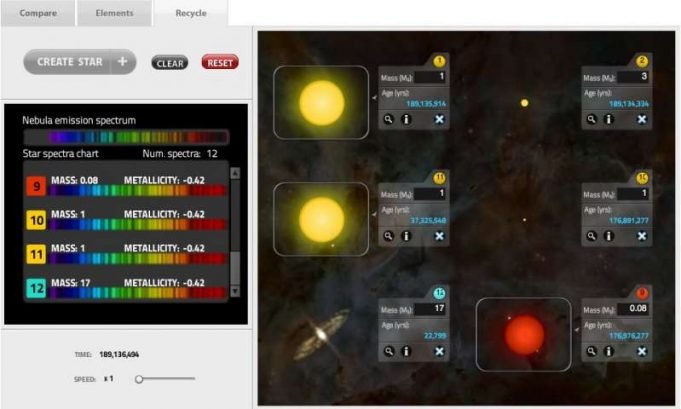
Arizona State University's School of Earth and Space Exploration recently released new research on its flagship Smart Course, Habitable Worlds, published in the peer-reviewed journal, Astrobiology. The study found that its student-centered, exploration-focused design resulted in high course grades...


