



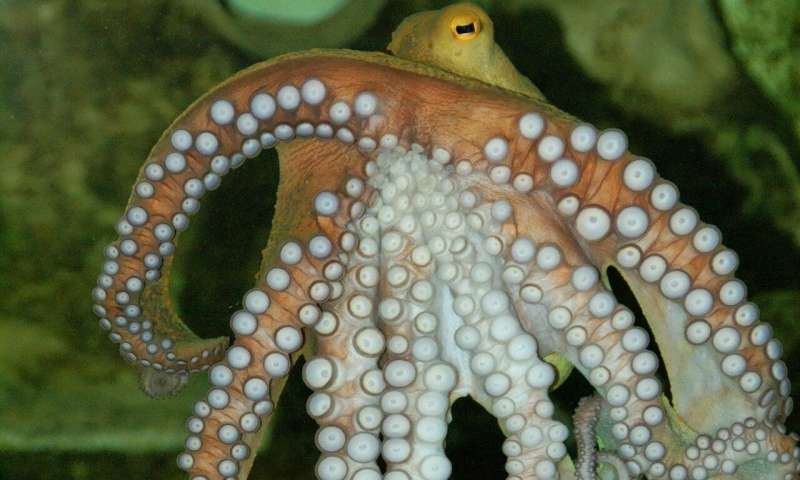
The remarkable properties of a recently-discovered squid protein could revolutionize materials in a way that would be unattainable with conventional plastic, finds a review published in Frontiers in Chemistry. Originating in the ringed teeth of a squid's predatory arms,...

One of the frontiers of medical diagnostics is the race for more sensitive blood tests. The ability to detect extremely rare proteins could make a life-saving difference for many conditions, such as the early detection of certain cancers or...

EVANSTON, Ill.— With their ability to treat a wide a variety of diseases, spherical nucleic acids (SNAs) are poised to revolutionize medicine. But before these digitally designed nanostructures can reach their full potential, researchers need to optimize their various components.
A Northwestern...

UCLA researchers and collaborators at eight other research institutions have created an extremely light, very durable ceramic aerogel. The material could be used for applications like insulating spacecraft because it can withstand the intense heat and severe temperature changes...

The rapidly growing desalination industry produces water for drinking and for agriculture in the world's arid coastal regions. But it leaves behind as a waste product a lot of highly concentrated brine, which is usually disposed of by dumping...

Cornell University scientists Rachel Hestrin and Johannes Lehmann, along with collaborators from Canada and Australia, have shown that charcoal can mop up large quantities of nitrogen from the air pollutant ammonia, resulting in a potential slow-release fertilizer with more...

A research group from RIKEN and Kyushu University has developed a new type of material, based on ethylene, which exhibits a number of useful properties such as self-healing and shape memory. Remarkably, some of the materials can spontaneously self-heal...

A new compound based on Iridium, a rare metal which landed in the Gulf of Mexico 66 M years ago, hooked onto albumin, a protein in blood, can attack the nucleus of cancerous cells when switched on by light,...

A mollusk with teeth that can grind down rock may hold the key to making next generation abrasion-resistant materials and nanoscale materials for energy.
The mollusk, called a gumboot chiton, scrapes algae off ocean rocks using a specialized set of...

A professor in Virginia Tech's College of Science wants to power planes and cars using energy stored in their exterior shells. He may have discovered a path toward that vision using porous carbon fibers made from what's known as...

Bees are among the most important species responsible for pollinating about one-third of the world's food supply, with their contribution in the United States alone valued at $15-20 billion each year. Rapid declines in honey bee colonies globally, and...


