




Green plants capture light that spans the visible solar spectrum, and while a broad spectral range is required for sufficient absorption, the process requires energy to be funneled rapidly and efficiently downhill to drive charge separation and water splitting....
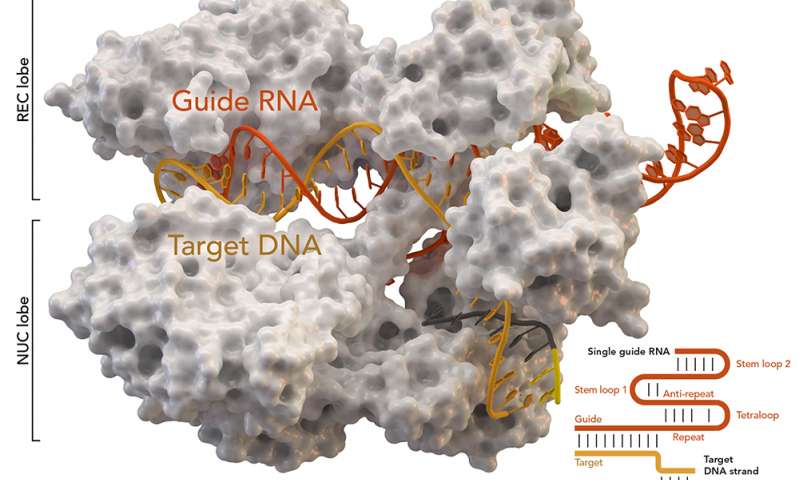
Scientists from the Novo Nordisk Foundation Center for Biosustainability (DTU) have found four new anti-CRISPR proteins that are distributed across different environments. The new study published in Cell Host & Microbe suggests that some anti-CRISPR proteins are more widespread...

Bacteria have multiple strategies to survive antibiotics: developing genetic resistance to the drugs; delaying their growth; or hiding in protective biofilms. New results from researchers at Princeton and California State University-Northridge (CSUN) have shed light on yet another approach:...

Using a piece of molecular "Velcro" to attach a light-emitting probe to a protein molecule, University of Wollongong (UOW) researchers have unlocked the mystery of how an important protein goes about repairing damaged DNA in bacteria, with implications for...

A new study into the genetic makeup of over 1,400 individuals from across Spain has shown that the genetic patterns in modern individuals were shaped by population movements over the past 1,000 years. It also showed that in some...

In a mere seven years, Cas9 has shown itself to be a formidable gene editor, employed in humans, plants, animals and bacteria to quickly and accurately cut and splice DNA, transforming biology and opening new avenues for treating disease.
But...
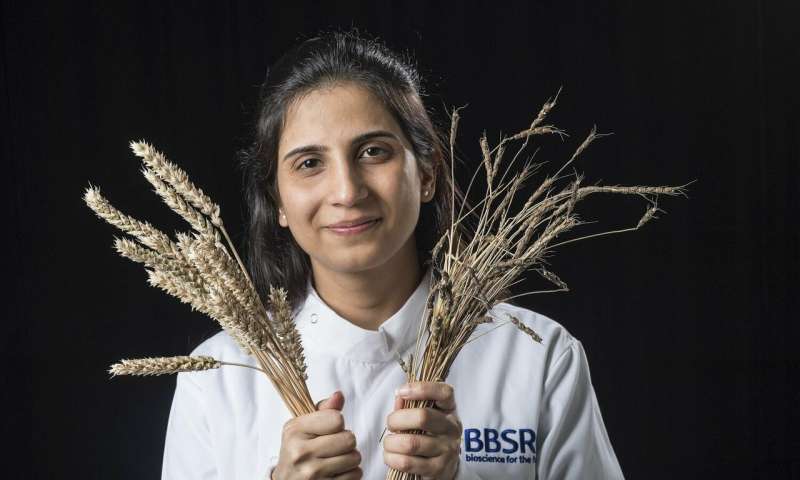
Researchers have pioneered a new method which allows them to rapidly recruit disease resistance genes from wild plants and transfer them into domestic crops.
The technique called AgRenSeq or speed cloning has been developed by John Innes Centre researchers alongside...
Scientists working on the gut microbiome have discovered and isolated more than 100 completely new species of bacteria from healthy people's intestines. The study from the Wellcome Sanger Institute, Hudson Institute of Medical Research, Australia, and EMBL's European Bioinformatics...

Endangered species of hammerhead and dogfish are among the sharks being sold as food in the UK, researchers have revealed.
University of Exeter scientists sampled shark products from fishmongers and chip shops, as well as shark fins from an Asian...

Lager beer is cold, crisp, dry—and worth about half a trillion dollars worldwide.
Behind the world's most popular alcoholic beverage is a yeast adapted to the cold, and hungry for the sugars it will transform into bubbles and booze.
That yeast...

Water bear. Moss piglet. Tardigrade
The gentle teddy-bear features of this polyonymic animal belie its hardy nature.
Capable of withstanding dehydration and cosmic radiation and surviving temperatures as low as -450 degrees F and as high as 300 degrees F, this...


