




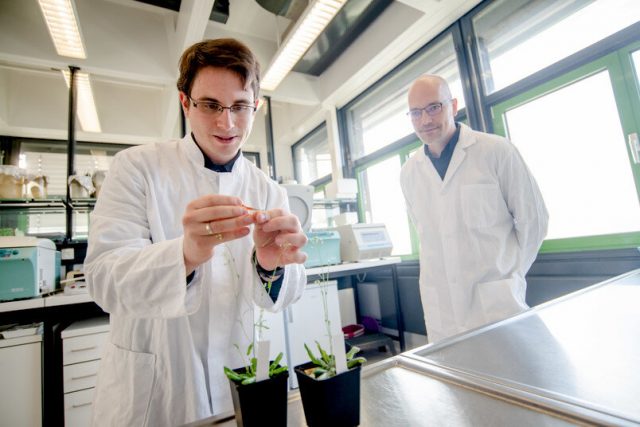
Together with lipids, membrane proteins are a central component of all biological membranes and fulfill important functions in transport and information transfer within and between cells. The majority of membrane proteins are recognized by a signal recognition particle on...
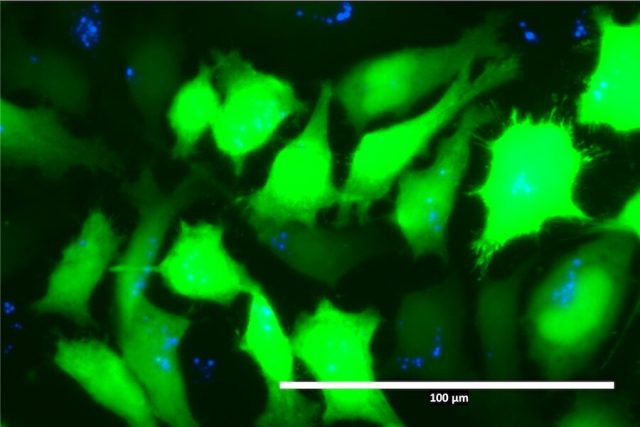
University of Minnesota Twin Cities researchers in the Department of Chemistry have created a new polymer to deliver DNA and RNA-based therapies for diseases. For the first time in the industry, the researchers were able to see exactly how...
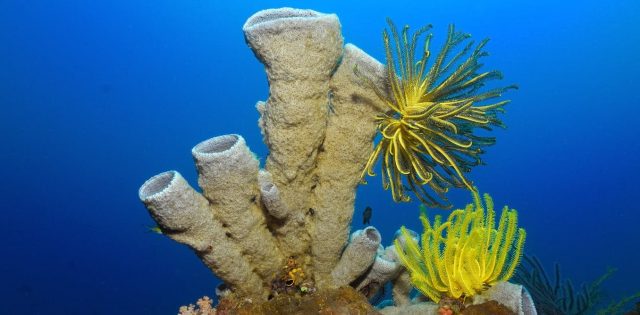
The theory of evolution shows that all of life stems from a single root and that we are related, more or less distantly, to every other living thing on Earth. Our closest ancestors, as Charles Darwin recognized, are to...

Researchers at the Center for Genomic Regulation (CRG) in Barcelona and Columbia University in New York City have identified a protein that is critical for the expansion of typically scarce, life-saving blood stem cells.
The discovery may lead to new...

Researchers at Hokkaido University and Amoeba Energy in Japan have, inspired by the efficient foraging behavior of a single-celled amoeba, developed an analog computer for finding a reliable and swift solution to the traveling salesman problem -- a representative...

Charles Darwin's landmark opus "On the Origin of the Species" ends with a beautiful summary of his theory of evolution: "There is a grandeur in this view of life, with its several powers, having been originally breathed into a...

A new study at the University of Chicago has shown that elaborate protein structures accumulate over deep time even when they serve no purpose, because a universal biochemical property and the genetic code force natural selection to preserve them....

A link between evolution over short time frames (microevolution) and long time frames (macroevolution) that could open new approaches to understanding some of biology's deepest questions is proposed by Dr. Owen Gilbert of the Department of Integrative Biology at...

In his first year of graduate school, Rice University biochemist Zachary Wright discovered something hidden inside a common piece of cellular machinery that's essential for all higher order life from yeast to humans.
What Wright saw in 2015—subcompartments inside organelles...

A team of Johns Hopkins University researchers has developed a new software that could revolutionize how DNA is sequenced, making it far faster and less expensive to map anything from yeast genomes to cancer genes.
The software, detailed in a paper...
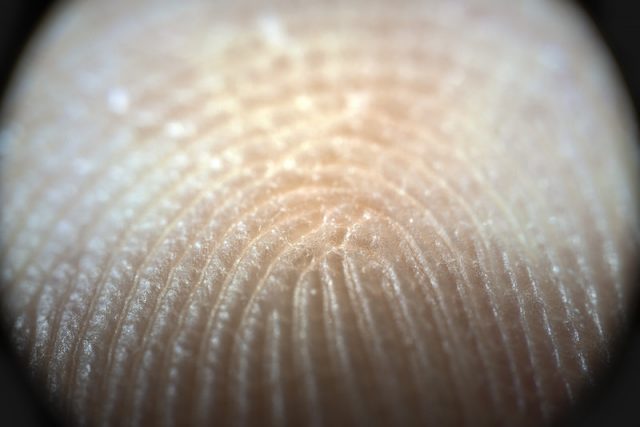
Human fingerprints have a self-regulating moisture mechanism that not only helps us to avoid dropping our smartphone, but could help scientists to develop better prosthetic limbs, robotic equipment and virtual reality environments, a new study reveals.
Primates -- including humans,...


