




Just as dust gathers in corners and along bookshelves in our homes, dust piles up in space too. But when the dust settles in the solar system, it's often in rings. Several dust rings circle the Sun. The rings...

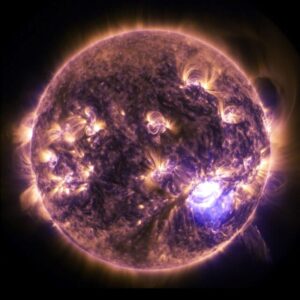
Solar storms can be far more powerful than previously thought. A new study has found evidence for the third known case of a massive solar storm in historical times. The researchers believe that society might not be sufficiently prepared...
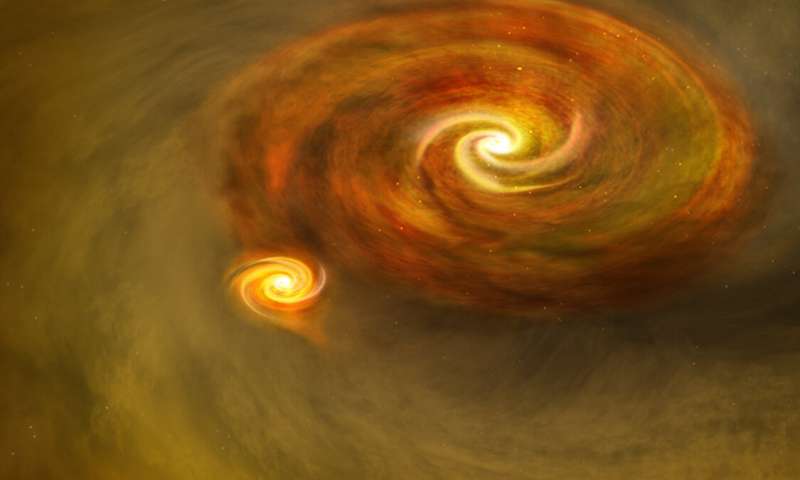
Astronomers have discovered a binary star system with the closest high-mass young stellar objects ever measured, providing a valuable "laboratory" to test theories on high mass binary star formation.
An international team led by the University of Leeds has determined...

Scientists, using an instrument aboard NASA's Lunar Reconnaissance Orbiter (LRO), have observed water molecules moving around the dayside of the Moon.
A paper published in Geophysical Research Letters describes how Lyman Alpha Mapping Project (LAMP) measurements of the sparse layer of molecules temporarily stuck...
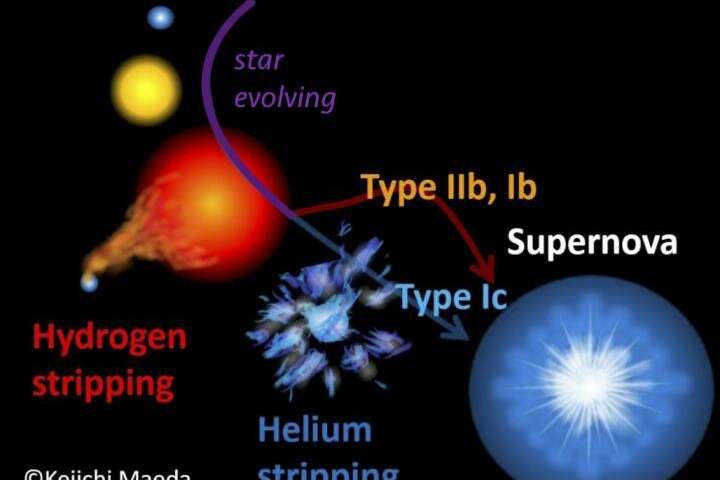
Stars over eight times more massive than the sun end their lives in supernovae explosions. The composition of the star influences what happens during the explosion.
A considerable number of massive stars have a close companion star. Led by researchers...

Scientists looking for signs of life beyond our solar system face major challenges, one of which is that there are hundreds of billions of stars in our galaxy alone to consider. To narrow the search, they must figure out:...

In a striking example of multi-mission astronomy, measurements from the NASA/ESA Hubble Space Telescope and the ESA Gaia mission have been combined to improve the estimate of the mass of our home galaxy the Milky Way: 1.5 trillion solar...
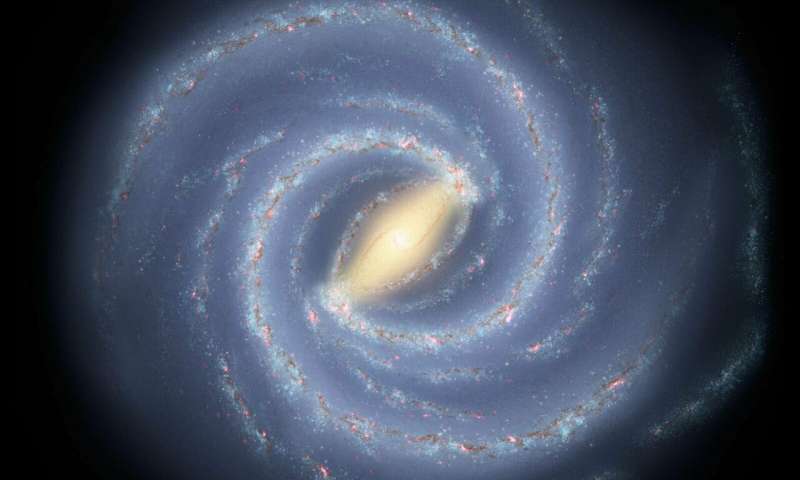
The rotation of stars in galaxies such as the Milky Way is puzzling. The orbital speeds of stars should decrease with their distance from the center of the galaxy, but in fact, stars in the middle and outer regions...

The Cigar Galaxy (also known as M82) is famous for its extraordinary speed in making new stars, with stars being born 10 times faster than in the Milky Way. Now, data from the Stratospheric Observatory for Infrared Astronomy, or...

An international team of astronomers, led by University of Hawaiʻi graduate student Ashley Chontos, announced the confirmation of the first exoplanet candidate identified by NASA's Kepler Mission. The result was presented today at the fifth Kepler/K2 Science Conference held...
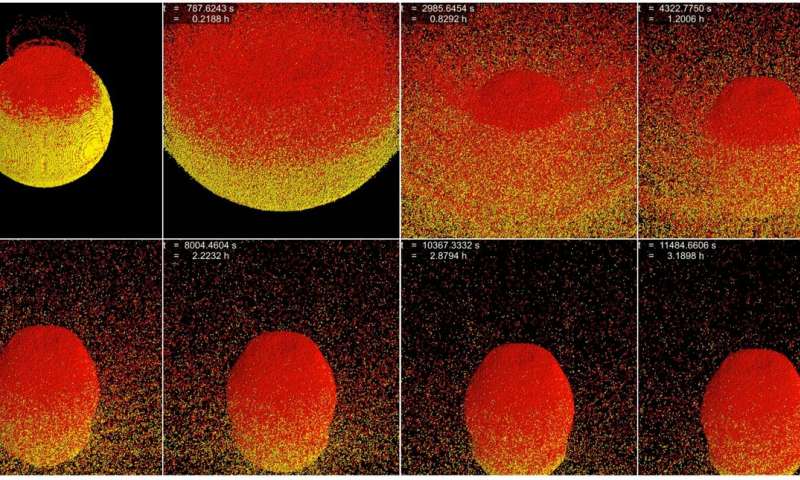
A popular theme in the movies is that of an incoming asteroid that could extinguish life on the planet, and our heroes are launched into space to blow it up. But incoming asteroids may be harder to break than...


