




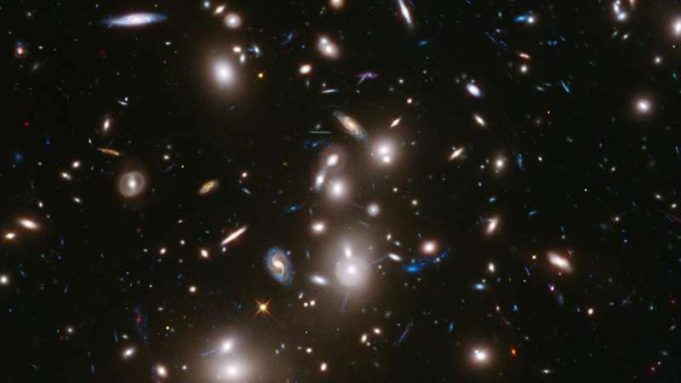
A method of weighing the quantities of matter in galaxy clusters—the largest objects in our universe—has shown a balance between the amounts of hot gas, stars and other materials.
The results are the first to use observational data to measure this balance,...
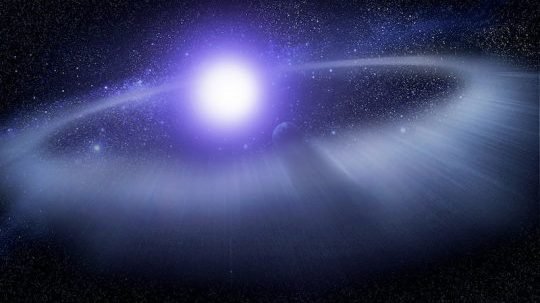
Researchers using ALMA (Atacama Large Millimeter/submillimeter Array) found a small dust concentration in the disk around TW Hydrae, the nearest young star. It is highly possible that a planet is growing or about to be formed in this concentration....
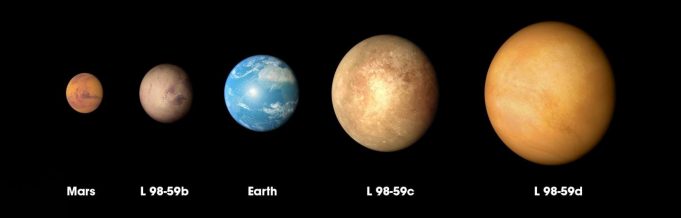
NASA's Transiting Exoplanet Survey Satellite (TESS) has discovered a world between the sizes of Mars and Earth orbiting a bright, cool, nearby star. The planet, called L 98-59b, marks the tiniest discovered by TESS to date.
Two other worlds orbit...
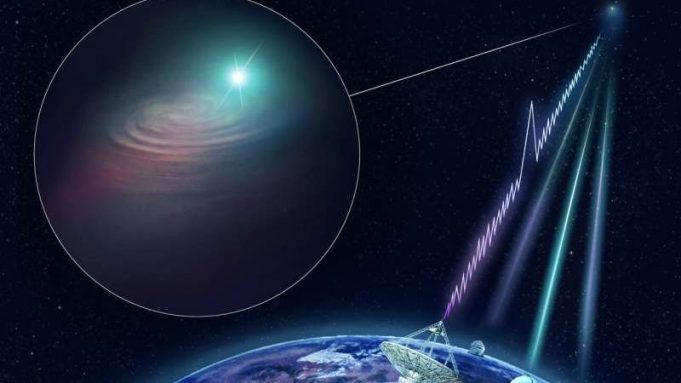
Scientists were celebrating a groundbreaking astronomical discovery Thursday that they say could pave the way for mapping the outer reaches of the universe.
An Australian-led team of international astronomers have determined for the first time the precise source of a...
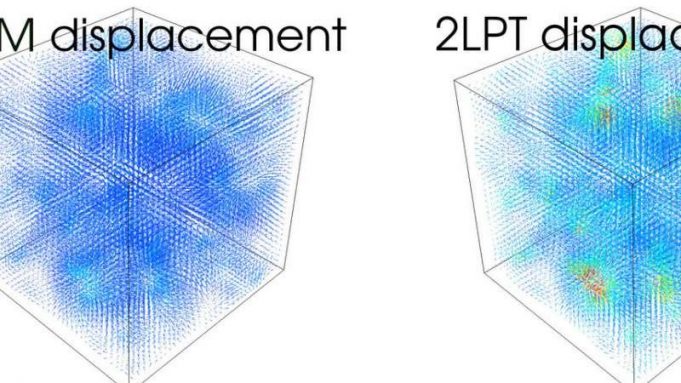
For the first time, astrophysicists have used artificial intelligence techniques to generate complex 3-D simulations of the universe. The results are so fast, accurate and robust that even the creators aren't sure how it all works.
"We can run these...
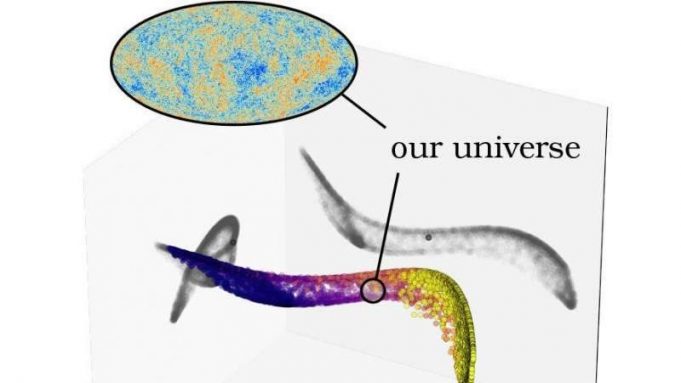
As cosmologists ponder the universe—and other possible universes—the data available to them is so complex and vast that it can be extremely challenging for humans alone to comprehend.
In applying scientific principles used to create models for understanding cell biology...
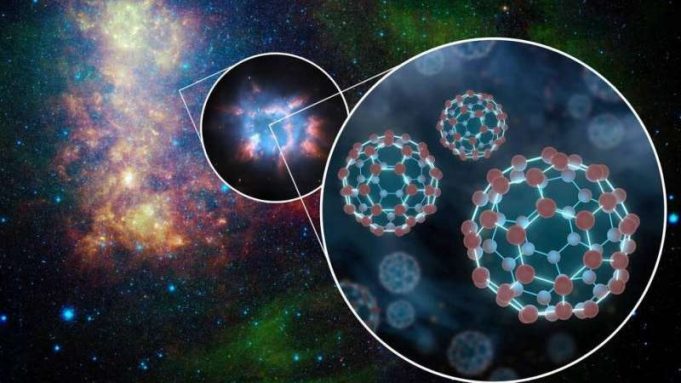
Scientists using NASA's Hubble Space Telescope have confirmed the presence of electrically-charged molecules in space shaped like soccer balls, shedding light on the mysterious contents of the interstellar medium (ISM) - the gas and dust that fills interstellar space.
Since...
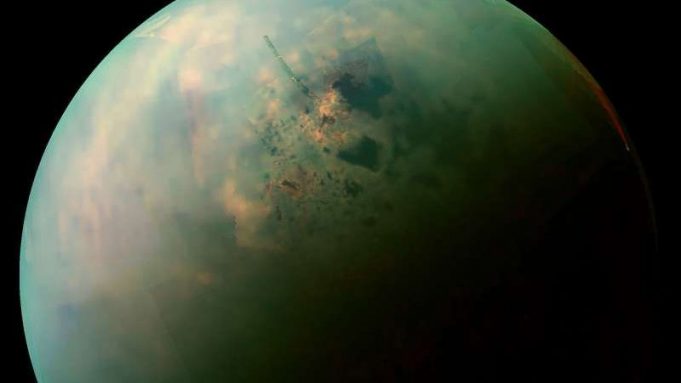
The frigid lakeshores of Saturn's moon Titan might be encrusted with strange, unearthly minerals, according to new research being presented here.
Scientists re-creating Titan-esque conditions in their laboratory have discovered new compounds and minerals not found on Earth, including a...

Good fortune and cutting-edge scientific equipment have allowed scientists to observe a Gamma Ray Burst jet with a radio telescope and detect the polarisation of radio waves within it for the first time -- moving us closer to an...
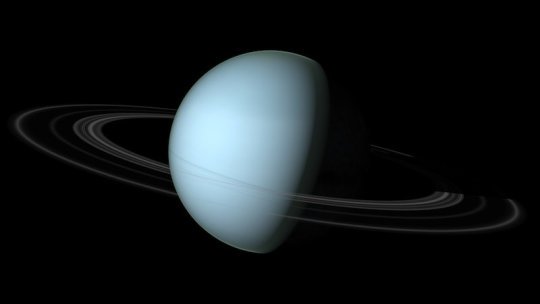
The rings of Uranus are invisible to all but the largest telescopes -- they weren't even discovered until 1977 -- but they're surprisingly bright in new heat images of the planet taken by two large telescopes in the high...
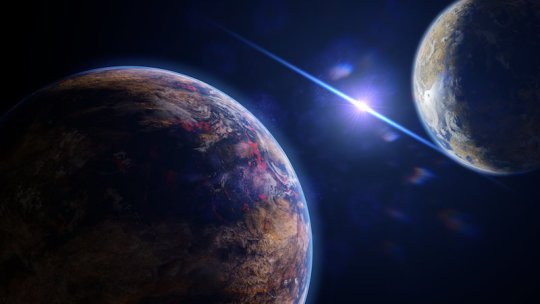
An international research team led by the University of Göttingen has discovered two new Earth-like planets near one of our closest neighboring stars. "Teegarden's star" is only about 12.5 light years away from Earth and is one of the...


