




An international team of astronomers, including Northwestern University's Farhad Yusef-Zadeh, has discovered one of the largest structures ever observed in the Milky Way. A newly spotted pair of radio-emitting bubbles reach hundreds of light-years tall, dwarfing all other structures...
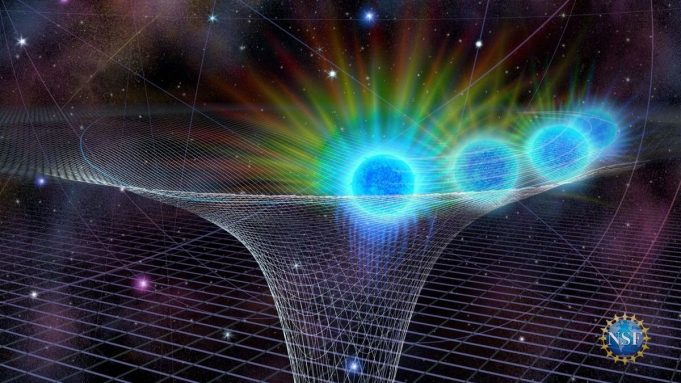
The enormous black hole at the center of our galaxy is having an unusually large meal of interstellar gas and dust, and researchers don't yet understand why.
"We have never seen anything like this in the 24 years we have...

Two University of Hawaii at Manoa researchers have identified and corrected a subtle error that was made when applying Einstein's equations to model the growth of the universe.
Physicists usually assume that a cosmologically large system, such as the universe, is...

An international team of astronomers has pinpointed the origin of a runaway high-velocity star named PG 1610+062 and determined that it was likely ejected from its birth cluster with the help of a mid-mass black hole (MMBH).
The findings are...

When the asteroid that wiped out the dinosaurs slammed into the planet, the impact set wildfires, triggered tsunamis and blasted so much sulfur into the atmosphere that it blocked the sun, which caused the global cooling that ultimately doomed...
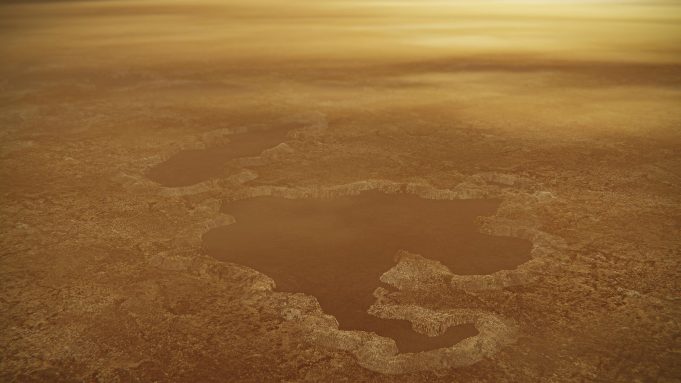
Using radar data from NASA's Cassini spacecraft, recently published research presents a new scenario to explain why some methane-filled lakes on Saturn's moon Titan are surrounded by steep rims that reach hundreds of feet high. The models suggests that...
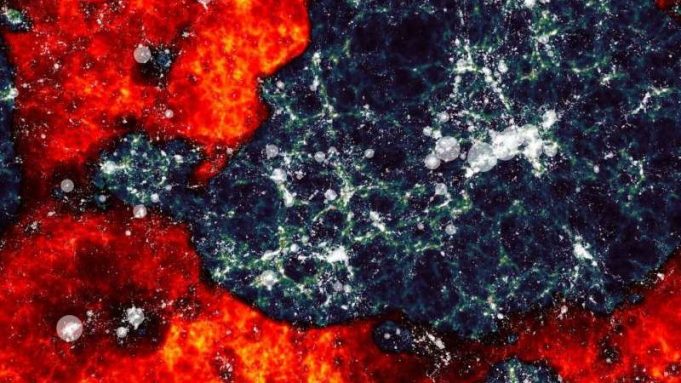
Astronomers are closing in on a signal that has been travelling across the Universe for 12 billion years, bringing them nearer to understanding the life and death of the very earliest stars.
In a paper on the preprint site arXiv...

All comets might share their place of birth, new research says. For the first time ever, astronomer Christian Eistrup applied chemical models to fourteen well-known comets, surprisingly finding a clear pattern. His publication has been accepted in the journal Astronomy...
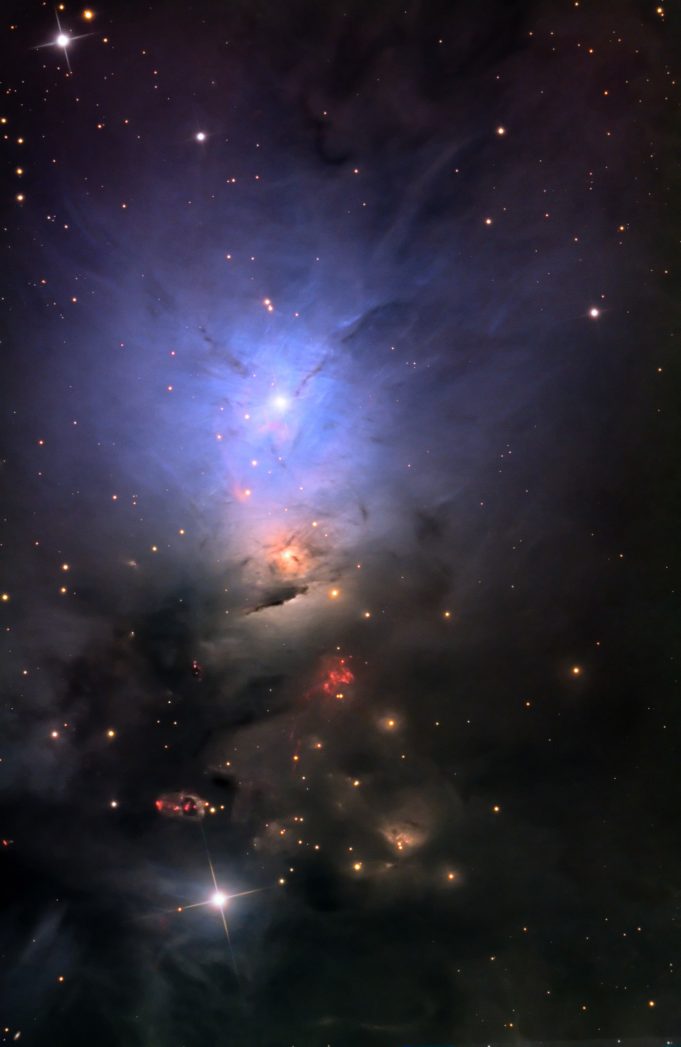
How do stars and planets form? Scientists are now one step closer to pinning down the conditions for the formation of proto-stellar disks. Observations of three systems in the early stages of star formation in the Perseus cloud revealed...
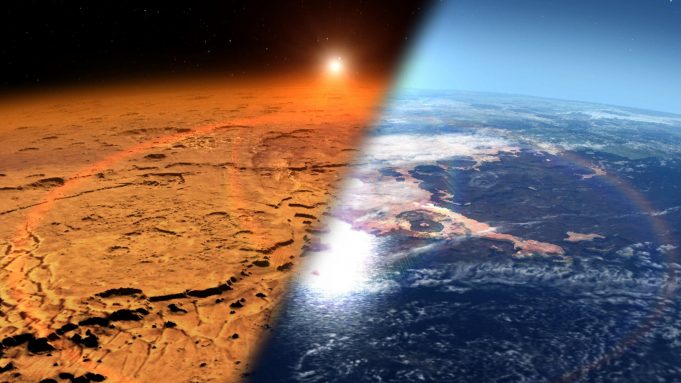
A key tracer used to estimate how much atmosphere Mars lost can change depending on the time of day and the surface temperature on the Red Planet, according to new observations by NASA-funded scientists. Previous measurements of this tracer—isotopes...
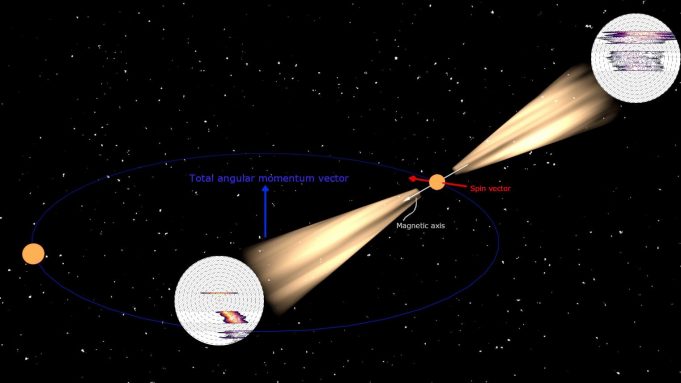
Pulsars in binary systems are affected by relativistic effects, causing the spin axes of each pulsar to change their direction with time. A research team led by Gregory Desvignes from the Max Planck Institute for Radio Astronomy in Bonn,...


