



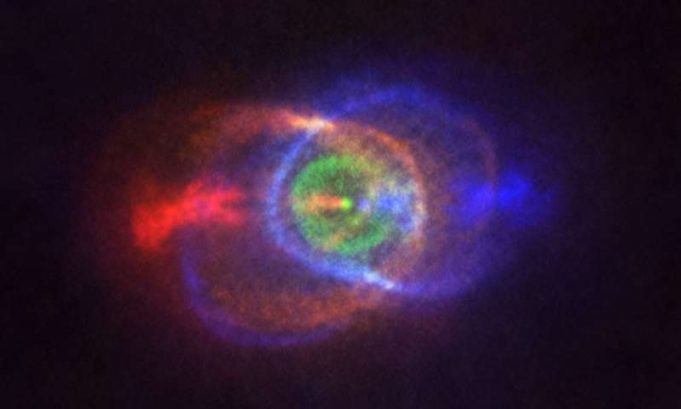
Astronomers using the Atacama Large Millimeter/submillimeter Array (ALMA), in which ESO is a partner, have spotted a peculiar gas cloud that resulted from a confrontation between two stars. One star grew so large it engulfed the other which, in...
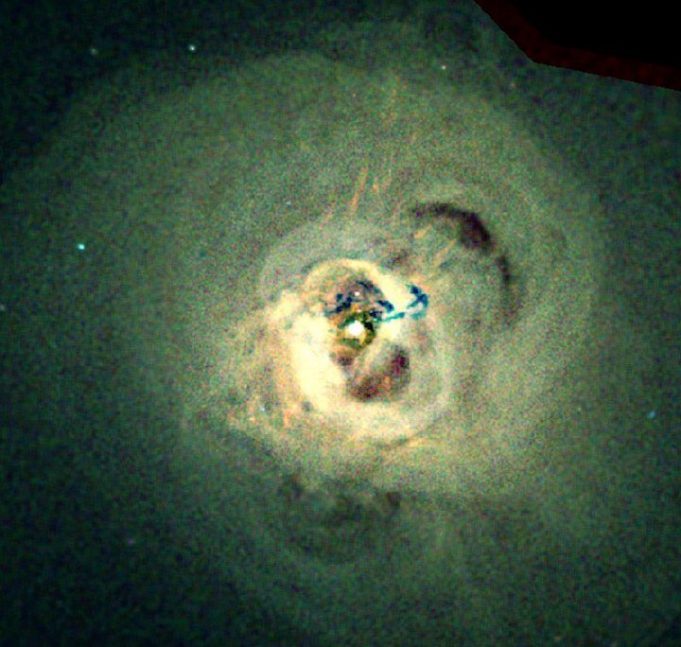
Active galactic nuclei (AGN) are supermassive black holes at the centers of galaxies that are accreting material onto their hot circumnuclear disks, releasing the energy in bursts of radiation or as particle jets moving at close to the speed...

Since the breakthrough in gravitational wave astronomy back in 2015, scientists have been able to detect more than a dozen pairs of closely located black holes—known as binary black holes—by their collisions into each other due to gravity. However,...
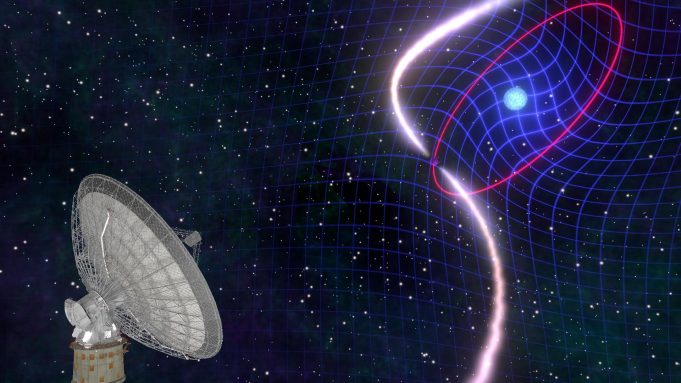
An international team of astrophysicists led by Australian Professor Matthew Bailes, from the ARC Centre of Excellence of Gravitational Wave Discovery (OzGrav), has shown exciting new evidence for 'frame-dragging'—how the spinning of a celestial body twists space and time—after...
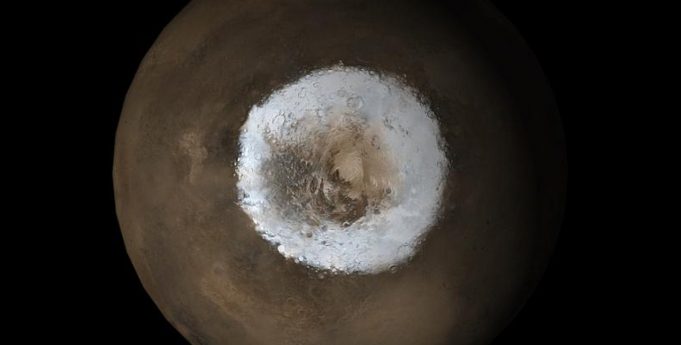
In 1966, two Caltech scientists were ruminating on the implications of the thin carbon dioxide (CO2) Martian atmosphere first revealed by Mariner IV, a NASA fly-by spacecraft built and flown by JPL. They theorized that Mars, with such an...
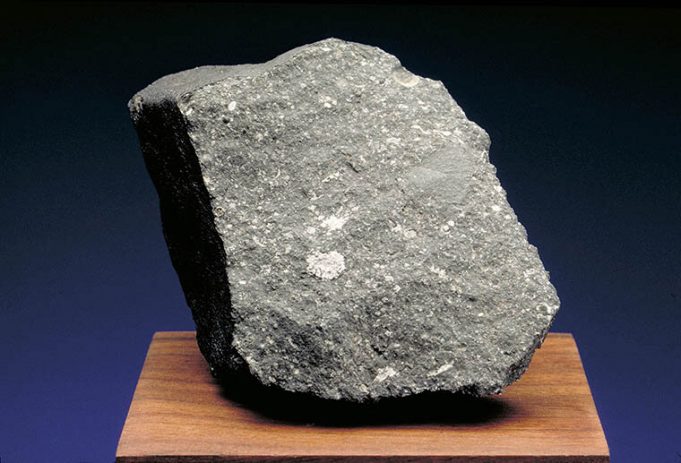
An unusual chunk in a meteorite may contain a surprising bit of space history, based on new research from Washington University in St. Louis.
Presolar grains—tiny bits of solid interstellar material formed before the sun was born—are sometimes found in primitive...
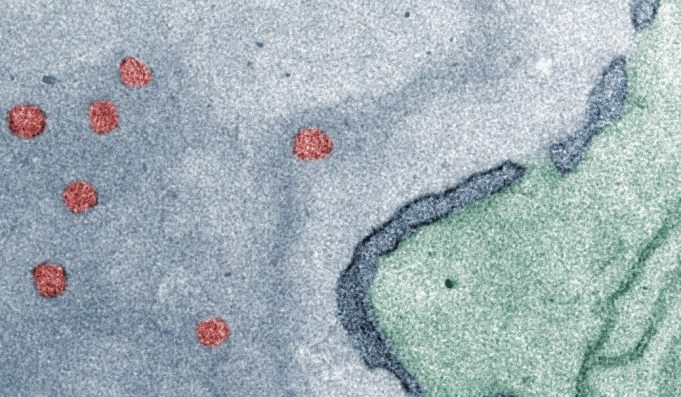
An interdisciplinary team from the University of Basel in Switzerland has succeeded in creating a direct path for artificial nanocontainers to enter into the nucleus of living cells. To this end, they produced biocompatible polymer vesicles that can pass...
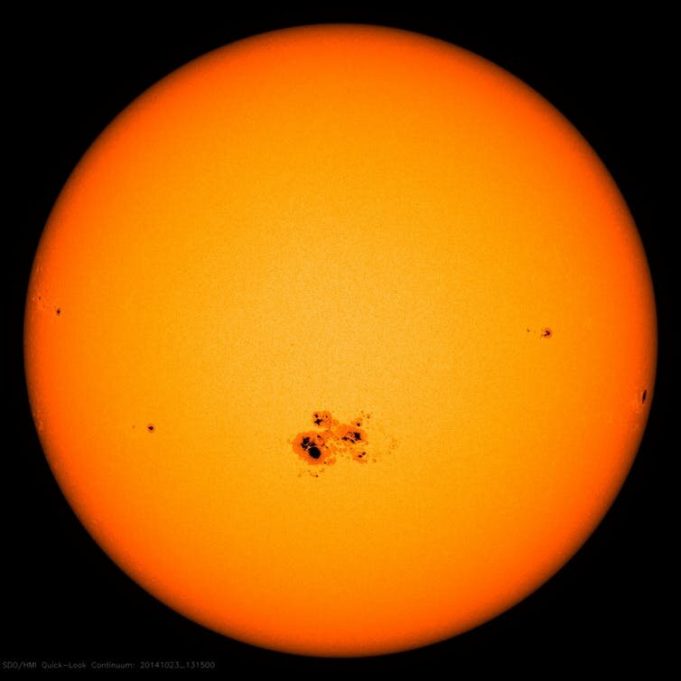
NASA's Kepler spacecraft was designed to find exoplanets by looking for stars that dim as a planet crosses the star's face. Fortuitously, the same design makes it ideal for spotting other astronomical transients—objects that brighten or dim over...
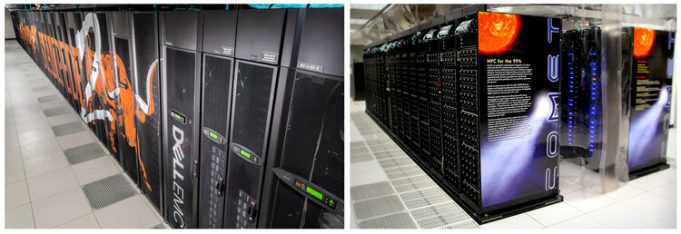
Inspired by the science fiction of the spacefaring Romulans of Star Trek, astrophysicists have used XSEDE-allocated supercomputers to develop cosmological computer simulations called RomulusC, where the 'C' stands for galaxy cluster. With a focus on black hole physics, RomulusC...
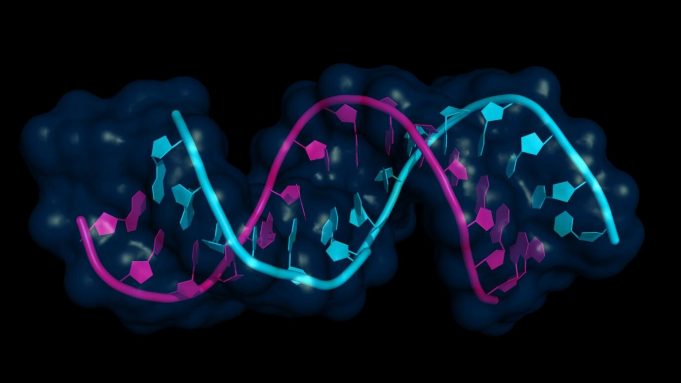
A group of University of Chicago scientists has uncovered a previously unknown way that our genes are made into reality.
Rather than directions going one-way from DNA to RNA to proteins, the latest study shows that RNA itself modulates how...
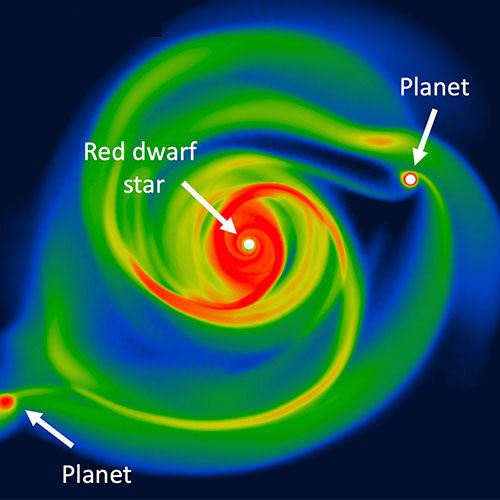
New astronomy research from the University of Central Lancashire (UCLan) suggests giant planets could form around small stars much faster than previously thought.
As published in today's Astronomy and Astrophysics journal, Dr. Anthony Mercer and Dr. Dimitris Stamatellos' new planet formation research...


