



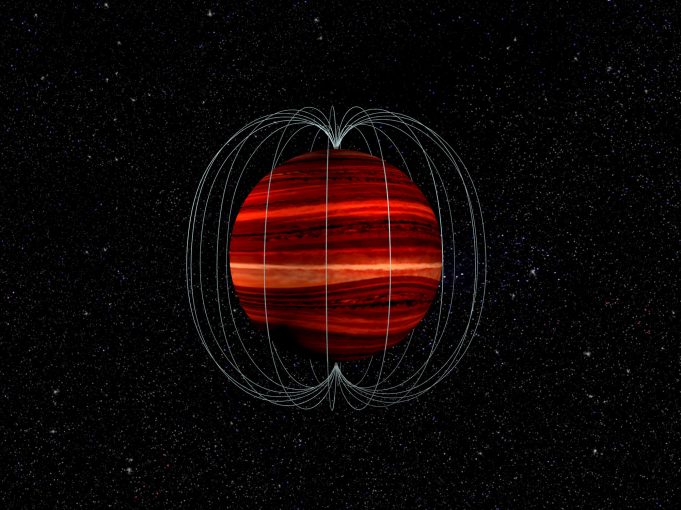
Astronomers have used the National Science Foundation's Karl G. Jansky Very Large Array (VLA) and NASA's Spitzer Space Telescope to make the first measurement of wind speed on a brown dwarf—an object intermediate in mass between a planet and...
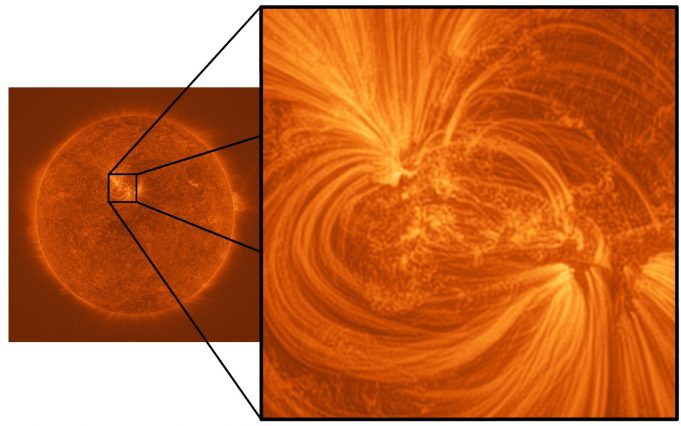
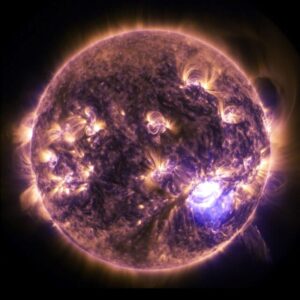
Researchers at the University of Central Lancashire (UCLan) unveil highest-ever resolution images of the Sun from NASA's solar sounding rocket mission
Newly released images of the Sun have revealed that its outer layer is filled with previously unseen, incredibly fine...
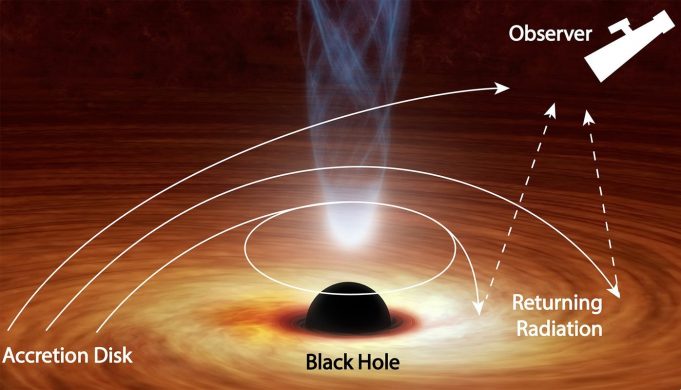
You may have heard that nothing escapes the gravitational grasp of a black hole, not even light. This is true in the immediate vicinity of a black hole, but a bit farther out—in disks of material that swirl around...
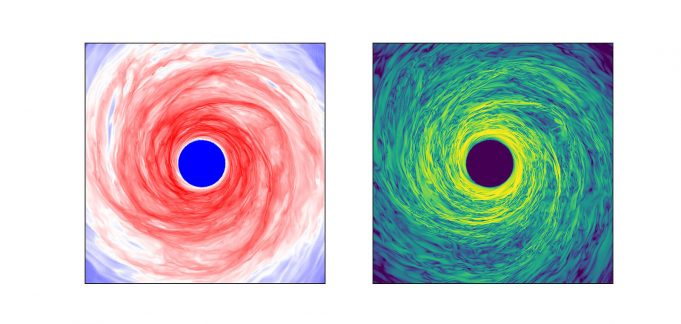
From a massive disk of gas and dust rotating around the sun, the earth and the other seven planets of our solar system once developed alongside their moons. And the same must have happened, scientists believe, for the thousands...
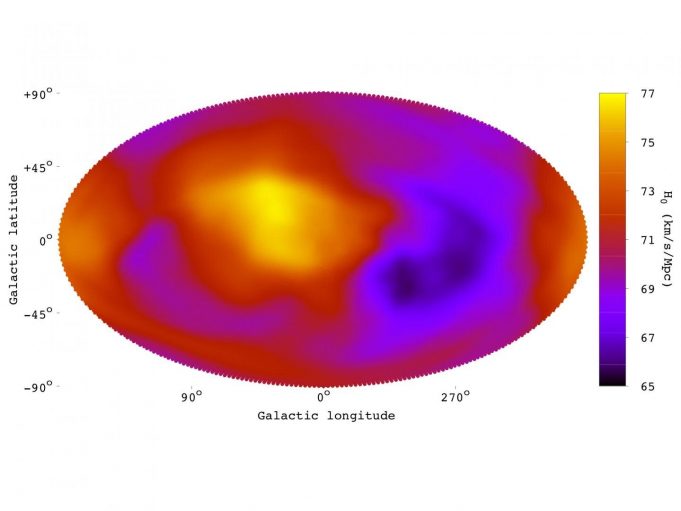
Astronomers have assumed for decades that the Universe is expanding at the same rate in all directions. A new study based on data from ESA's XMM-Newton, NASA's Chandra and the German-led ROSAT X-ray observatories suggests this key premise of...
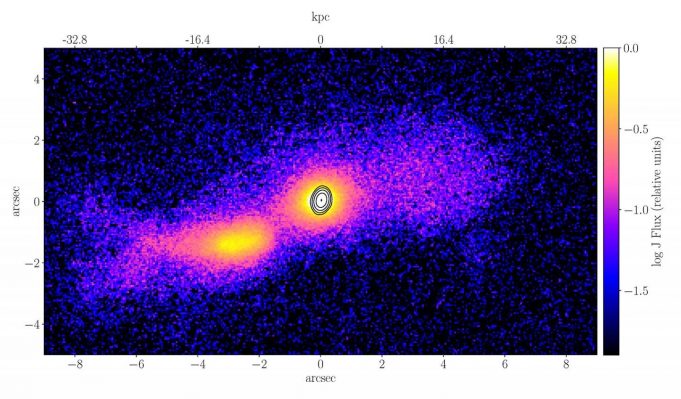
A team of Clemson University College of Science researchers, in collaboration with international colleagues, has reported the first definitive detection of a relativistic jet emerging from two colliding galaxies—in essence, the first photographic proof that merging galaxies can produce...
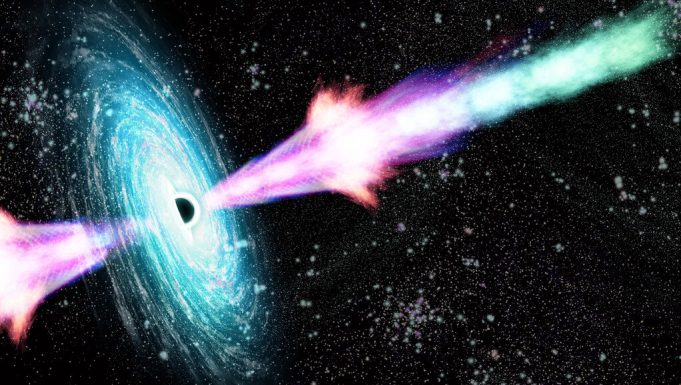
When a massive star in a distant galaxy collapses, forming a black hole, two giant jets of light-emitting plasma shoot from its core. These extremely bright gamma-ray bursts (GRBs) are the most powerful explosions in the universe, and when...
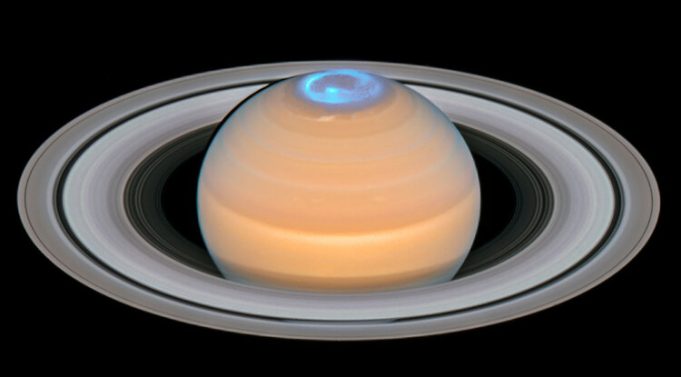
The upper layers in the atmospheres of gas giants—Saturn, Jupiter, Uranus and Neptune—are hot, just like Earth's. But unlike Earth, the Sun is too far from these outer planets to account for the high temperatures. Their heat source has...
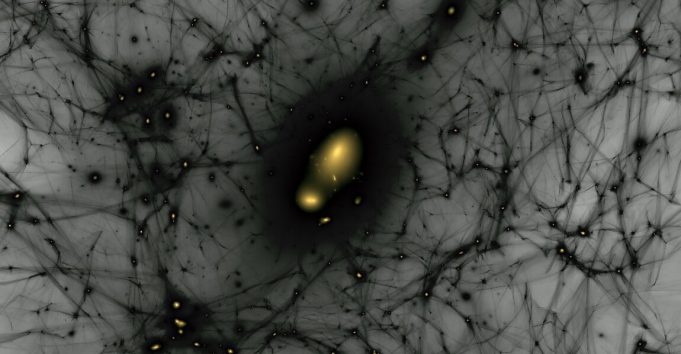
Just as the sun has planets and the planets have moons, our galaxy has satellite galaxies, and some of those might have smaller satellite galaxies of their own. To wit, the Large Magellanic Cloud (LMC), a relatively large satellite...

A hospitable star that doesn't kill you with deadly flares. A rocky planet with liquid water and an agreeable climate. Absence of apocalyptic asteroid storms. No pantheon of angry, vengeful and capricious gods. These are the things that define...
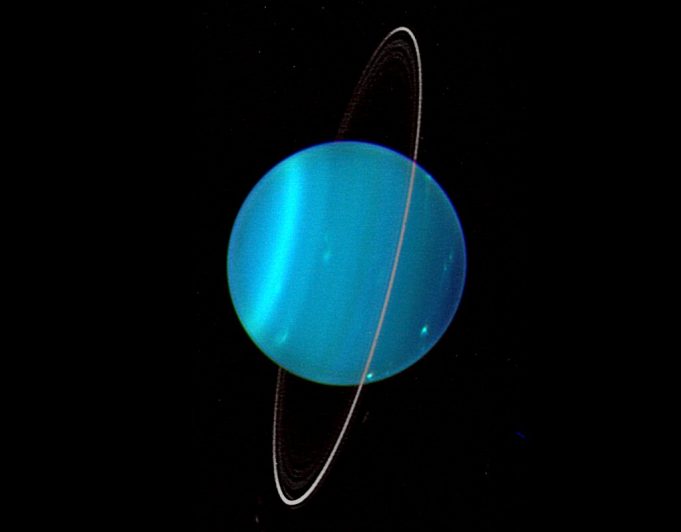
The ice giant Uranus' unusual attributes have long puzzled scientists. All of the planets in the solar system revolve around the sun in the same direction and in the same plane, which astronomers believe is a vestige of how...


