




A team of astronomers, including researchers at MIT, has picked up on a curious, repeating rhythm of fast radio bursts emanating from an unknown source outside our galaxy, 500 million light years away.
Fast radio bursts, or FRBs, are short,...
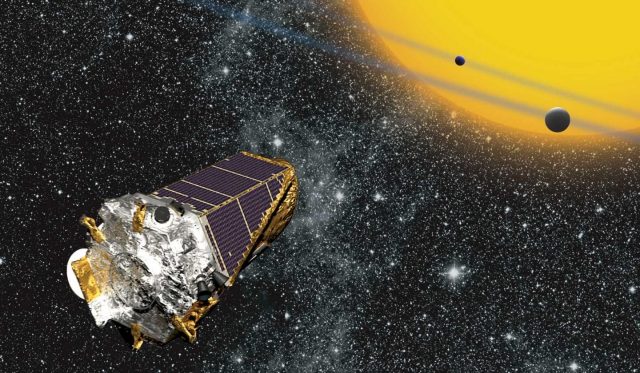
To be considered Earth-like, a planet must be rocky, roughly Earth-sized and orbiting Sun-like (G-type) stars. It also has to orbit in the habitable zones of its star—the range of distances from a star in which a rocky planet...
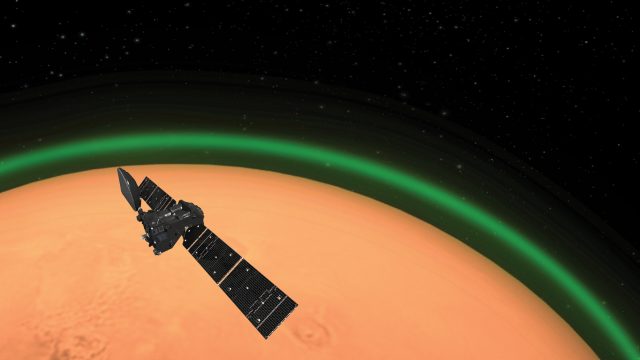
ESA's ExoMars Trace Gas Orbiter has detected glowing green oxygen in Mars' atmosphere—the first time that this emission has been seen around a planet other than Earth.
On Earth, glowing oxygen is produced during polar auroras when energetic electrons from...

Is there anyone out there? This is an age-old question that researchers have now shed new light on with a study that calculates there could be more than 30 intelligent civilizations throughout our Galaxy. This is an enormous advance...

Like most galaxies, the Milky Way hosts a supermassive black hole at its center. Called Sagittarius A*, the object has captured astronomers' curiosity for decades. And now there is an effort to image it directly.
Catching a good photo of...

Today, stars fill the night sky. But when the universe was in its infancy, it contained no stars at all. And an international team of scientists is closer than ever to detecting, measuring and studying a signal from this...
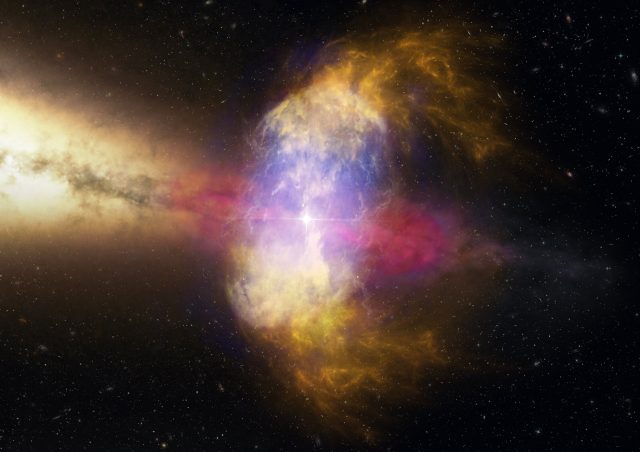
A team of scientists, including Chief Investigator Ilya Mandel from the ARC Centre of Excellence for Gravitational Wave Discovery (OzGrav) at Monash University, recently studied what happens to rotating massive stars when they reach the end of their lives.
Stars...

The formation of our solar system was a messy affair. Most of the material that existed before its formation—material formed around other, long-dead stars—was vaporized, then recondensed into new materials. But some grains of that material, formed before the...

Scientists have expanded our understanding of potentially habitable planets orbiting distant stars by including a critical climate component—the presence of airborne dust.
The researchers suggest that planets with significant airborne dust—similar to the world portrayed in the classic sci-fi Dune—could...

The first confirmed heartbeat of a supermassive black hole is still going strong more than ten years after first being observed.
X-ray satellite observations spotted the repeated beat after its signal had been blocked by our Sun for a number of years.
Astronomers...
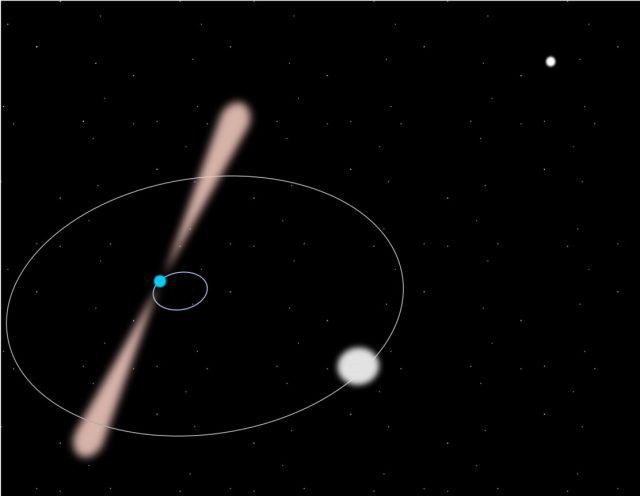
An international collaboration of scientists has recorded the most accurate confirmation to date for one of the cornerstones of Einstein's theory of general relativity, 'the universality of free fall."
The new research shows that the theory holds for strongly self-gravitating...


