




Spider silk is among the strongest and toughest materials in the natural world, as strong as some steel alloys with a toughness even greater than bulletproof Kevlar. Spider silk's unmatched combination of strength and toughness have made this protein-based...

Contrary to previous studies, pigs appear to have better visual discrimination abilities than had previously been assumed. Cognition researchers from the Messerli Research Institute showed in a new study that pigs not only discriminate between front and back views...

The relatively swift adaptability of tiny, acorn-dwelling ants to warmer environments could help scientists predict how other species might evolve in the crucible of global climate change.
That's a big-picture conclusion from research into the some of the world's smallest...

Scientists have revisited—and confirmed—one of the most famous textbook examples of evolution in action.
They showed that differences in the survival of pale and dark forms of the peppered moth (Biston betularia) are explained by how well camouflaged the moths...

Flowering plants are well known for their special relationship to the insects and other animals that serve as their pollinators. But, before the rise of angiosperms, another group of unusual evergreen gymnosperms, known as cycads, may have been the...

An estimated 17 percent of humans worldwide die from cancer, but less than five percent of captive elephants -- who also live for about 70 years, and have about 100 times as many potentially cancerous cells as humans --...
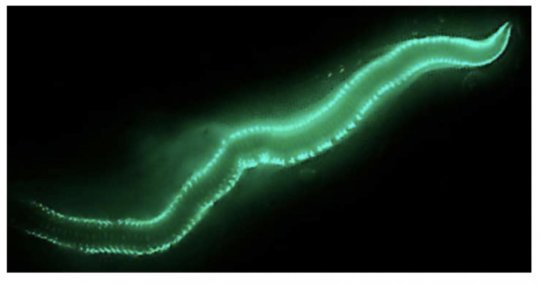
A new study led by researchers at the American Museum of Natural History looks at the genes behind an incredible, luminous seasonal mating display produced by swarms of bioluminescent marine Bermuda fireworms. The new research, published today in the...

A study that examined the shape of hundreds of fossilized shark teeth suggests that modern shark biodiversity was triggered by the end-Cretaceous mass extinction event, about 66 million years ago.
This finding is reported this week in Current Biology.
As part...

A new study by an international team of scientists, including the University of Bristol, has discovered that plants adjust their daily circadian rhythm to the cycle of day and night by measuring the amount of sugars in their cells.
Plants,...

Cobras are among the most widely known venomous snakes, and yet a new research paper has revealed that what was thought to be a single widespread cobra species, the forest cobra, is, in fact, made up of five separate...

Researchers from the University of Hawai'i at M?noa School of Ocean and Earth Science and Technology (SOEST) discovered that several greenhouse gases are emitted as common plastics degrade in the environment.
Mass production of plastics started nearly 70 years ago...


