





Are Laikipia's recovering lions turning to endangered Grevy's zebras (Equus grevyi) for their next meal?
That's what a team of researchers led by WCS and WWF set out to discover -- whether the comeback of a top predator -- in...

Without dramatic reductions in greenhouse-gas emissions, most of the planet's land-based ecosystems -- from its forests and grasslands to the deserts and tundra -- are at high risk of "major transformation" due to climate change, according to a new...

How did life arise on Earth? Rutgers researchers have found among the first and perhaps only hard evidence that simple protein catalysts -- essential for cells, the building blocks of life, to function -- may have existed when life...

Since the discovery of the fossil remains of Australopithecus africanus from Taung nearly a century ago, and subsequent discoveries of Paranthropus robustus, there have been disagreements about the diets of these two South African hominin species. By analyzing the...

Compared with the rest of the animal kingdom, mammals have the biggest brains and produce some of the smallest litters of offspring. A newly described fossil of an extinct mammal relative -- and her 38 babies -- is among...

Biological anthropologists from The University of Texas at Austin have described three new species of fossil primates that were previously unknown to science. All of the new primates were residents of San Diego County at a time when southern...
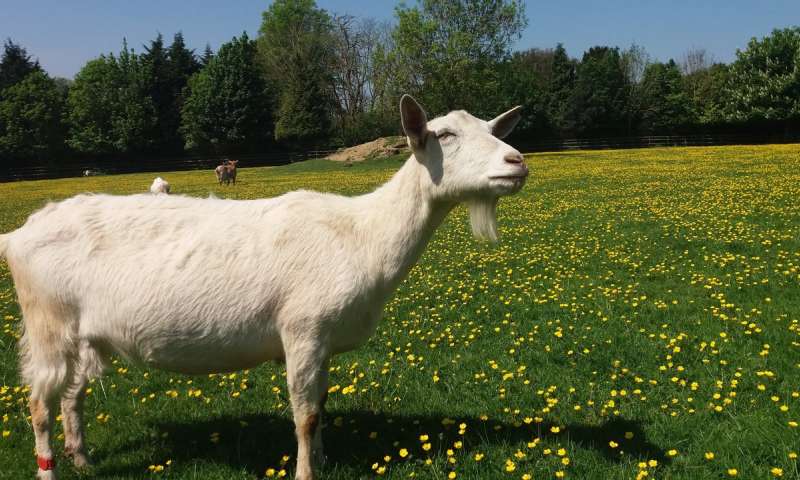
Goats can differentiate between human facial expressions and prefer to interact with happy people, according to a new study led by scientists at Queen Mary University of London.
The study, which provides the first evidence of how goats read human...

By sequencing the genome of the yellow-banded bumblebee, York University researchers have found that inbreeding and disease are likely culprits in their rapid decline in North America.
This is believed to be the first time the genome of an at-risk...

There are a couple of key features that make a turtle a turtle: its shell, for one, but also its toothless beak. A newly-discovered fossil turtle that lived 228 million years ago is shedding light on how modern turtles...

Parrots -- highly intelligent and highly verbal -- may also ruffle their head feathers and blush to communicate visually, according to a new study published August 22 in the open-access journal PLOS ONE by Aline Bertin of the INRA...
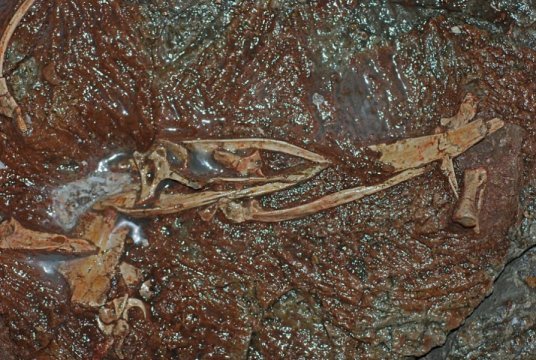
An international team of researchers discovered a new species of dinosaur, Xiyunykus pengi, during an expedition to Xinjiang, China. The discovery is the latest stemming from a partnership between the George Washington University and the Chinese Academy of Sciences....


