



Wombats, the chubby and beloved, short-legged marsupials native to Australia, are central to a biological mystery in the animal kingdom: How do they produce cube-shaped poop? Patricia Yang, a postdoctoral fellow in mechanical engineering at the Georgia Institute of...

The symmetries that govern the world of elementary particles at the most elementary level could be radically different from what has so far been thought. This surprising conclusion emerges from new work published by theoreticians from Warsaw and Potsdam....
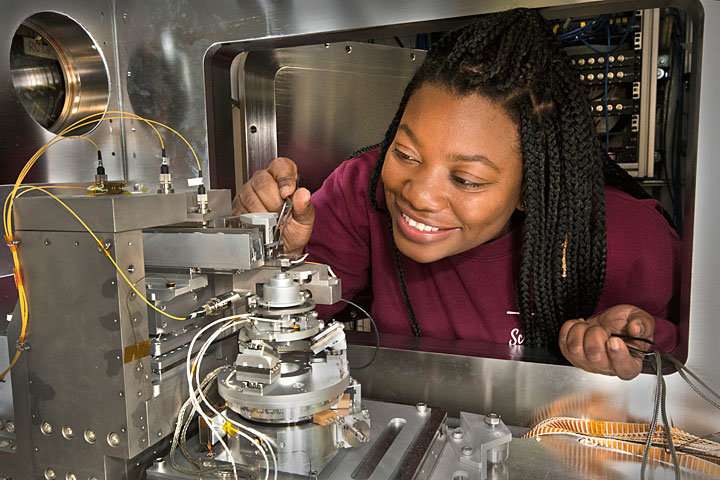
Scientists at the National Synchrotron Light Source II (NSLS-II)—a U.S. Department of Energy (DOE) Office of Science User Facility at DOE's Brookhaven National Laboratory—have used ultrabright x-rays to image single bacteria with higher spatial resolution than ever before. Their...
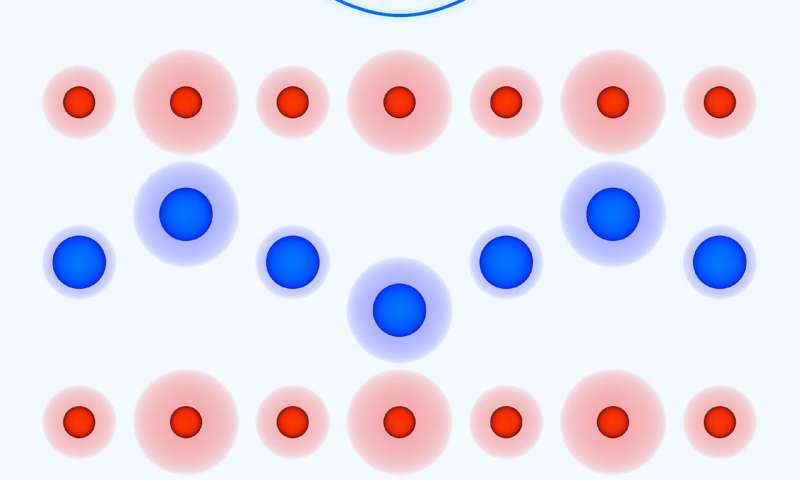
A study led by scientists of the Max Planck Institute for the Structure and Dynamics of Matter (MPSD) at the Center for Free-Electron Laser Science in Hamburg/Germany presents evidence of the amplification of optical phonons in a solid by...

Exploring the mystery of molecular handedness in nature, scientists have proposed a new experimental scheme to create custom-made mirror molecules for analysis. The technique can make ordinary molecules spin so fast that they lose their normal symmetry and shape...
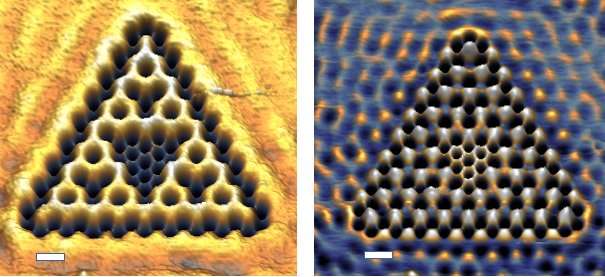
In physics, it is well-known that electrons behave very differently in three dimensions, two dimensions or one dimension. These behaviours give rise to different possibilities for technological applications and electronic systems. But what happens if electrons live in 1.58...

A new approach to controlling magnetism in a microchip could open the doors to memory, computing, and sensing devices that consume drastically less power than existing versions. The approach could also overcome some of the inherent physical limitations that...
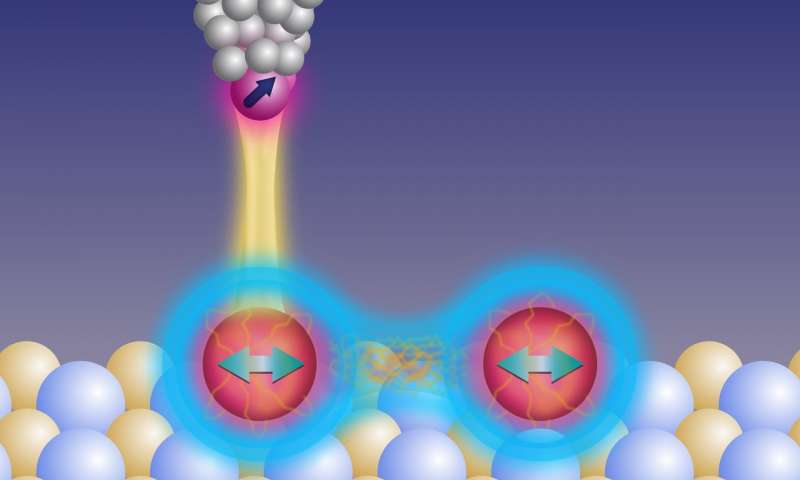
Researchers at the Center for Quantum Nanoscience (QNS) within the Institute for Basic Science (IBS) achieved a major breakthrough in shielding the quantum properties of single atoms on a surface. The scientists used the magnetism of single atoms, known...
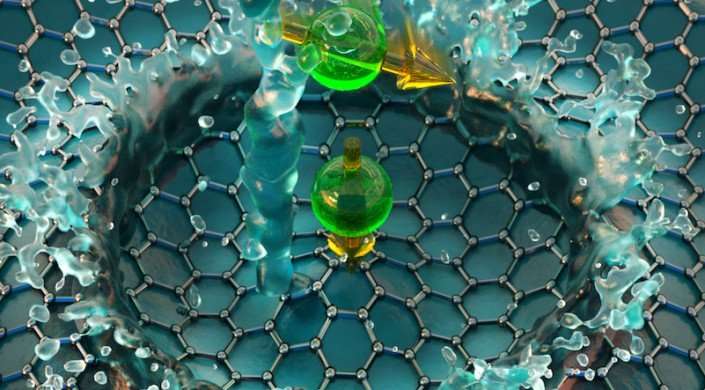
Quantum Hall ferromagnets are among the purest magnets in the world—and one of the most difficult to study. These 2-D magnets can only be made in temperatures less than a degree above absolute zero and in high magnetic fields,...

A system proposed by world war two codebreaker Alan Turing more than 60 years ago can explain the patterning of tooth-like scales possessed by sharks, according to new research.
Scientists from the University of Sheffield's Department of Animal and Plant...

Despite its role in shaping life as we know it, many aspects of photosynthesis remain a mystery. An international collaboration between scientists at SLAC National Accelerator Laboratory, Lawrence Berkeley National Laboratory and several other institutions is working to change...


