



Black holes are known for their voracious appetites, binging on matter with such ferocity that not even light can escape once it's swallowed up.
Less understood, though, is how black holes purge energy locked up in their rotation, jetting near-light-speed...

Researchers have demonstrated that a laser can transmit an audible message to a person without any type of receiver equipment. The ability to send highly targeted audio signals over the air could be used to communicate across noisy rooms...

For the first time, a team led by Prof. Jian-Wei Pan and Prof. Bo Zhao at the University of Science and Technology of China, have successfully observed scattering resonances between atoms and molecules at ultra-low temperatures, shedding light on...

An old thought experiment now appears in a new light. In 1935 Erwin Schrödinger formulated a thought experiment designed to capture the paradoxical nature of quantum physics. A group of researchers led by Gerhard Rempe, Director of the Department...

An international research team led by the University of Liverpool and McMaster University has made a significant breakthrough in the search for new states of matter.
In a study published in the journal Nature Physics, researchers show that the perovskite-related...

A team of researchers based at the Universities of Oxford and Edinburgh have recreated for the first time the famous Draupner freak wave measured in the North Sea in 1995.
The Draupner wave was one of the first confirmed observations...

For the first time ever, an international team of researchers imaged the microscopic state of negative capacitance. This novel result provides researchers with fundamental, atomistic insight into the physics of negative capacitance, which could have far-reaching consequences for energy-efficient...
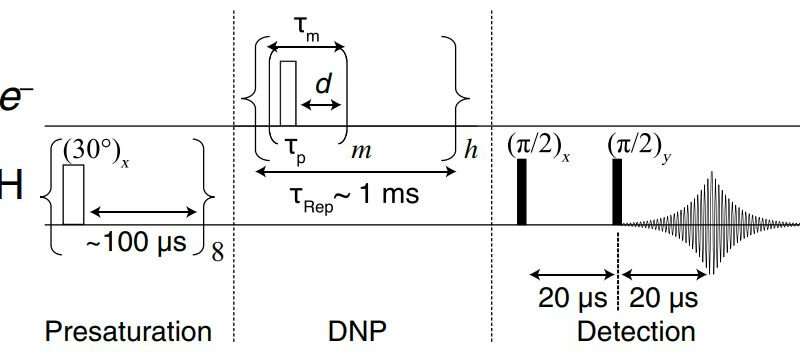
MIT researchers have developed a way to dramatically enhance the sensitivity of nuclear magnetic resonance spectroscopy (NMR), a technique used to study the structure and composition of many kinds of molecules, including proteins linked to Alzheimer's and other diseases.
Using...

An international research team led by physicists from the University of Cologne has implemented a new variant of the basic double-slit experiment using resonant inelastic X-ray scattering at the European Synchrotron ESRF in Grenoble. This new variant offers a...

Columbia University scientists, in collaboration with researchers from Harvard, have succeeded in developing a chemical process to absorb infrared light and re-emit it as visible energy, allowing innocuous radiation to penetrate living tissue and other materials without the damage...
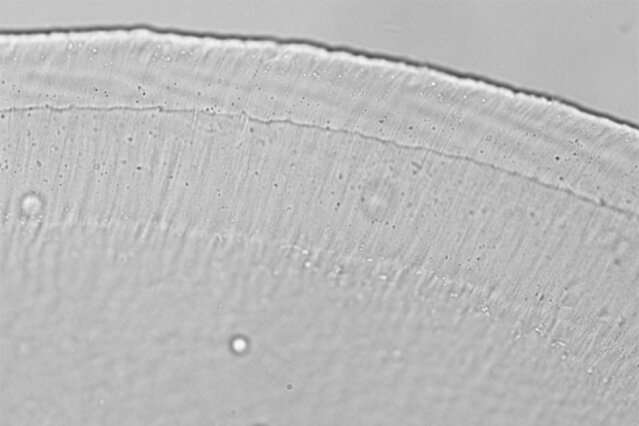
The human ear, like those of other mammals, is so extraordinarily sensitive that it can detect sound-wave-induced vibrations of the eardrum that move by less than the width of an atom. Now, researchers at MIT have discovered important new...


