



Logic and memory devices, such as the hard drives in computers, now use nanomagnetic mechanisms to store and manipulate information. Unlike silicon transistors, which have fundamental efficiency limitations, they require no energy to maintain their magnetic state: Energy is...
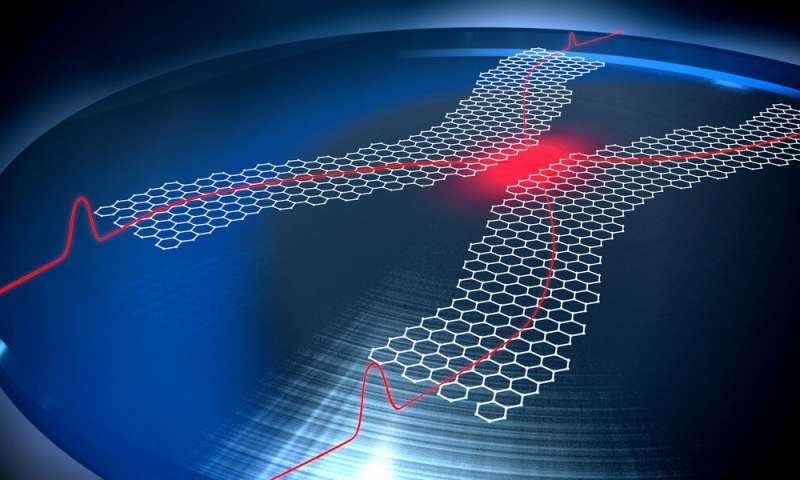
A novel material that consists of a single sheet of carbon atoms could lead to new designs for optical quantum computers. Physicists from the University of Vienna and the Institute of Photonic Sciences in Barcelona have shown that tailored...

In Jules Verne's famous classic 20,000 Leagues Under the Sea, the iconic submarine Nautilus disappears into the Moskenstraumen, a massive whirlpool off the coast of Norway. In space, stars spiral around black holes; on Earth, swirling cyclones, tornadoes and dust...

The obvious drawback of solar panels is that they require sunlight to generate electricity. Some have observed that for a device on Earth facing space, which has a frigid temperature, the chilling outflow of energy from the device can...
Matter waves constitute a crucial feature of quantum mechanics, in which particles have wave properties in addition to particle characteristics. This wave-particle duality was postulated in 1924 by the French physicist Louis de Broglie. The existence of the wave...
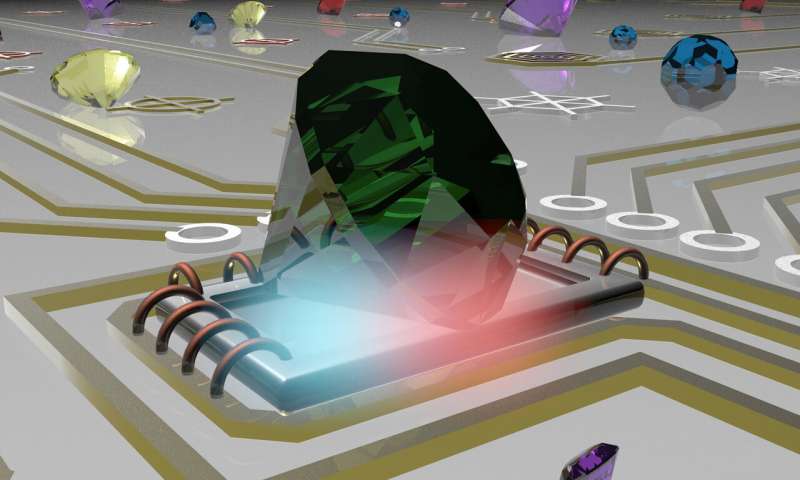
Being able to measure, and monitor, temperatures and temperature changes at miniscule scales—inside a cell or in micro and nano-electronic components—has the potential to impact many areas of research from disease detection to a major challenge of modern computation...

A photodetector converts light into an electrical signal, causing the light to be lost. Researchers led by Tracy Northup at the University of Innsbruck have now built a quantum sensor that can measure light particles non-destructively. It can be...
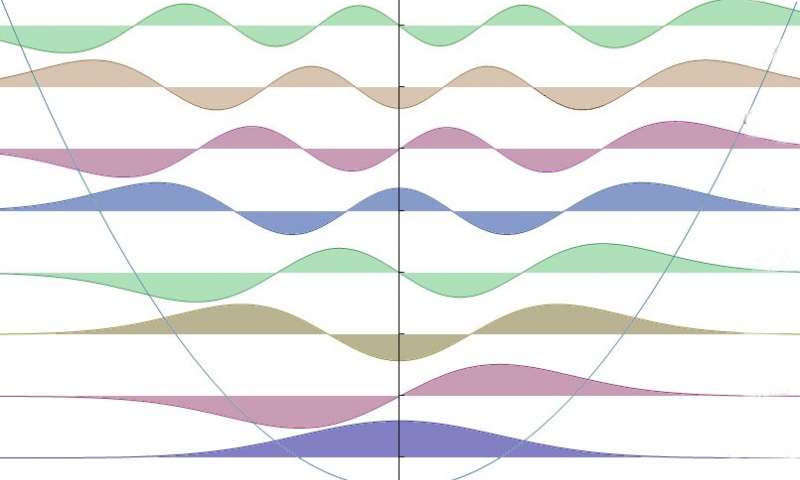
A group of scientists at the Department of Energy's Fermilab has figured out how to use quantum computing to simulate the fundamental interactions that hold together our universe.
In a paper published in Physical Review Letters, Fermilab researchers fill a conspicuous...

Scientists with the Institute for Molecular Engineering at the University of Chicago have made two breakthroughs in the quest to develop quantum technology. In one study, they entangled two quantum bits using sound for the first time; in another,...
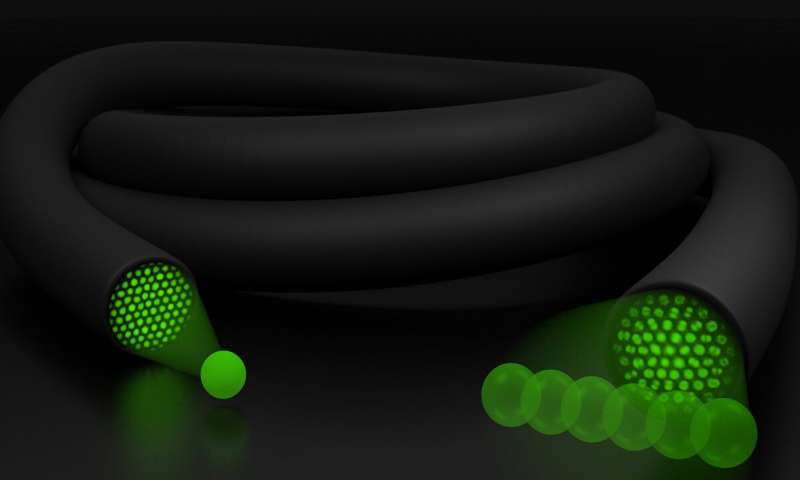
Researchers have shown that existing optical fibre technology could be used to produce microscopic 3-D images of tissue inside the body, paving the way towards 3-D optical biopsies.
Unlike normal biopsies where tissue is harvested and sent off to a...

Giant earthquakes and extreme wealth may not appear to have much in common, but the frequency with which the "Big One" will hit San Francisco and how often someone will earn as much money as Bill Gates can both...


