




Researchers from Sweden's Chalmers University of Technology and the University of Gothenburg present a new method which can double the energy of a proton beam produced by laser-based particle accelerators. The breakthrough could lead to more compact, cheaper equipment...

Using cutting-edge theoretical calculations performed at NERSC, researchers at Berkeley Lab's Molecular Foundry have predicted fascinating new properties of lithium—a light alkali metal that has intrigued scientists for two decades with its remarkable diversity of physical states at high...

A technique to stabilise alkali metal vapour density using gold nanoparticles, so electrons can be accessed for applications including quantum computing, atom cooling and precision measurements, has been patented by scientists at the University of Bath.
Alkali metal vapours, including...

Through an experiment designed to create a super-cold state of water, scientists at the Department of Energy's Oak Ridge National Laboratory used neutron scattering to discover a pathway to the unexpected formation of dense, crystalline phases of ice thought...

Owners of thoroughbred stallions carefully breed prizewinning horses over generations to eke out fractions of a second in million-dollar races. Materials scientists have taken a page from that playbook, turning to the power of evolution and artificial selection to...
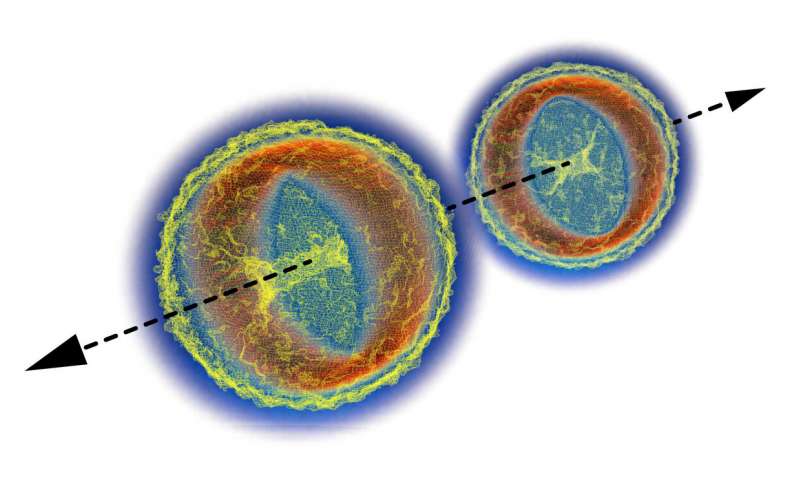
A new idea for smashing beams of elementary particles into one another could reveal how light and matter interact under extreme conditions that may exist on the surfaces of exotic astrophysical objects, in powerful cosmic light bursts and star...
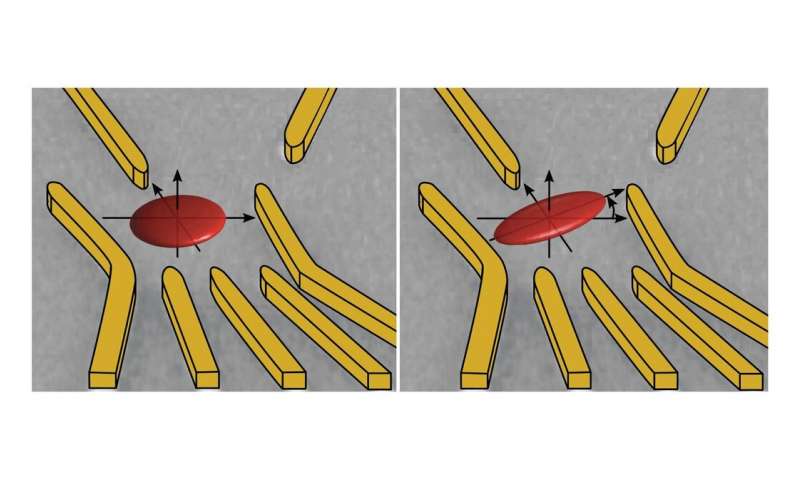
Physicists at the University of Basel have shown for the first time how a single electron looks in an artificial atom. A newly developed method enables them to show the probability of an electron being present in a space....
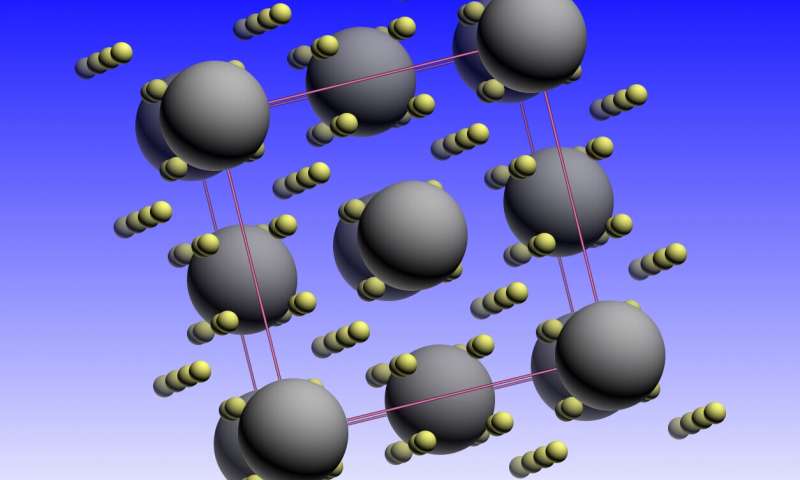
University of Chicago scientists are part of an international research team that has discovered superconductivity—the ability to conduct electricity perfectly—at the highest temperatures ever recorded.
Using advanced technology at UChicago-affiliated Argonne National Laboratory, the team studied a class of materials in which...

Superconductors' never-ending flow of electrical current could provide new options for energy storage and superefficient electrical transmission and generation, to name just a few benefits. But the signature zero electrical resistance of superconductors is reached only below a certain...

In the future, quantum physics could become the guarantor of secure information technology. To achieve this, individual particles of light—photons—are used for secure transmission of data. Findings by physicists from the Max Planck Institute for Solid State Research could...

Machine learning (ML), a form of artificial intelligence that recognizes faces, understands language and navigates self-driving cars, can help bring to Earth the clean fusion energy that lights the sun and stars. Researchers at the U.S. Department of Energy's...


