



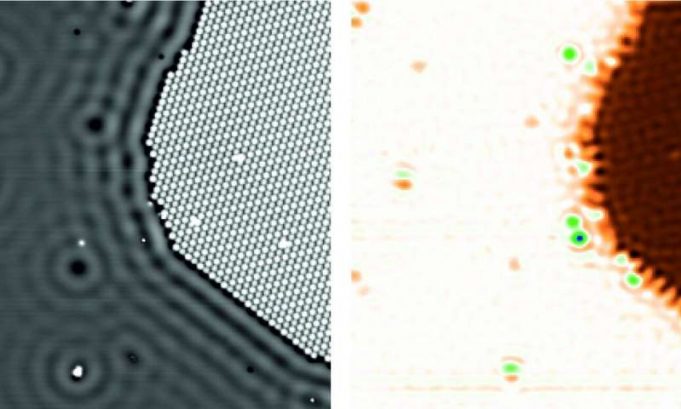
A team of researchers from Jülich in cooperation with the University of Magdeburg has developed a new method to measure the electric potentials of a sample at atomic accuracy. Using conventional methods, it was virtually impossible until now to...
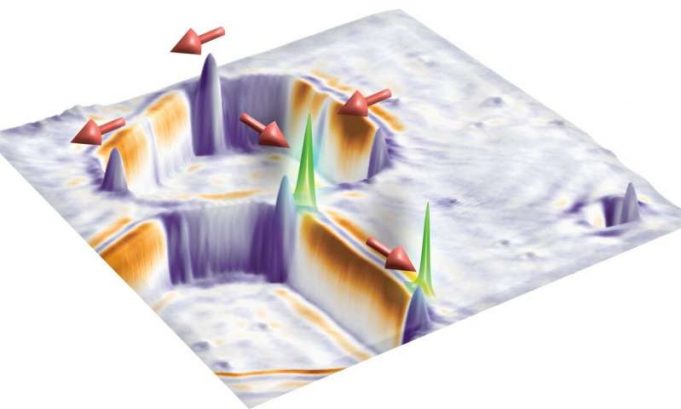
As mysterious as the Italian scientist for which it is named, the Majorana particle is one of the most compelling quests in physics.
Its fame stems from its strange properties—it is the only particle that is its own antiparticle—and from...
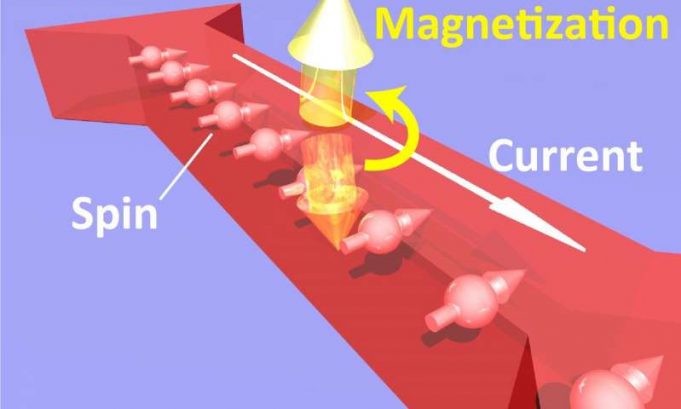
University of Tokyo researchers have created an electronic component that demonstrates functions and abilities important to future generations of computational logic and memory devices. It is between one and two orders of magnitude more power efficient than previous attempts...
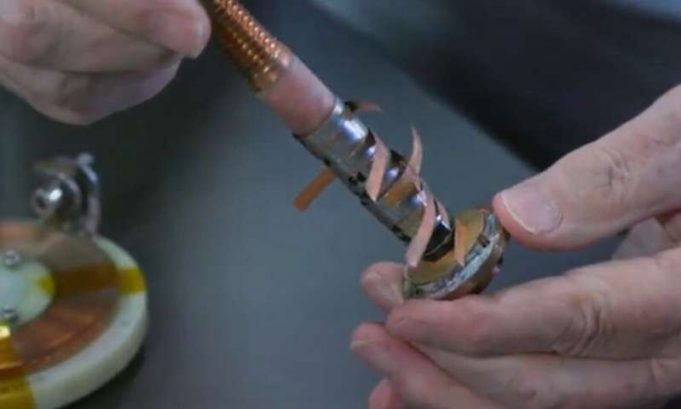
A novel magnet half the size of a cardboard toilet tissue roll usurped the title of "world's strongest magnetic field" from the metal titan that had held it for two decades at the Florida State University-headquartered National High Magnetic...
In 2005, condensed matter physicists Charles Kane and Eugene Mele considered the fate of graphene at low temperatures. Their work led to the discovery of a new state of matter dubbed a "topological insulator," which would usher in a...
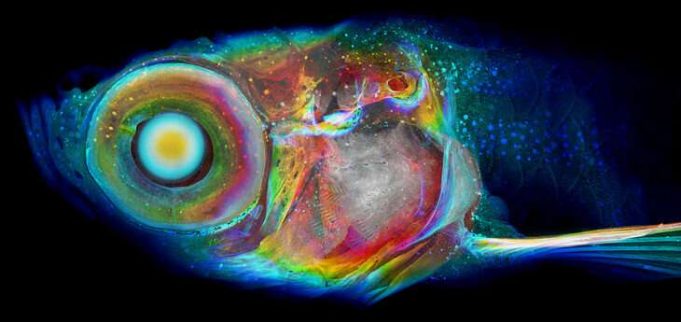
To diagnose and treat diseases like cancer, scientists and doctors must understand how cells respond to different medical conditions and treatments. Researchers have developed a new way to study disease at the cellular level.
Dr. Keith Cheng, distinguished professor of...

It's a process so fundamental to everyday life—in everything from your morning coffeemaker to the huge power plant that provides its electricity—that it's often taken for granted: the way a liquid boils away from a hot surface.
Yet surprisingly, this...

Two theoretical physicists at the University of California, Davis have a new candidate for dark matter, and a possible way to detect it. They presented their work June 6 at the Planck 2019 conference in Granada, Spain and it...

Researchers at Rensselaer Polytechnic Institute have come up with a way to manipulate tungsten diselenide (WSe2) —a promising two-dimensional material—to further unlock its potential to enable faster, more efficient computing, and even quantum information processing and storage. Their findings...

Faster computers. More efficient solar panels. More powerful electric cars.
Researchers at Northeastern are helping to make these technological advances a reality. They are developing ways to change the electrical and magnetic properties of materials used to create circuits that...

MIT researchers have developed a novel "photonic" chip that uses light instead of electricity—and consumes relatively little power in the process. The chip could be used to process massive neural networks millions of times more efficiently than today's classical...


