



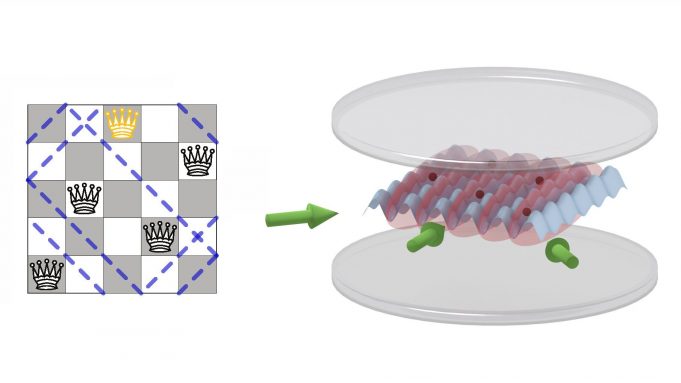
Physicists at the University of Innsbruck are proposing a new model that could demonstrate the supremacy of quantum computers over classical supercomputers in solving optimization problems. In a recent paper, they demonstrate that just a few quantum particles would...

A team of scientists, led by the University of Bristol, have discovered a new method that could be used to build quantum sensors with ultra-high precision.
When individual atoms emit light, they do so in discrete packets called photons.
When this light is measured,...
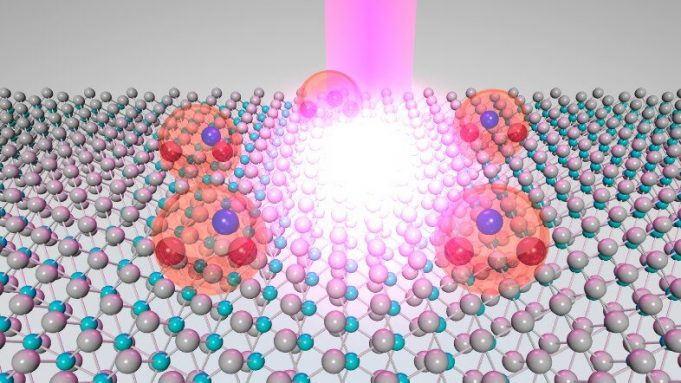
Move aside, electrons; it's time to make way for the trion.
A research team led by physicists at the University of California, Riverside, has observed, characterized, and controlled dark trions in a semiconductor—ultraclean single-layer tungsten diselenide (WSe2)—a feat that could...

Even in the strange world of open quantum systems, the arrow of time points steadily forward—most of the time. New experiments conducted at Washington University in St. Louis compare the forward and reverse trajectories of superconducting circuits called qubits,...
UK researchers have developed world-leading Compound Semiconductor (CS) technology that can drive future high-speed data communications.
A team from Cardiff University's Institute for Compound Semiconductors (ICS) worked with collaborators to innovate an ultrafast and highly sensitive 'avalanche photodiode' (APD) that...

Leaders in the field of ultracold molecule research from Columbia and Harvard universities are teaming up to propel understanding of the quantum mechanics of chemical reactions.
The partnership will result in the development of new, more precise techniques that will...
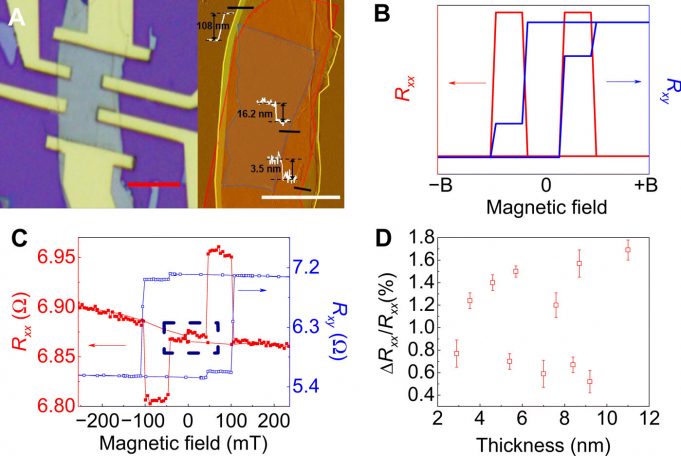
A theoretical-experimental collaboration across two FLEET nodes has discovered new magnetic properties within 2-D structures, with exciting potential for researchers in the emerging field of spintronics.
Spintronic devices use a quantum property known as spin, in addition to the electronic...
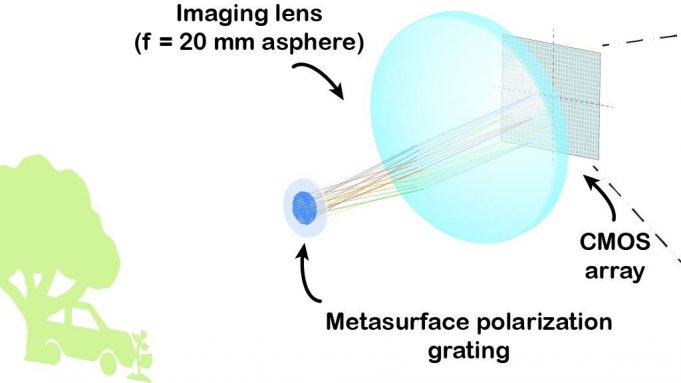
When the first full-length movie made with the advanced, three-color process of Technicolor premiered in 1935, The New York Times declared "it produced in the spectator all the excitement of standing upon a peak ... and glimpsing a strange,...
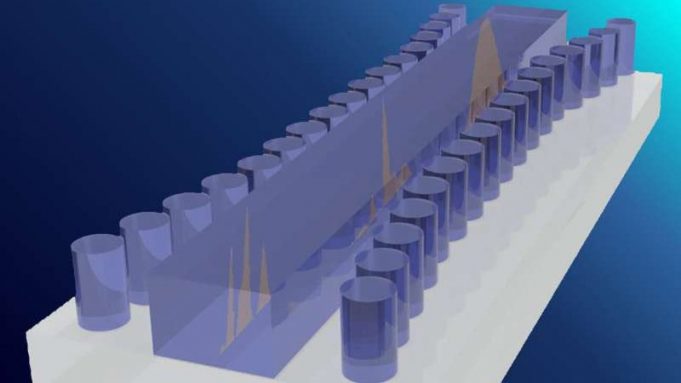
A tsunami holds its wave shape over very long distances across the ocean, retaining its power and 'information' far from its source.
In communications science, retaining information in an optic fibre that spans continents is vital. Ideally, this requires the...

University College Cork (UCC) & University of Oxford Professor of Physics, Séamus Davis, has led a team of experimental physicists in the discovery of the magnetic noise generated by a fluid of magnetic monopoles.
In a world first, the team...

Every type of atom in the universe has a unique fingerprint: It only absorbs or emits light at the particular energies that match the allowed orbits of its electrons. That fingerprint enables scientists to identify an atom wherever it...


