



A team of scientists at Freie Universität Berlin has developed an Artificial Intelligence (AI) method that provides a fundamentally new solution of the "sampling problem" in statistical physics. The sampling problem is that important properties of materials and molecules...
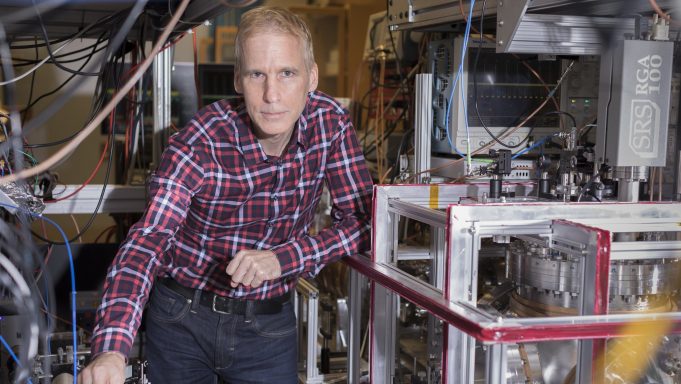
York University researchers have made a precise measurement of the size of the proton—a crucial step towards solving a mystery that has preoccupied scientists around the world for the past decade.
Scientists thought they knew the size of the proton,...
An exotic physical phenomenon, involving optical waves, synthetic magnetic fields, and time reversal, has been directly observed for the first time, following decades of attempts. The new finding could lead to realizations of what are known as topological phases,...

The future of technology relies, to a great extent, on new materials, but the work of developing those materials begins years before any specific application for them is known. Stephen Wilson, a professor of materials in UC Santa Barbara's...

Quantum information relies on the possibility of writing messages in a quantum particle and reading them out in a reliable way. If, however, the particle is relativistic, meaning that it moves with velocities close to the speed of light,...
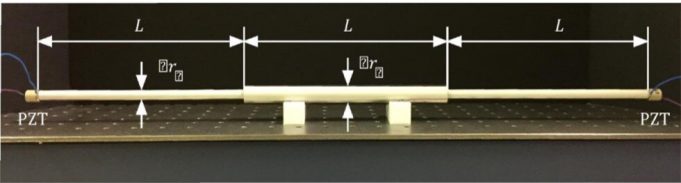
Light and sound waves are at the basis of energy and signal transport and fundamental to some of our most basic technologies—from cell phones to engines. Scientists, however, have yet to devise a method that allows them to store...

If you swirl a glass of wine clockwise, the wine inside will also rotate clockwise. But, if you're making a blueberry pancake and you swirl the pan clockwise, the pancake will rotate counterclockwise. Don't believe us? Go try it.
The...
The quantum internet promises absolutely tap-proof communication and powerful distributed sensor networks for new science and technology. However, because quantum information cannot be copied, it is not possible to send this information over a classical network. Quantum information must...
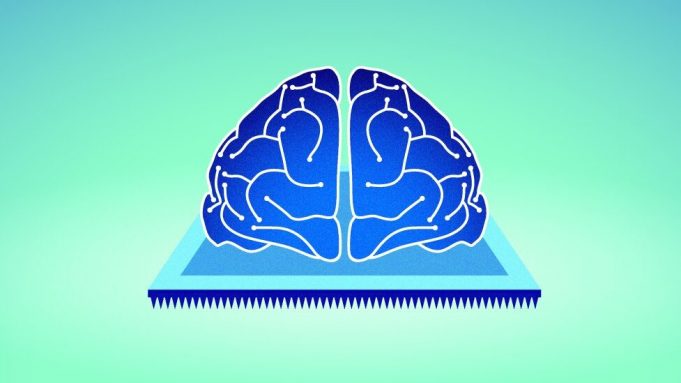
Researchers from the Moscow Institute of Physics and Technology have created a device that acts like a synapse in the living brain, storing information and gradually forgetting it when not accessed for a long time. Known as a second-order...

The cosmological constant, introduced a century ago by Albert Einstein in his theory of general relativity, is a thorn in the side of physicists. The difference between the theoretical prediction of this parameter and its measurement based on astronomical...
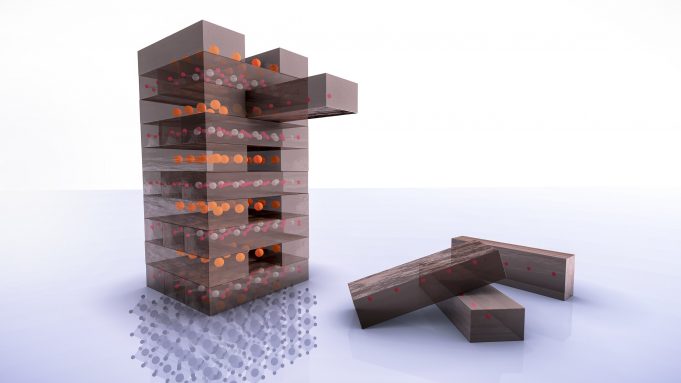
Scientists at the Department of Energy's SLAC National Accelerator Laboratory and Stanford University have made the first nickel oxide material that shows clear signs of superconductivity—the ability to transmit electrical current with no loss.
Also known as a nickelate, it's...


