



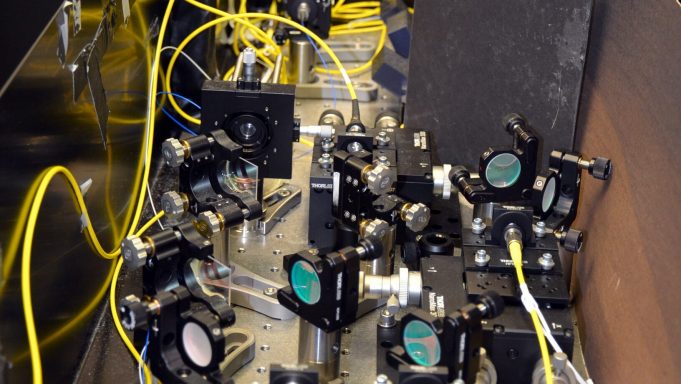
Over the last two decades, tremendous advances have been made in the field of quantum information science. Scientists are capitalizing on the strange nature of quantum mechanics to solve difficult problems in computing and communications, as well as in...

A new measurement protocol, developed at TU Wien (Vienna), makes it possible to measure the quantum phase of electrons—an important step for attosecond physics.
It is like a microscope for time: Today's methods of attosecond physic allows us to measure...
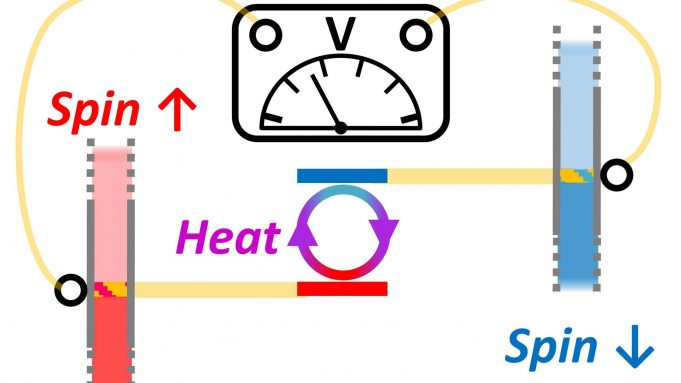
Today's energy-hungry global society is struggling with how to mitigate the effects of man-made climate change, and under what conditions of voluntary/coercive adaptation. Present fossil fuel-free technologies appear inadequate/insufficient to meet this daunting challenge. Addressing this challenge from a...

Quantum physics is difficult and explaining it even more so. Associate Professor Holger F. Hofmann from Hiroshima University and Kartik Patekar from the Indian Institute of Technology Bombay have tried to solve one of the biggest puzzles in quantum...
Energy is a quantity that must always be positive—at least that's what our intuition tells us. If every single particle is removed from a certain volume until there is nothing left that could possibly carry energy, then a limit...

Rice University physicist Qimiao Si began mapping quantum criticality more than a decade ago, and he's finally found a traveler that can traverse the final frontier.
The traveler is an alloy of cerium palladium and aluminum, and its journey is...
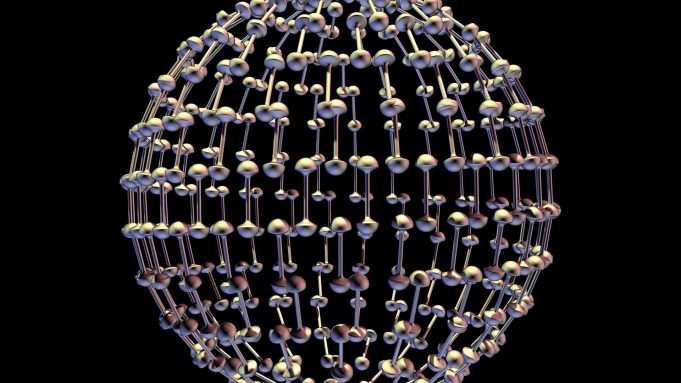
The discovery that free electrons can move asymmetrically provides a deeper understanding of one of the basic processes in physics: the photoelectric effect. It was first described by Albert Einstein and explains how high frequency light releases electrons from...
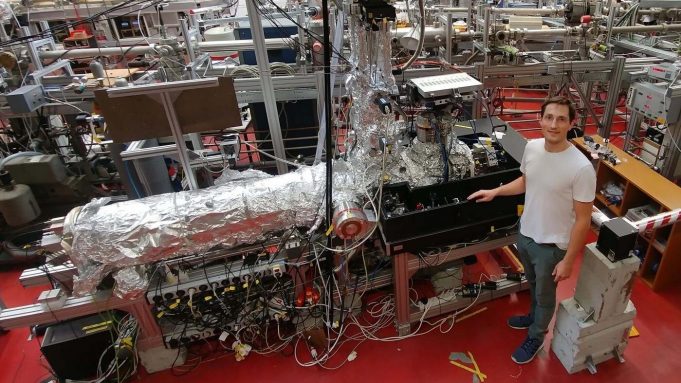
Albert Einstein received the Nobel Prize for explaining the photoelectric effect: in its most intuitive form, a single atom is irradiated with light. According to Einstein, light consists of particles (photons) that transfer only quantised energy to the electron...
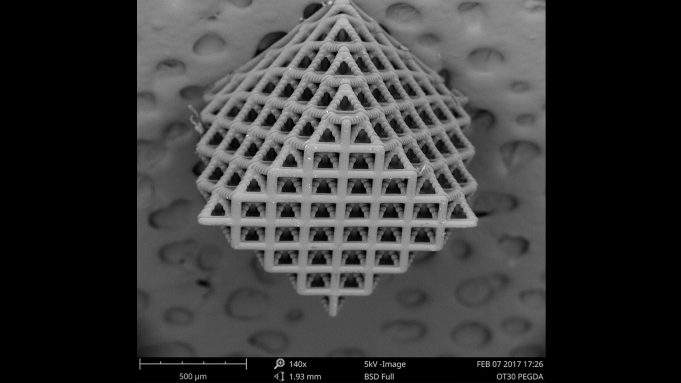
Lawrence Livermore National Laboratory (LLNL) researchers have designed a new class of 3-D-printed lattice structures that combine lightweight and high stiffness, despite breaking a rule previously thought to be required to exhibit such properties. One of the new structures...
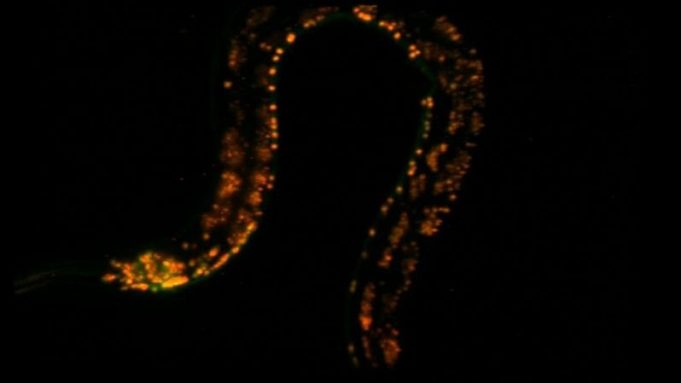
The Columbia team behind the revolutionary 3-D SCAPE microscope announces today a new version of this high-speed imaging technology. In collaboration with scientists from around the world, they used SCAPE 2.0 to reveal previously unseen details of living creatures—from...
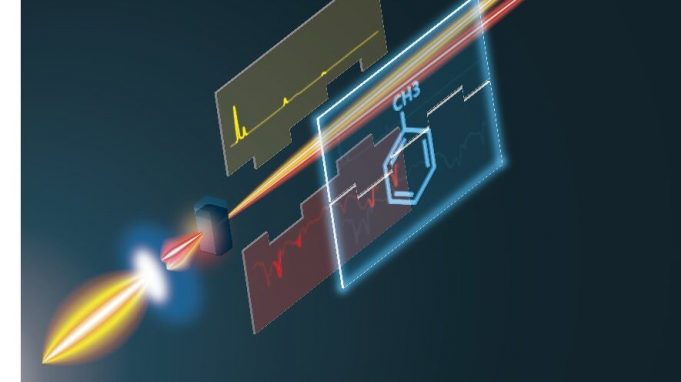
Researchers have built a new tool to study molecules using a laser, a crystal and light detectors. This new technology will reveal the structures of molecules with increased detail and specificity.
"We live in the molecular world where most things...


