



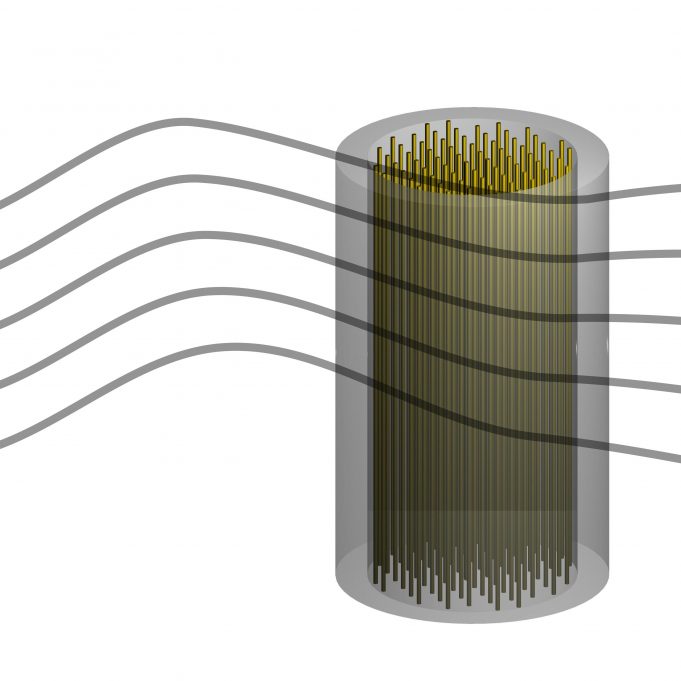
Physicists at Stockholm University and the Max Planck Institute for Physics have turned to plasmas in a proposal that could revolutionise the search for the elusive dark matter.
Dark matter makes up 85 percent of the matter in the universe....
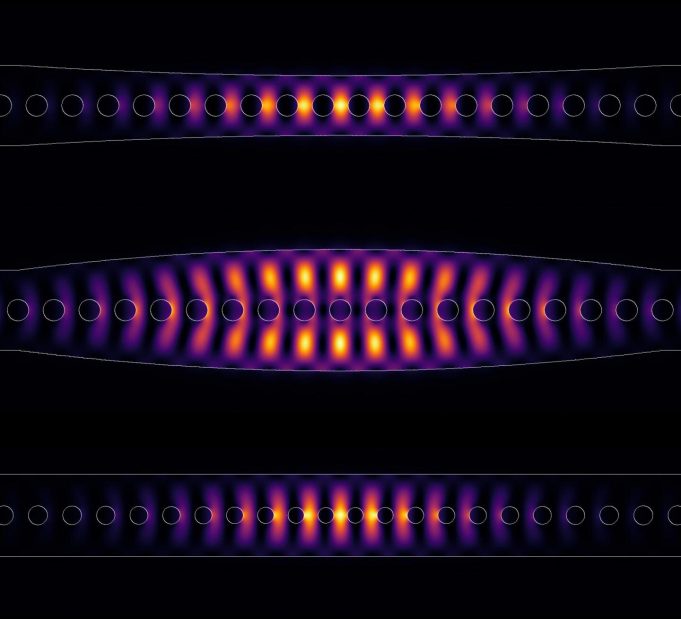
Quantum effects are genuinely found in the world of nanostructures and allow a wide variety of new technological applications. For example, a quantum computer could in the future solve problems, which conventional computers need a lot of time to...

Researchers led by Delft University of Technology personnel have made two steps in the conversion of quantum states between signals in the microwave and optical domains. This is of great interest for connecting future superconducting quantum computers into a...

ETH researchers have developed a compact infrared spectrometer. It's small enough to fit on a computer chip but can still open up interesting possibilities—in space and in everyday life.
Nowadays, a mobile phone can do almost anything: take photos or video, send...
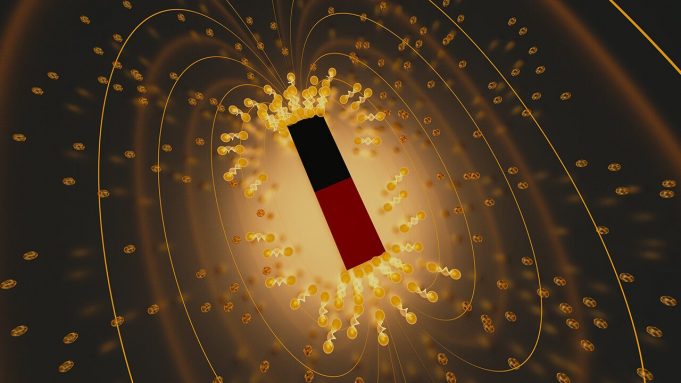
Researchers from the University of Maryland, the National Institute of Standards and Technology (NIST), the National High Magnetic Field Laboratory (NHMFL) and the University of Oxford have observed a rare phenomenon called re-entrant superconductivity in the material uranium ditelluride....
In a certain sense, physics is the study of the universe's symmetries. Physicists strive to understand how systems and symmetries change under various transformations.
New research from Washington University in St. Louis realizes one of the first parity-time (PT) symmetric quantum...

When a guitar string is plucked, it vibrates as any vibrating object would, rising and falling like a wave, as the laws of classical physics predict. But under the laws of quantum mechanics, which describe the way physics works...

It's a phenomenon many preschoolers know well: When you mix cornstarch and water, weird things happen. Swish it gently in a bowl, and the mixture sloshes around like a liquid. Squeeze it, and it starts to feel like paste....
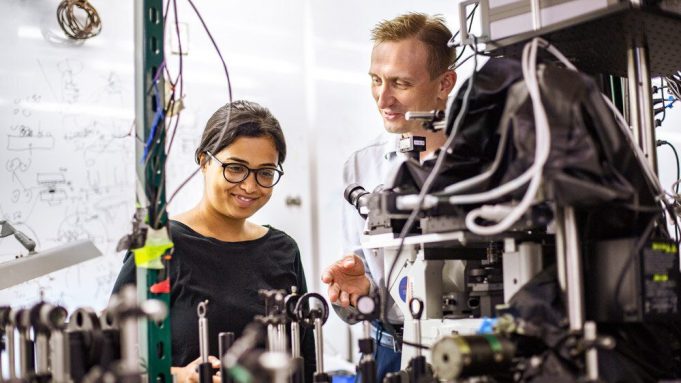
Research led by University of Texas at Dallas physicists has altered the understanding of the fundamental properties of perovskite crystals, a class of materials with great potential as solar cells and light emitters.
Published in July in Nature Communications, the study...
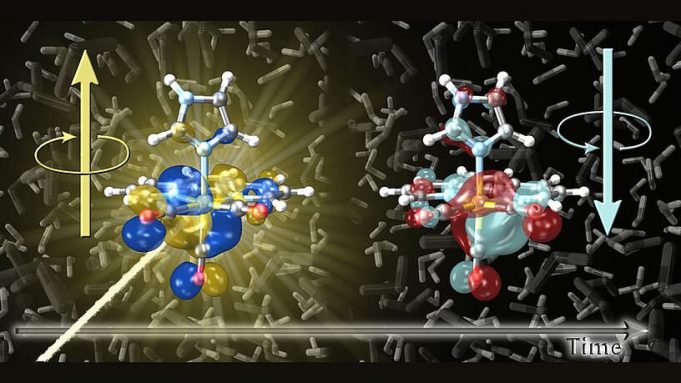
Metal complexes show a fascinating behavior in their interactions with light, which for example is utilized in organic light emitting diodes, solar cells, quantum computers, or even in cancer therapy. In many of these applications, the electron spin, a...
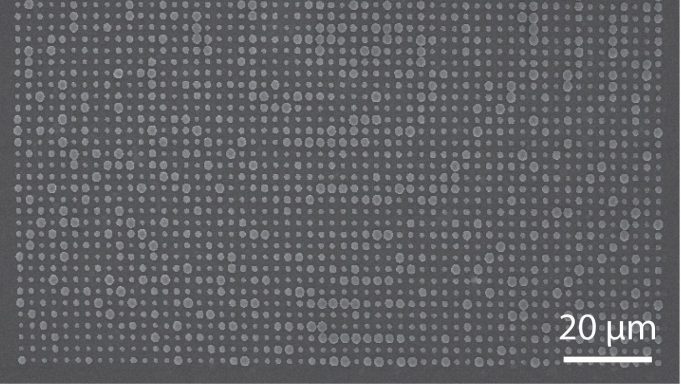
A team led by scientists at the University of Washington has designed and tested a 3-D-printed metamaterial that can manipulate light with nanoscale precision. As they report in a paper published Oct. 4 in the journal Science Advances, their designed...


