



Entanglement, once called "spooky action at a distance" by Einstein, is the phenomenon in which the quantum states of separated particles cannot be described independently. This puzzling phenomenon is widely exploited in the quantum physicist's toolbox, and is a...
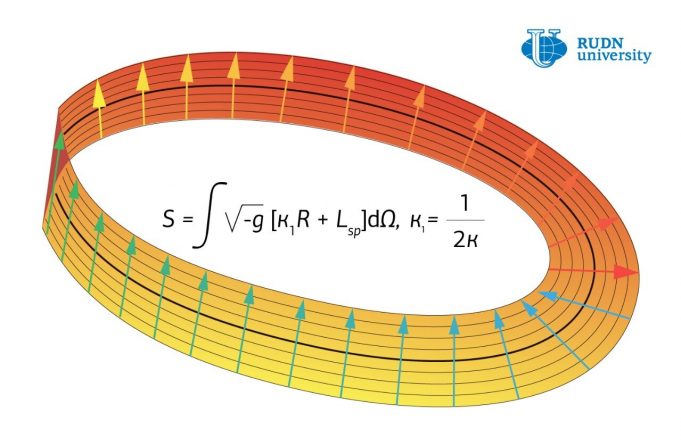
A physicist from RUDN University has proposed a new theoretical model for the interaction of spinor and gravitational fields. He considered the evolution of the universe within one of the variants of the widespread Bianchi cosmological model. In this...
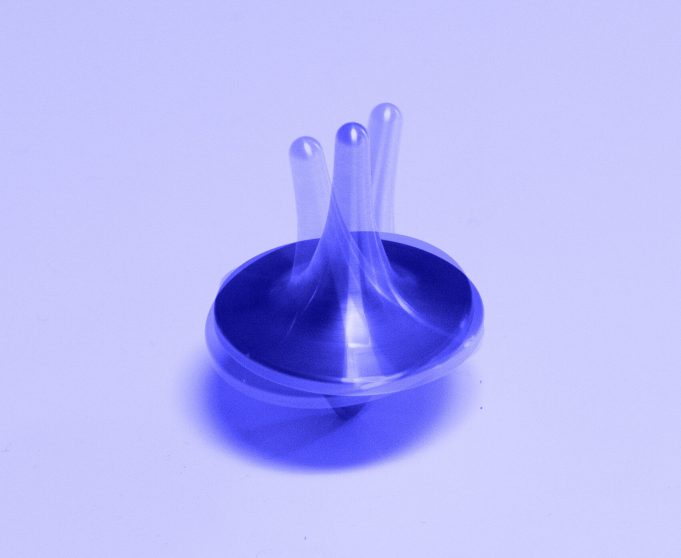
Scientists at the U.S. Department of Energy's Brookhaven National Laboratory have developed a non-invasive way to measure the "spin tune" of polarized protons at the Relativistic Heavy Ion Collider (RHIC)—an important factor for maintaining these spinning particles' alignment.
The technique...

Since their invention more than 60 years ago, diamond anvil cells have made it possible for scientists to recreate extreme phenomena—such as the crushing pressures deep inside the Earth's mantle—or to enable chemical reactions that can only be triggered...

If you use a vacuum-insulated thermos to help keep your coffee hot, you may know it's a good insulator because heat energy has a hard time moving through empty space. Vibrations of atoms or molecules, which carry thermal energy,...
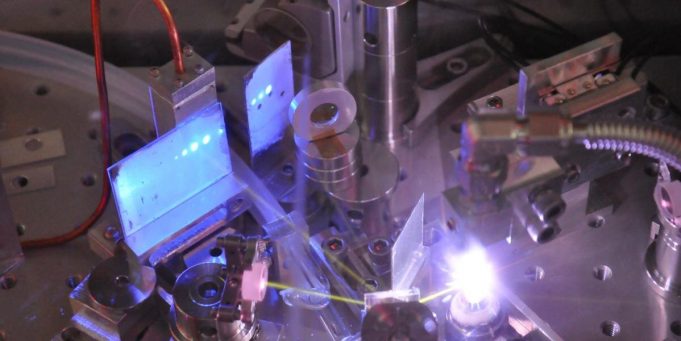
For the first time, researchers have been able to record, frame-by-frame, how an electron interacts with certain atomic vibrations in a solid. The technique captures a process that commonly causes electrical resistance in materials while, in others, can cause...

The motions of plasmas may be notoriously difficult to model, but they can be better understood by analysing what happens when protons are scattered by atoms of hydrogen. In itself, this property is characterised by the size of a...
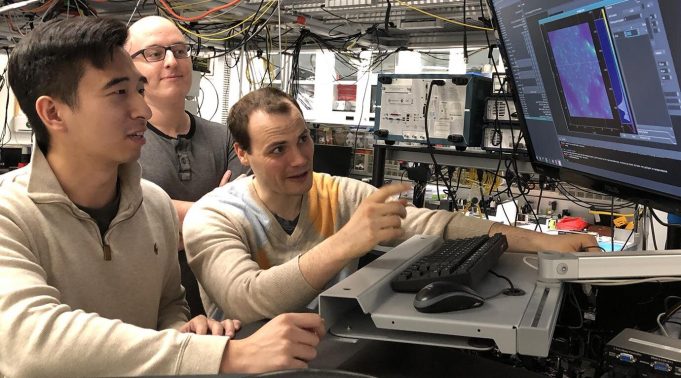
After decades of miniaturization, the electronic components we've relied on for computers and modern technologies are now starting to reach fundamental limits. Faced with this challenge, engineers and scientists around the world are turning toward a radically new paradigm:...
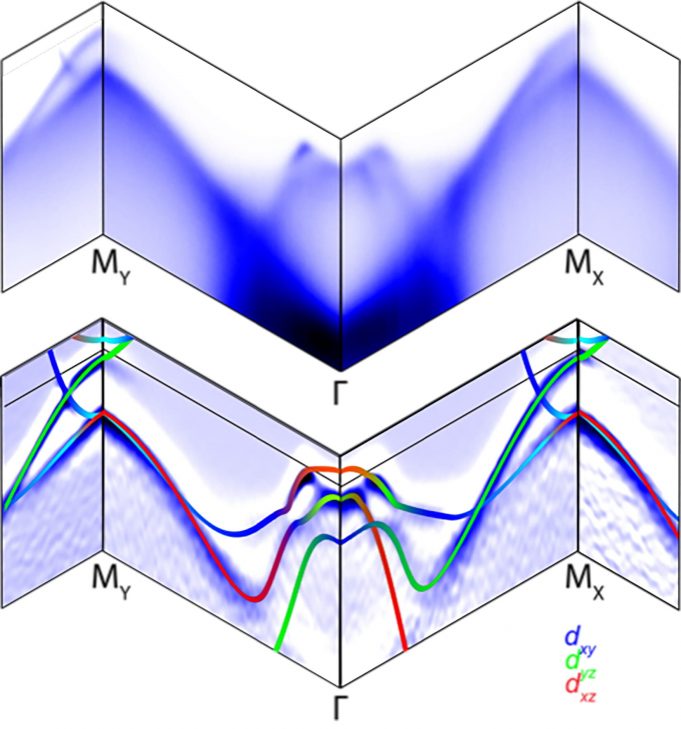
Using a clever technique that causes unruly crystals of iron selenide to snap into alignment, Rice University physicists have drawn a detailed map that reveals the "rules of the road" for electrons both in normal conditions and in the...
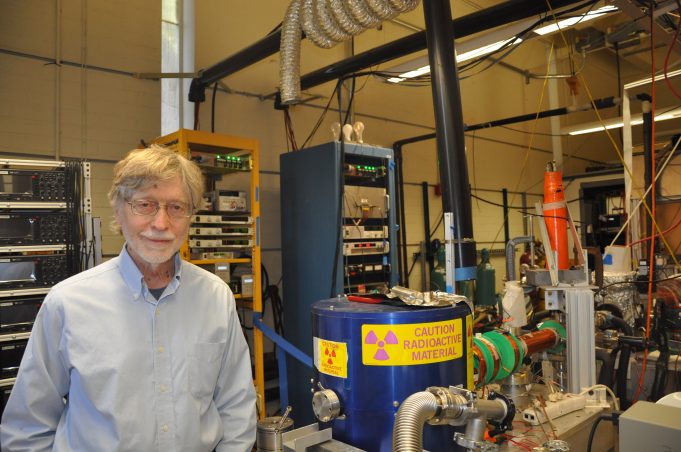
A physicist at the University of California, Riverside, has performed calculations showing hollow spherical bubbles filled with a gas of positronium atoms are stable in liquid helium.
The calculations take scientists a step closer to realizing a gamma-ray laser, which may...

Researchers from the Austrian Academy of Sciences, the University of Vienna and the University of Geneva, have proposed a new interpretation of classical physics without real numbers. This new study challenges the traditional view of classical physics as deterministic.
In...


