



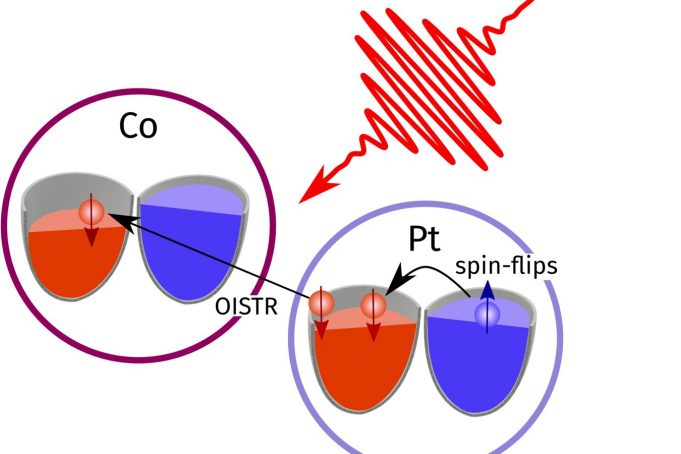
Combining experiment and theory, researchers from the Max Born Institute for Nonlinear Optics and Short Pulse Spectroscopy (MBI) and the Max Planck Institute of Microstructure Physics have disentangled how laser pulses can manipulate magnetization via ultrafast transfer of electrons...

Labs around the world are racing to develop new computing and sensing devices that operate on the principles of quantum mechanics and could offer dramatic advantages over their classical counterparts. But these technologies still face several challenges, and one...
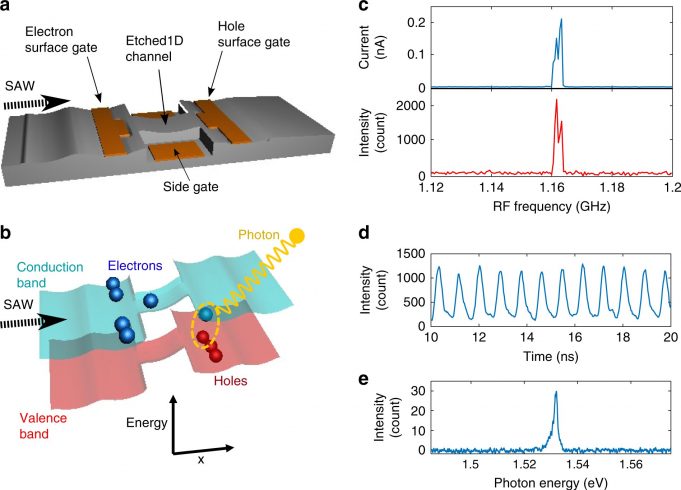
Researchers at the University of Cambridge have developed a novel technique for generating single photons, by moving single electrons in a specially designed light-emitting diode (LED). This technique, reported in the journal Nature Communications, could help the development of the...
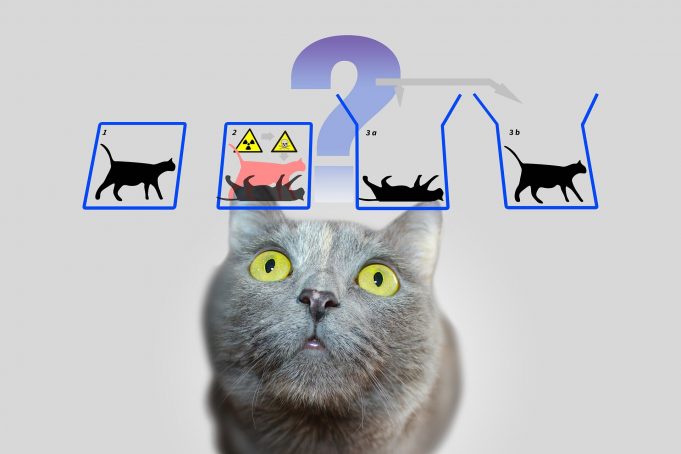
The paradox of Schrödinger's cat -- the feline that is, famously, both alive and dead until its box is opened -- is the most widely known example of a recurrent problem in quantum mechanics: its dynamics seems to predict...

A team headed by Prof. Dr. Frank Stienkemeier and Dr. Lukas Bruder from the Institute of Physics at the University of Freiburg has succeeded in observing in real-time ultrafast quantum interferences—in other words the oscillation patterns—of electrons which are...
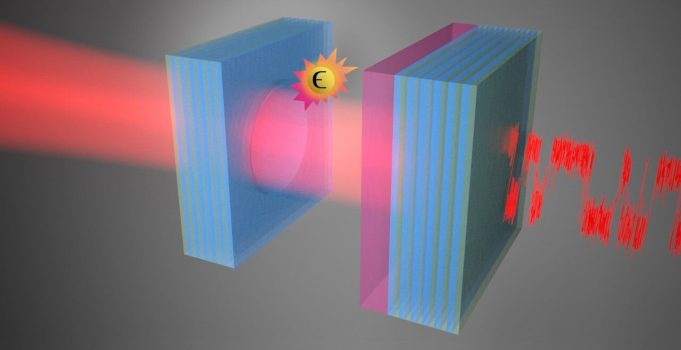
In conventional sensing methods, noise is always a problem, especially in systems that are meant to detect changes in their environment that are hardly bigger or even smaller than the noise in the system. Encountering this problem in his...
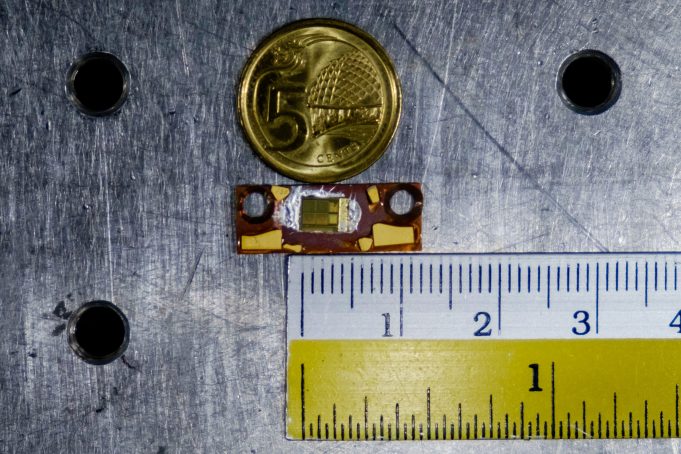
Scientists and engineers from Nanyang Technological University, Singapore (NTU Singapore) and the University of Leeds in the U.K. have created the first electrically driven topological laser, which has the ability to route light particles around corners and to cope...
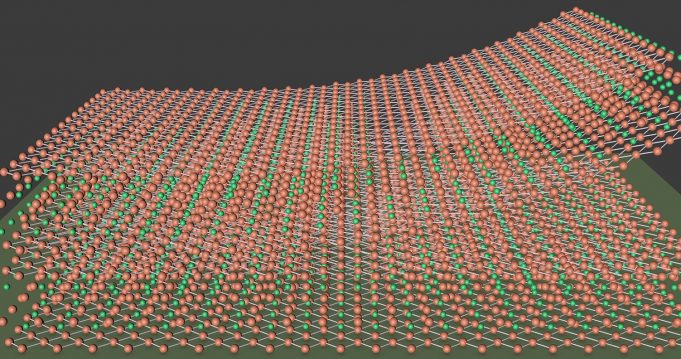
All the elements are there to begin with, so to speak; it's just a matter of figuring out what they are capable of—alone or together. For Leslie Schoop's lab, one recent such investigation has uncovered a layered compound with...
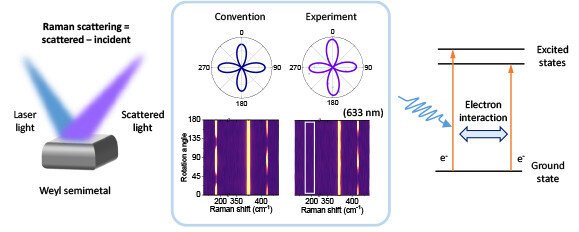
A method to observe a new class of topological materials, called Weyl semimetals, was developed by researchers at Penn State, MIT, Tohoku University, Japan and the Indonesian Institute of Sciences. The material's unusual electronic properties could be useful in...

Quantum engineers from UNSW Sydney have created artificial atoms in silicon chips that offer improved stability for quantum computing.
In a paper published today in Nature Communications, UNSW quantum computing researchers describe how they created artificial atoms in a silicon 'quantum dot', a...
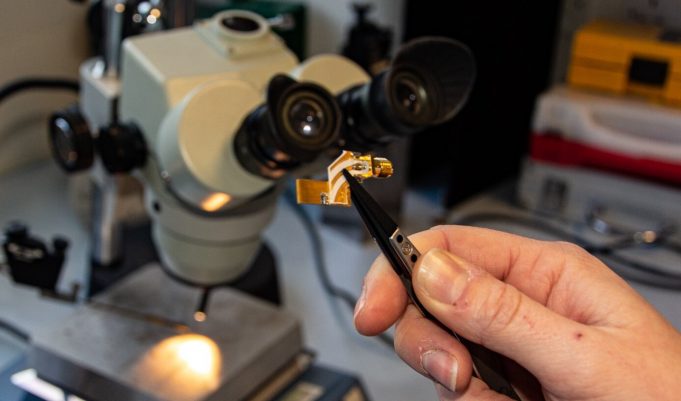
Researchers have made a breakthrough in the control of terahertz quantum cascade lasers, which could lead to the transmission of data at the rate of 100 gigabits per second—around one thousand times quicker than a fast Ethernet operating at...


