



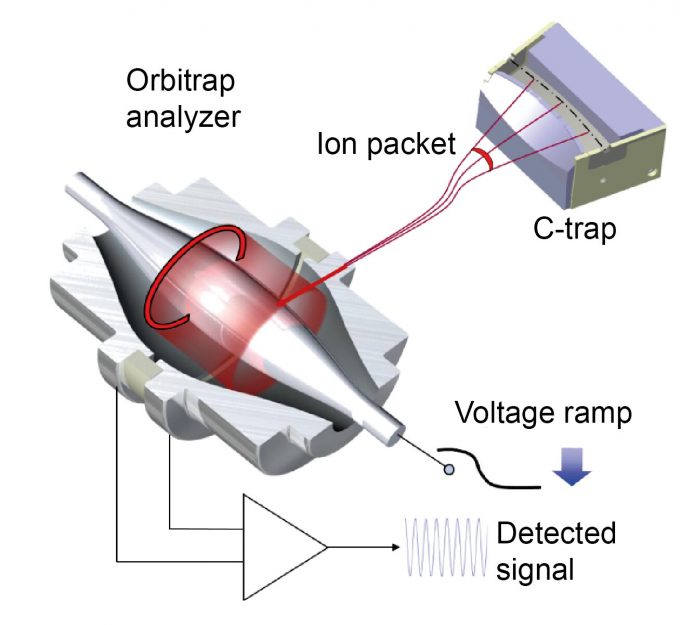
Utrecht scientists have succeeded in measuring the mass of individual molecules. By modifying an existing mass spectrometer and developing special software, the researchers succeeded in making ultra-sensitive measurements. This enables them to measure each particle separately in a mixture...
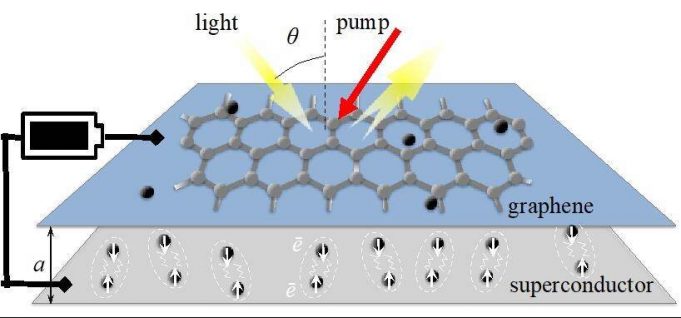
Researchers at the Center for Theoretical Physics of Complex Systems (PCS), within the Institute for Basic Science (IBS, South Korea) have proposed a transistor made of graphene and a two-dimensional superconductor that amplifies terahertz (THz) signals. This research was...

Google is racing to develop quantum-enhanced processors that use quantum mechanical effects to increase the speed at which data can be processed. In the near term, Google has devised new quantum-enhanced algorithms that operate in the presence of realistic...

In an advance that may help researchers scale up quantum devices, an MIT team has developed a method to "recruit" neighboring quantum bits made of nanoscale defects in diamond, so that instead of causing disruptions they help carry out...
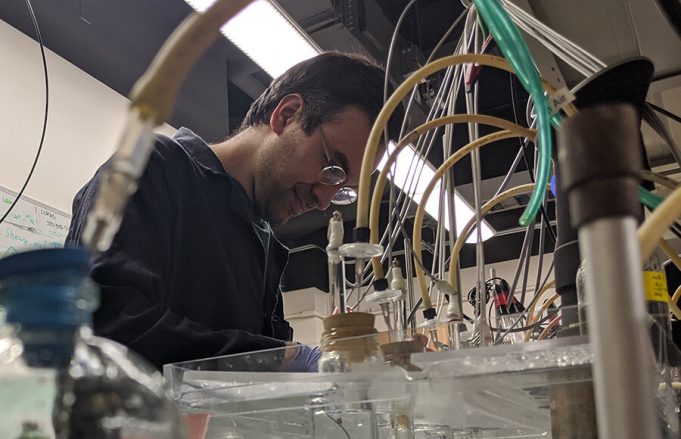
Electrons spin. It's a fundamental part of their existence. Some spin "up" while others spin "down." Scientists have known this for about a century, thanks to quantum physics.
They've also known that magnetic fields can affect the direction of an...

To heat a slice of pizza, you probably wouldn't consider first chilling it in the fridge. But a theoretical study suggests that cooling, as a first step before heating, may be the fastest way to warm up certain materials....

Scientists have identified a sub-atomic particle that could have formed the "dark matter" in the Universe during the Big Bang.
Up to 80% of the Universe could be dark matter, but despite many decades of study, its physical origin has remained...
A group of scientists from the RIKEN Center for Emergent Matter Science in Japan has succeeded in taking repeated measurements of the spin of an electron in a silicon quantum dot (QD) without changing its spin in the process....
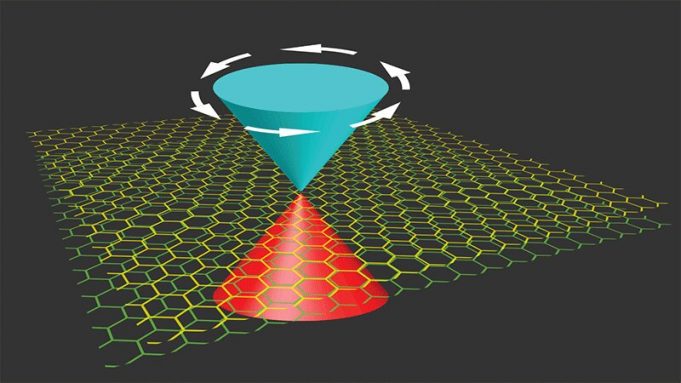
Graphene, a single sheet of carbon atoms, has many extreme electrical and mechanical properties. Two years ago, researchers showed how two sheets laid on top of each other and twisted at just the right angle can become superconducting, so...
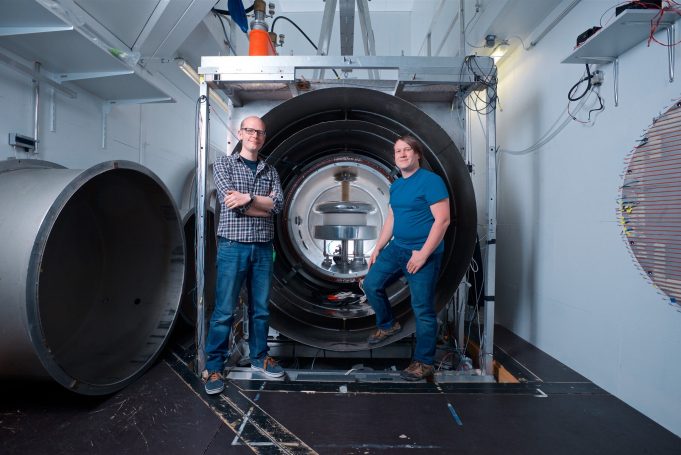
Scientists at the University of Sussex have measured a property of the neutron—a fundamental particle in the universe—more precisely than ever before. Their research is part of an investigation into why there is matter left over in the universe,...
Researchers at the Paul Scherrer Institute PSI have measured a property of the neutron more precisely than ever before. In the process they found out that the elementary particle has a significantly smaller electric dipole moment than was previously...


