



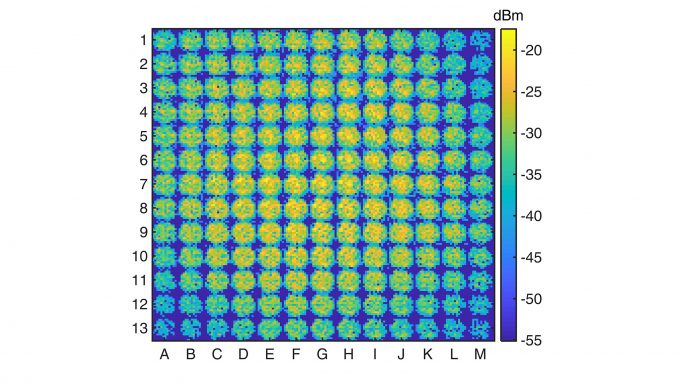
Using the same technology that allows high-frequency signals to travel on regular phone lines, researchers tested sending extremely high-frequency, 200 GHz signals through a pair of copper wires. The result is a link that can move data at rates...
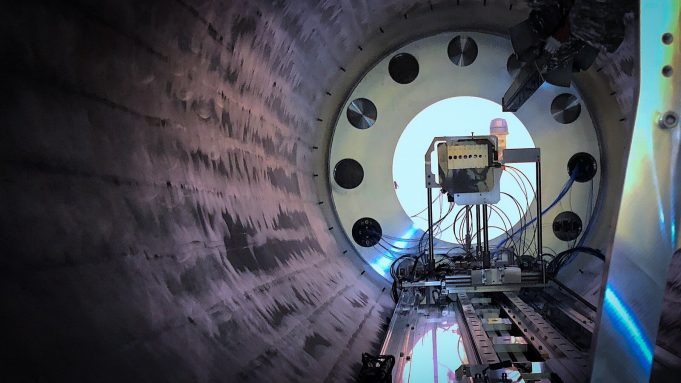
A long-held mystery in the field of nuclear physics is why the universe is composed of the specific materials we see around us. In other words, why is it made of "this" stuff and not other stuff?
Specifically of interest are...
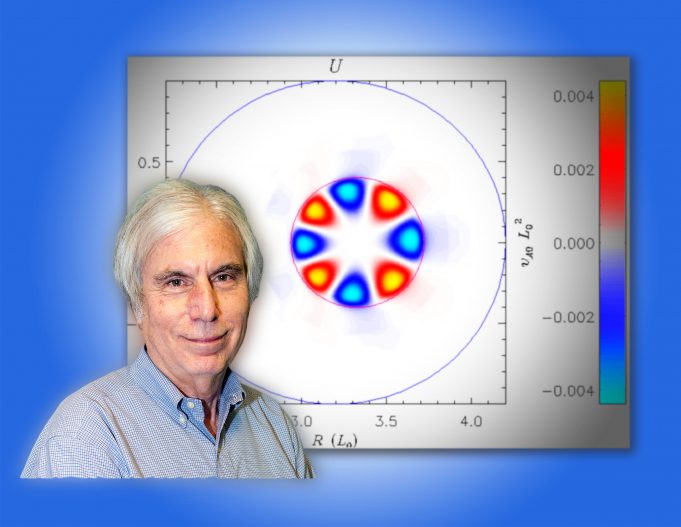
Scientists seeking to bring the fusion that powers the sun and stars to Earth must deal with sawtooth instabilities—up-and-down swings in the central pressure and temperature of the plasma that fuels fusion reactions, similar to the serrated blades of...
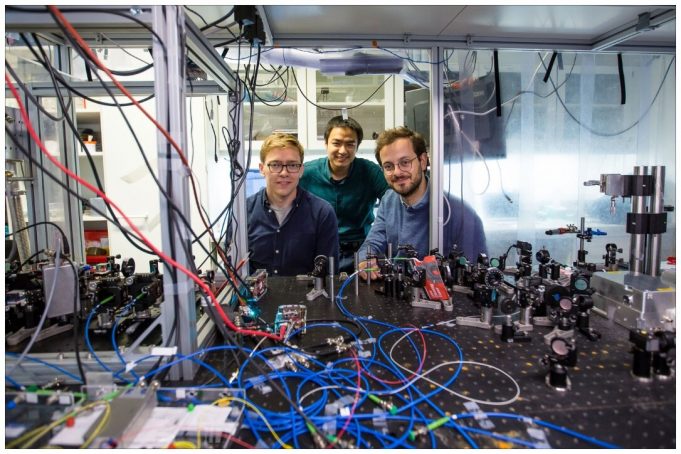
Entanglement, a powerful form of correlation among quantum systems, is an important resource for quantum computing. Researchers from the Quantum Optomechanics group at the Niels Bohr Institute, University of Copenhagen, recently entangled two laser beams through bouncing them off...
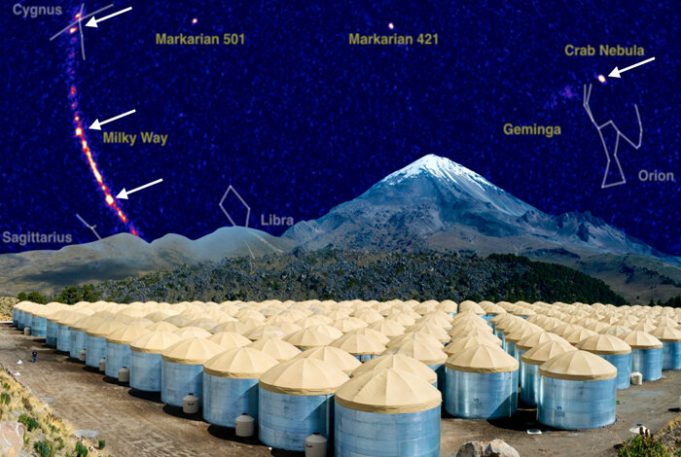
New measurements confirm, to the highest energies yet explored, that the laws of physics hold no matter where you are or how fast you're moving. Observations of record-breaking gamma rays prove the robustness of Lorentz Invariance—a piece of Einstein's...
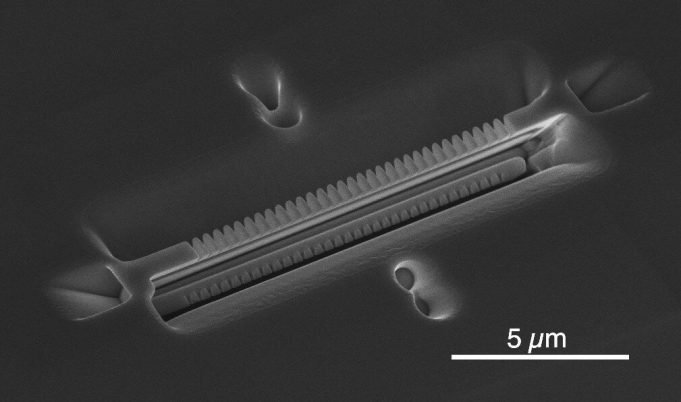
Engineers at Caltech have shown that atoms in optical cavities—tiny boxes for light—could be foundational to the creation of a quantum internet. Their work was published on March 30 by the journal Nature.
Quantum networks would connect quantum computers through a...

UNSW material scientists have shed new light on a promising new way to store and process information in computers and electronic devices that could significantly cut down the energy required to maintain our digital lifestyles.
Skyrmions, which can be described...
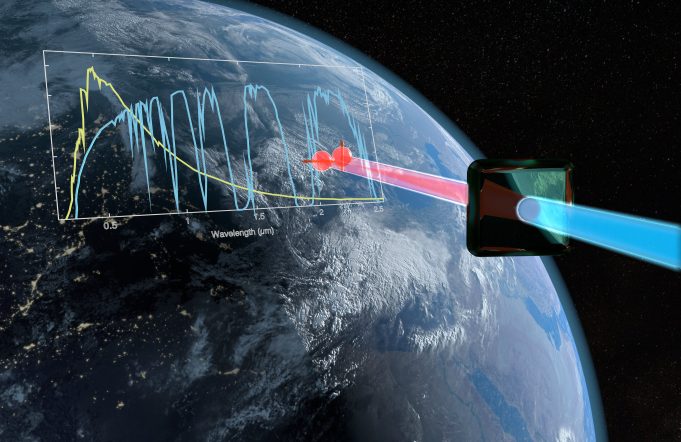
An international team with the participation of Prof. Dr. Michael Kues from the Cluster of Excellence PhoenixD at Leibniz University Hannover has developed a new method for generating quantum-entangled photons in a spectral range of light that was previously...

Any device that sends out a Wi-Fi signal also emits terahertz waves —electromagnetic waves with a frequency somewhere between microwaves and infrared light. These high-frequency radiation waves, known as "T-rays," are also produced by almost anything that registers a...
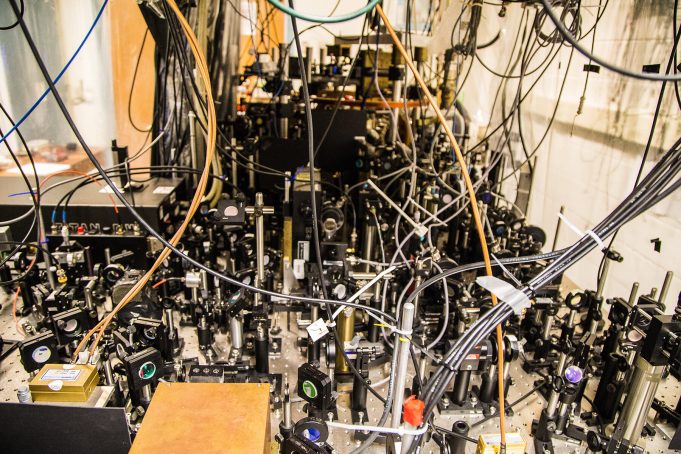
Bosons and fermions, the two classes into which all particles—from the sub-atomic to atoms themselves—can be sorted, behave very differently under most circumstances. While identical bosons like to congregate, identical fermions tend to be antisocial. However, in one dimension—imagine...
Professor Ronny Thomale holds a chair for theoretical condensed matter physics, the TP1, at the Julius-Maximilian University of Würzburg. The discovery and theoretical description of new quantum states of matter is a prime objective of his research. "Developing a...


