



Quantum bits, or qubits, can hold quantum information much longer now thanks to efforts by an international research team. The researchers have increased the retention time, or coherence time, to 10 milliseconds—10,000 times longer than the previous record—by combining...
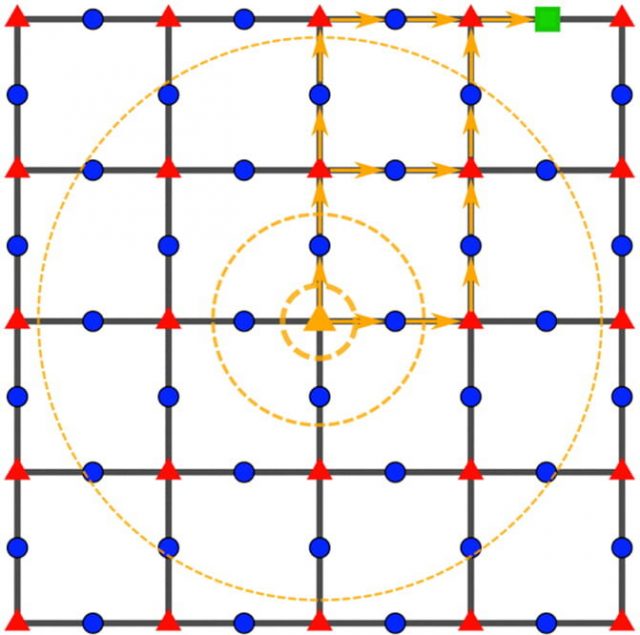
Nature's speed limits aren't posted on road signs, but Rice University physicists have discovered a new way to deduce them that is better—infinitely better, in some cases—than previous methods.
"The big question is, 'How fast can anything—information, mass, energy—move in...
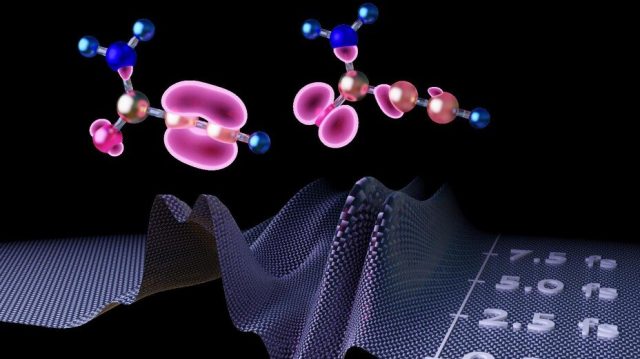
EPFL researchers, working at the boundary between classical and quantum physics, have developed a method for quickly spotting molecules with particularly interesting electron properties.
Laser technology is giving scientists an ever-closer look into molecular structures, and this sometimes leads to very...

In atomic nuclei, protons and neutrons share energy and momentum in tight quarters. But exactly how they share the energy that keeps them bound within the nucleus—and even where they are within the nucleus—remain key puzzles for nuclear physicists.
A...

It is very hard to take a photo of a hummingbird flapping its wings 50 times per second. The exposure time has to be much shorter than the characteristic time scale of the wing beat, otherwise you will only...

The technology behind the quantum computers of the future is fast developing, with several different approaches in progress. Many of the strategies, or "blueprints," for quantum computers rely on atoms or artificial atom-like electrical circuits. In a new theoretical...
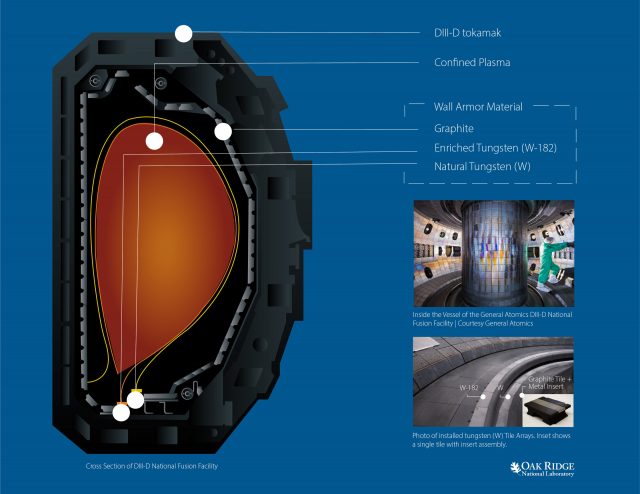
The inside of future nuclear fusion energy reactors will be among the harshest environments ever produced on Earth. What's strong enough to protect the inside of a fusion reactor from plasma-produced heat fluxes akin to space shuttles reentering Earth's...
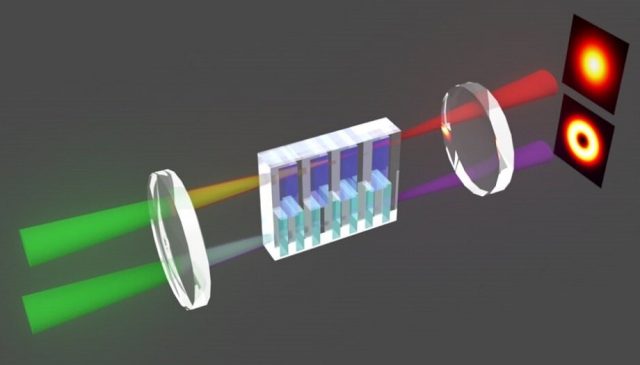
Optical vortices, characterized by a helical phase front and doughnut-shaped intensity distribution, contribute to a broad range of applications, from microscopy to optical communications. And applications for optical vortices are proliferating. So, what's the best way to generate optical...

Turing machines were first proposed by British mathematician Alan Turing in 1936, and are a theoretical mathematical model of what it means for a system to "be a computer."
At a high level, these machines are similar to real-world modern computers because...
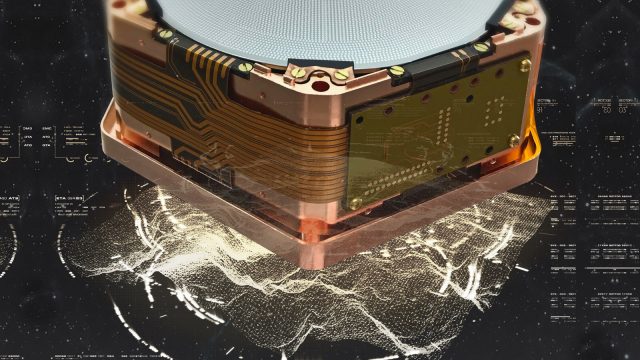
The practicality of quantum computing hangs on the integrity of the quantum bit, or qubit.
Qubits, the logic elements of quantum computers, are coherent two-level systems that represent quantum information. Each qubit has the strange ability to be in a quantum superposition,...

Months into the COVID-19 pandemic, wearing a mask while out in public has become the recommended practice. However, many still question the effectiveness of this.
To allay these doubts, Padmanabha Prasanna Simha, from the Indian Space Research Organisation, and Prasanna...


