



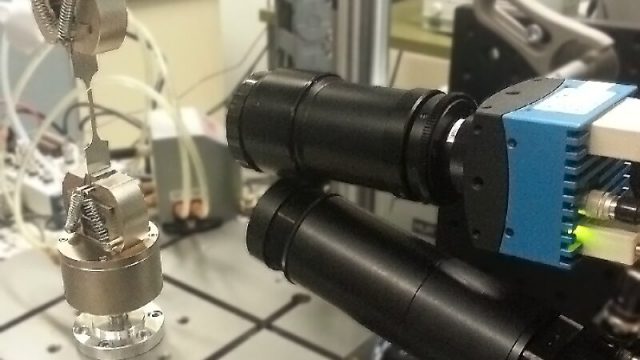
How things deform and break is important for engineers, as it helps them choose and design what materials they're going to use for building things. Researchers at Aalto University and Tampere University have stretched metal alloy samples to their...

A new measurement of how quickly stars create carbon may trigger a major shift in our understanding of how stars evolve and die, how the elements are created, and even the origin and abundance of the building blocks of...
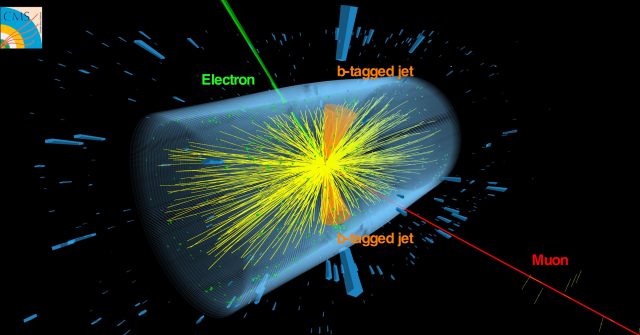
The result of recent research by the CMS collaboration opens the path to study in a new and unique way an extreme state of matter that is thought to have existed shortly after the Big Bang. The collaboration has...
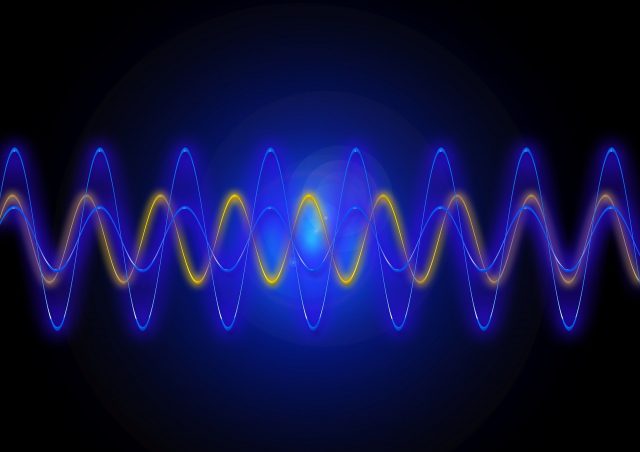
A research collaboration between Queen Mary University of London, the University of Cambridge and the Institute for High Pressure Physics in Troitsk has discovered the fastest possible speed of sound.
The result- about 36 km per second—is around twice as...

The team's findings have been published in Nature: Scientific Reports: "Transition delay using biomimetic fish scale arrays," and in the Journal of Experimental Biology: "Streak formation in flow over biomimetic fish scale arrays."
Reducing drag means faster aircraft speeds and less fuel...
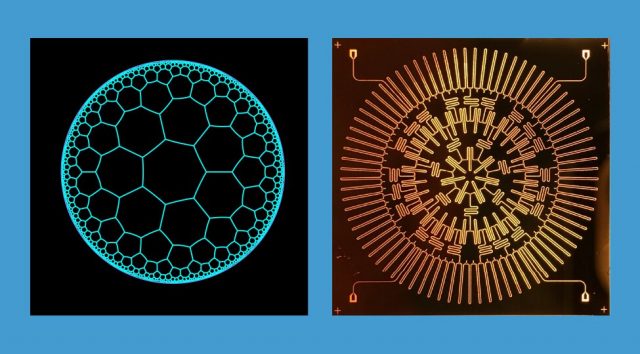
Thanks to Einstein, we know that our three-dimensional space is warped and curved. And in curved space, normal ideas of geometry and straight lines break down, creating a chance to explore an unfamiliar landscape governed by new rules. But...

The Higgs boson reached overnight fame in 2012 when it was finally discovered in a jumble of other particles generated at CERN's Large Hadron Collider (LHC) in Geneva, Switzerland. The discovery was monumental because the Higgs boson, which had...

A new algorithm that fast forwards simulations could bring greater use ability to current and near-term quantum computers, opening the way for applications to run past strict time limits that hamper many quantum calculations.l
"Quantum computers have a limited time...
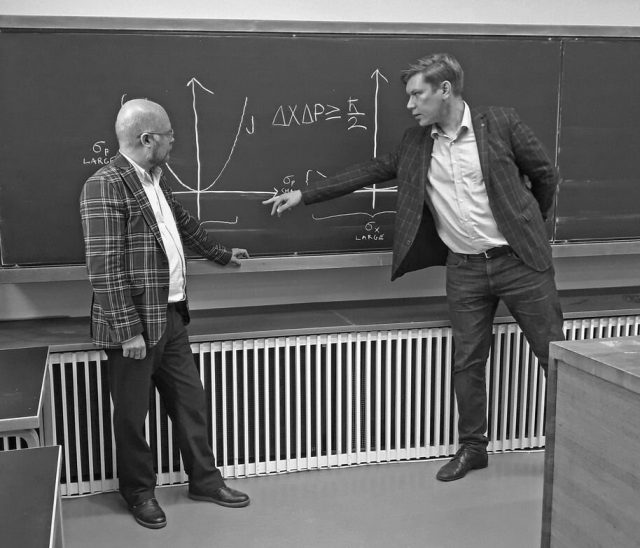
Quantum mechanics arose in the 1920s, and since then scientists have disagreed on how best to interpret it. Many interpretations, including the Copenhagen interpretation presented by Niels Bohr and Werner Heisenberg, and in particular, von Neumann-Wigner interpretation, state that...

Scientists have re-investigated a 60-year-old idea by an American physicist and provided new insights into the quantum world.
The research, which took seven years to complete, could lead to improved spectroscopic techniques, laser techniques, interferometric high-precision measurements and atomic beam applications.
Quantum...
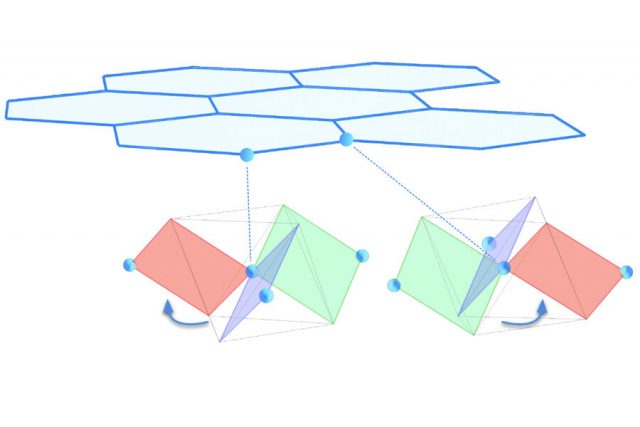
Using a novel technique, scientists working at the Florida State University-headquartered National High Magnetic Field Laboratory have found evidence for a quantum spin liquid, a state of matter that is promising as a building block for the quantum computers...


