



The Weak Equivalence Principle (WEP) is a key aspect of classical physics. It states that when particles are in freefall, the trajectories they follow are entirely independent of their masses. However, it is not yet clear whether this property...
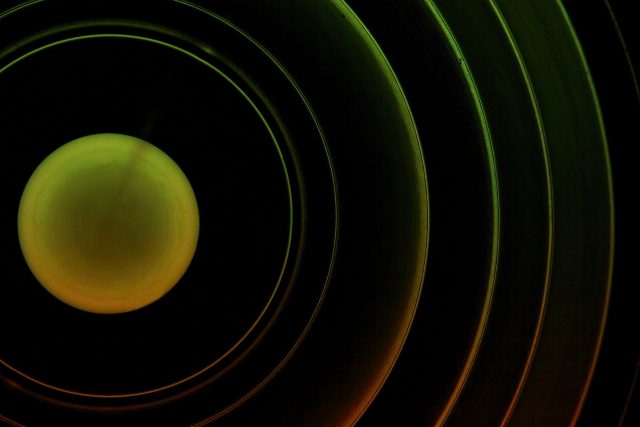
A team of scientists including two physicists at the University of Sussex has found a way to circumvent a 178-year old theory which means they can effectively cancel magnetic fields at a distance. They are the first to be...
A team of Australian quantum theorists has shown how to break a bound that had been believed, for 60 years, to fundamentally limit the coherence of lasers.
The coherence of a laser beam can be thought of as the number of photons (particles of...

Time crystals sound like something out of science fiction, but they may be the next major leap in quantum network research. A team based in Japan has proposed a method to use time crystals to simulate massive networks with...

A phenomenon of quantum mechanics known as superposition can impact timekeeping in high-precision clocks, according to a theoretical study from Dartmouth College, Saint Anselm College and Santa Clara University.
Research describing the effect shows that superposition—the ability of an atom...

Noisy, open-plan offices full of workers hunched over desks while wearing noise canceling headphones could soon be a thing of the past, thanks to new research from The Australian National University (ANU).
The ANU researchers have developed a new formula...
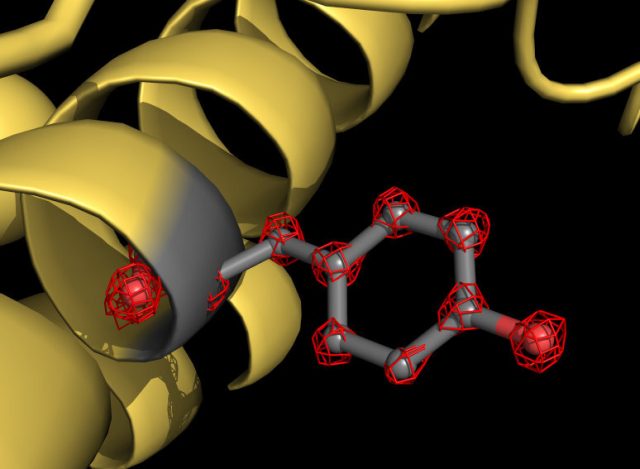
Holger Stark from the Max Planck Institute for Biophysical Chemistry in Göttingen and his team have broken a crucial resolution barrier in cryo electron microscopy. For the first time, his group succeeded in observing individual atoms in a protein...

Walk into a quantum lab where scientists trap ions, and you'll find benchtops full of mirrors and lenses, all focusing lasers to hit an ion "trapped" in place above a chip. By using lasers to control ions, scientists have...
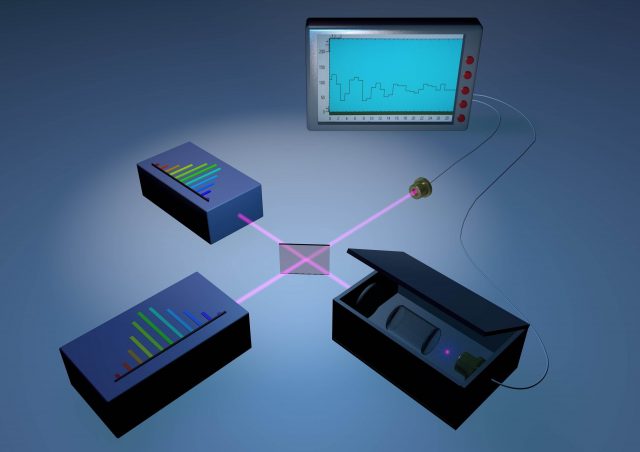
Our eyes are sensitive to only three spectral color bands (red, green, blue), and people can no longer distinguish colors if it becomes very dark. Spectroscopists can identify many more colors by the frequencies of the light waves and...
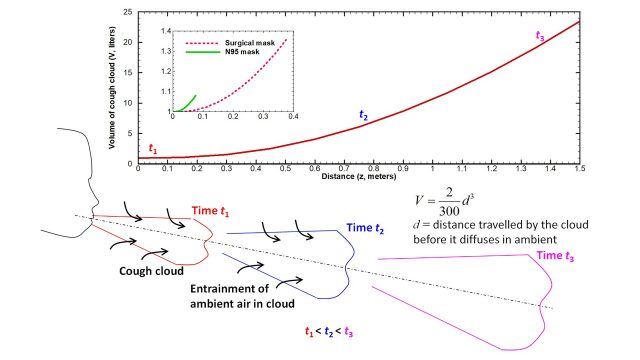
As the coronavirus has affected more than 30 million people globally, researchers have increasingly focused on the extent to which airborne respiratory droplets carrying the virus travel and contaminate the air after an infected person coughs.
While scientists have studied...

Scientists have long sought to harness fusion as an inexhaustible and carbon-free energy source. Within the past few years, groundbreaking high-temperature superconductor technology (HTS) sparked a new vision for achieving practical fusion energy. This approach, known as the high-field...


