



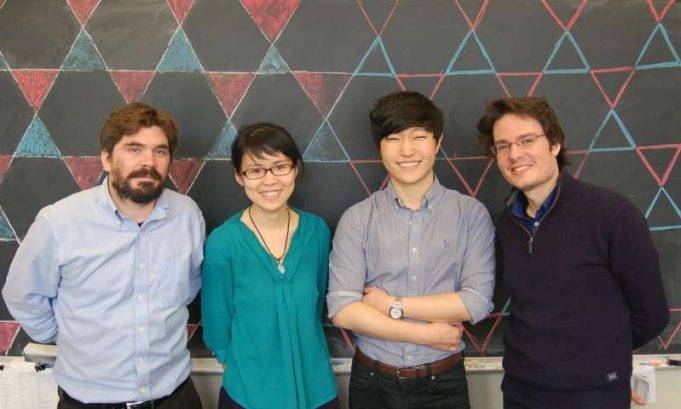
A motif of Japanese basketweaving known as the kagome pattern has preoccupied physicists for decades. Kagome baskets are typically made from strips of bamboo woven into a highly symmetrical pattern of interlaced, corner-sharing triangles.
If a metal or other conductive...

Some novel materials that sound too good to be true turn out to be true and good. An emergent class of semiconductors, which could affordably light up our future with nuanced colors emanating from lasers, lamps, and even window...
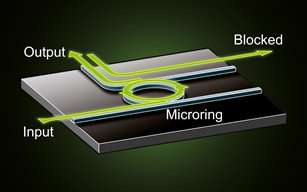
Photonics researchers at the National Physical Laboratory (NPL) have achieved the extra-ordinary by creating a diode consisting of light that can be used, for the first time, in miniaturised photonic circuits, as published in Optica.
Dr. Pascal Del'Haye and his team...
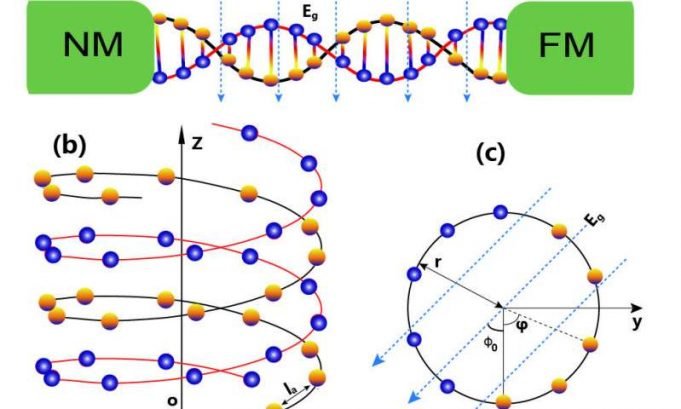
An emerging field that has generated a wide range of interest, spin caloritronics, is an offshoot of spintronics that explores how heat currents transport electron spin. Spin caloritronics researchers are particularly interested in how waste heat could be used...
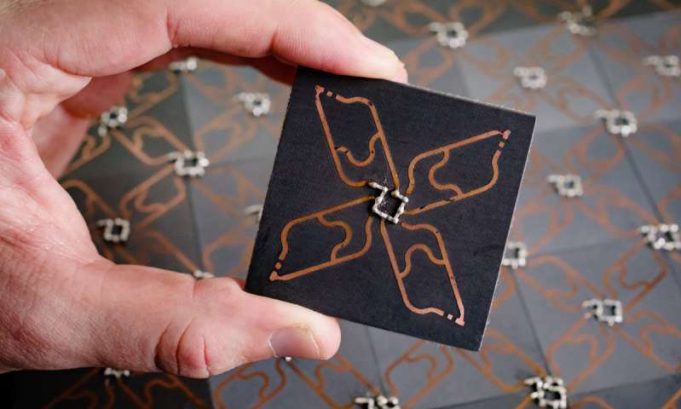
Researchers have produced a "human scale" demonstration of a new phase of matter called quadrupole topological insulators that was recently predicted using theoretical physics. These are the first experimental findings to validate this theory.
The researchers report their findings in...

Exotic physics can happen when quantum particles come together and talk to each other. Understanding such processes is challenging for scientists, because the particle interactions can be hard to glimpse and even harder to control. Moreover, modern computer simulations...

The mystery of why comets travelling through Space give off X-ray emissions has been solved thanks to new research undertaken by a team that included science staff from STFC's Central Laser Facility (CLF) and RAL Space.
Scientists have long wondered...

In 1991, University of Utah chemist Joel Miller developed the first magnet with carbon-based, or organic, components that was stable at room temperature. It was a great advance in magnetics, and he's been exploring the applications ever since.
Twenty-five years...
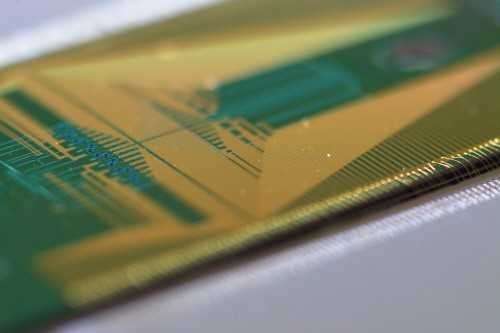
An international team of quantum scientists and engineers led by the University of Bristol and involving groups from China, Denmark, Spain, Germany and Poland, have realised an advanced large-scale silicon quantum photonic device that can entangle photons to incredible...

The unique Australian approach of creating quantum bits from precisely positioned individual atoms in silicon is reaping major rewards, with UNSW Sydney-led scientists showing for the first time that they can make two of these atom qubits "talk" to...
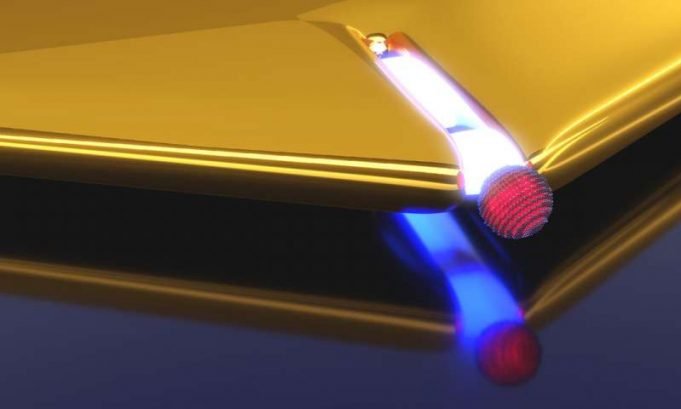
Researchers from Würzburg and London have succeeded in controlling the coupling of light and matter at room temperature. They have published their results in Science Advances.
This achievement is particularly significant, as it builds the foundations for the realization of practical...


