



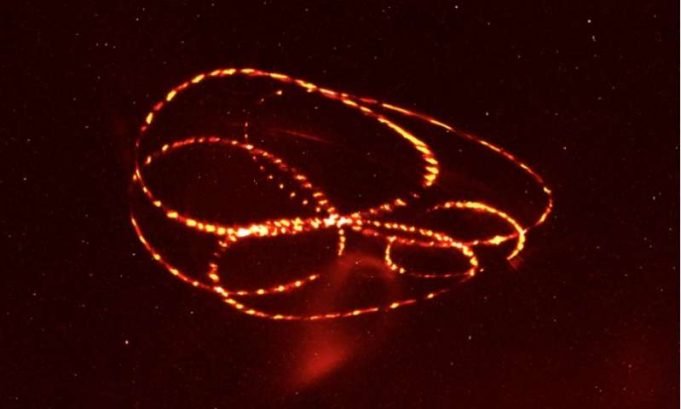
A team of U.S. and German scientists has used a system of large magnetic "trim" coils designed and delivered by the U.S. Department of Energy's (DOE) Princeton Plasma Physics Laboratory (PPPL) to achieve high performance in the latest round...
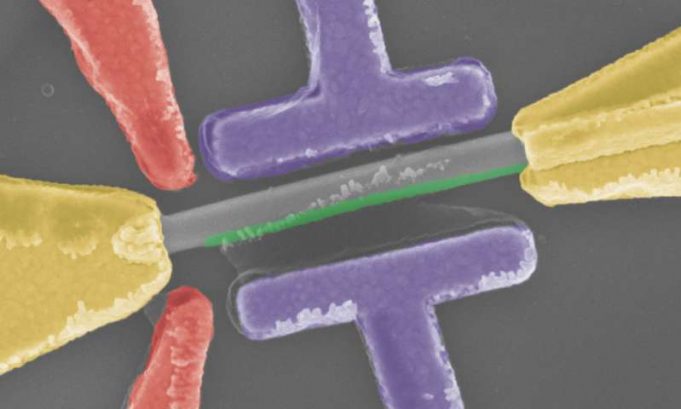
In the latest experiment of its kind, researchers have captured the most compelling evidence to date that unusual particles lurk inside a special kind of superconductor. The result, which confirms theoretical predictions first made nearly a decade ago at...
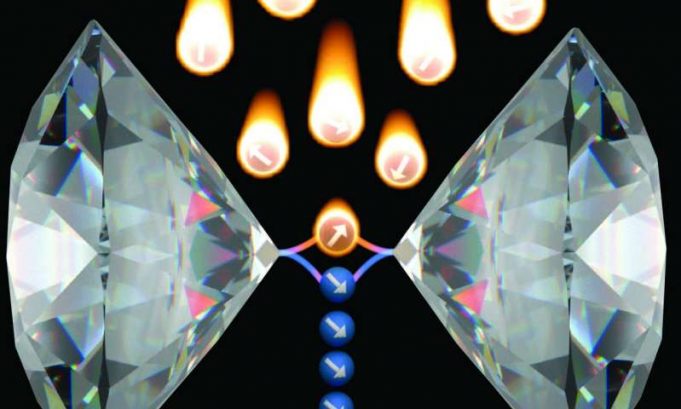
Researchers at the University of Melbourne have developed a technique which could increase the sensitivity of magnetic resonance imaging (MRI) for patient diagnosis.
The new technique works by increasing the strength of the magnetic field produced by molecules, and hence...
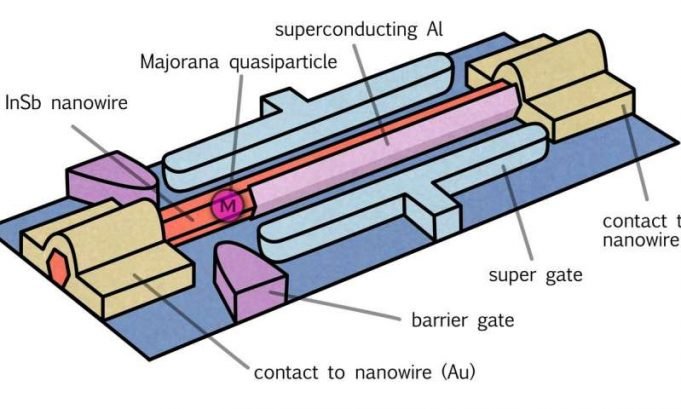
Since the breakthrough discovery of the Majorana particle in 2012 in Delft, the group of professor Leo Kouwenhoven at QuTech and Microsoft have collaborated with theorists and material scientists of various institutes to understand the next steps required to...

What if the odds of an event occurring were about one in ten billion? This is the case for the decay of a positively charged particle known as a kaon into another positively charged particle called a pion and...
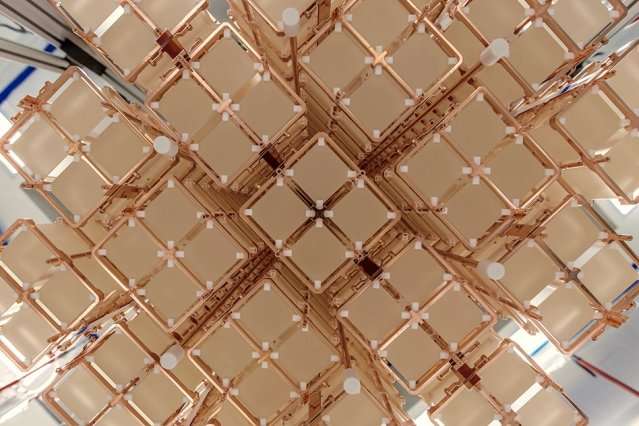
This week, an international team of physicists, including researchers at MIT, is reporting the first results from an underground experiment designed to answer one of physics' most fundamental questions: Why is our universe made mostly of matter?
According to theory,...
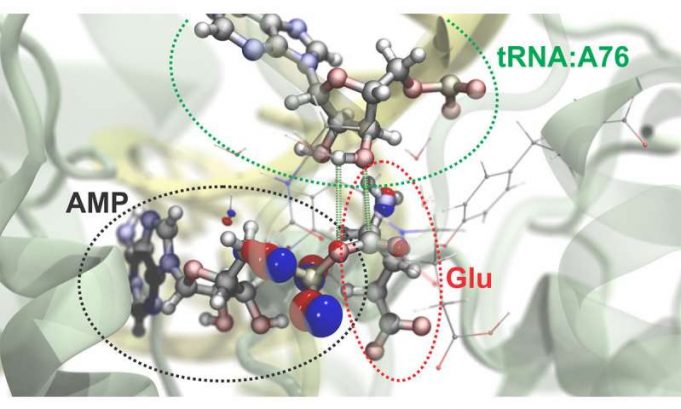
Scientists have built a "computational microscope" that can simulate the atomic and subatomic forces that drive molecular interactions. This tool will streamline efforts to understand the chemistry of life, model large molecular systems and develop new pharmaceutical and industrial...

UC Berkeley engineers have built a bright-light emitting device that is millimeters wide and fully transparent when turned off. The light emitting material in this device is a monolayer semiconductor, which is just three atoms thick.
The device opens the...
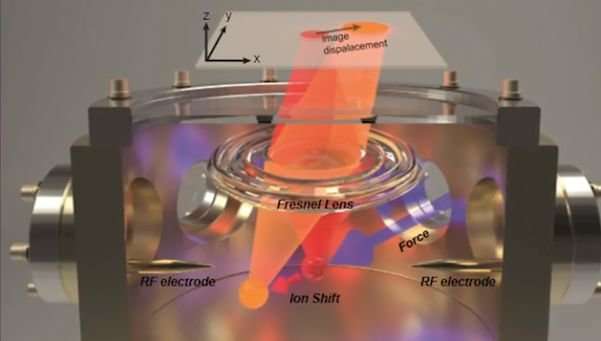
Researchers at Griffith University working with Australia's Commonwealth Scientific and Industrial Research Organisation (CSIRO) have unveiled a stunningly accurate technique for scientific measurements which uses a single atom as the sensor, with sensitivity down to 100 zeptoNewtons.
Using highly miniaturised...
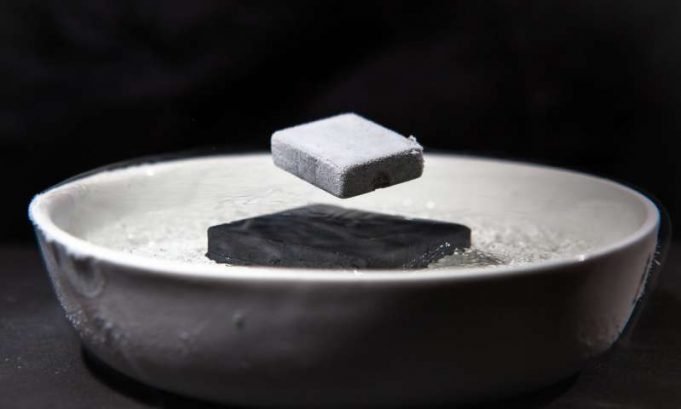
Until about 50 years ago, all known superconductors were metals. This made sense, because metals have the largest number of loosely bound "carrier" electrons that are free to pair up and flow as electrical current with no resistance and...

Some novel materials that sound too good to be true turn out to be true and good. An emergent class of semiconductors, which could affordably light up our future with nuanced colors emanating from lasers, lamps, and even window...


